




Summer the Most Dangerous Time for Teen Drivers
Summer's here and the time is right for putting away the phone while driving. On the day she graduated from college in May 2008, Jacy Good's car was struck by a tractor-trailer that had swerved to avoid a young driver who had run a red light while talking on his cell phone. Her parents were killed. She barely survived and lives with serious injuries
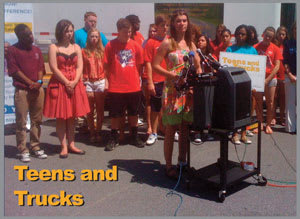
Summer's here and the time is right for putting away the phone while driving.
On the day she graduated from college in May 2008, Jacy Good's car was struck by a tractor-trailer that had swerved to avoid a young driver who had run a red light while talking on his cell phone. Her parents were killed. She barely survived and lives with serious injuries.
"This probably won't happen to you but it happens every day," Good told a group of teenagers gathered at Walt Whitman High School in suburban Washington, D.C., yesterday. "Watch out for each other."
The students were there to sign a "no texting" pledge and learn about a truck's "No Zone" at the event hosted by the Federal Motor Carrier Safety Administration and the Commercial Vehicle Safety Alliance. A truck for the "No Zone" demonstration was provided by FedEx Ground.
"This is the time of year when fatal crash rates among teens almost doubles," FMCSA Administrator Anne Ferro told the students.
The statistics are compelling: each day in May, June, July and August, an average of 16 teenagers die in a traffic accident, compared to 9 per day in other months, said Sandy Spavone, executive director of the National Organization for Youth Safety.
And teenagers are much more likely to be in a crash than adults are, said CVSA Executive Director Steve Keppler. More than a quarter of the people killed in crashes involving large trucks and buses are between 16 and 25 years old, he said.
"We want to get these kids into the right (driving) habits right out of the gate," Keppler said.
CVSA has put together a truck education program for teenage drivers. The Teens & Trucks curriculum covers such basics as the differences in handling characteristics between trucks and cars, and how to drive in the vicinity of a truck.
Few high-school driver education programs have a truck component, so CVSA and its partners in this effort, the Arizona Trucking Association, the Arizona Department of Public Safety and American Trucking Associations, have disseminated the curriculum to about 500,000 students in 47 states and 8 Canadian provinces, Keppler said.
The program, whose goal is 1 million students, is funded in part by an $85,000 grant from FMCSA.
After the students were given a "No-Zone" demonstration by Maryland State Police First Sgt. Robert Mondor, they lined up to sign the pledge that they would not text while driving.
"Life is all about decisions, choices and consequences," Ferro told them. "And every trip you take in a vehicle matters and requires sound judgment and your full attention. In a split second your life could be negatively impacted forever."
The message was made immediate by Jacy Good, and by Laurie Kelly of Takoma Park, Maryland.
Kelly, whose 23-year-old son was killed in a distracted driving crash in May 2010, told the students that everything they know can change in an instant. "Being over-confident means that you are unsafe," she said.
More Safety & Compliance
A Camera Isn't a Safety Program. Here's What Brokers Are Screening for Now
Footage alone may not be enough to pass broker vetting processes. Here's what counts as a defensible safety program now.
Read More →
Marijuana and Trucking’s Drug-Testing Dilemma
Marijuana is getting stronger, laws are changing, and drug tests still can’t reliably establish impairment. What does that mean for truck drivers and the fleets that employ them?
Read More →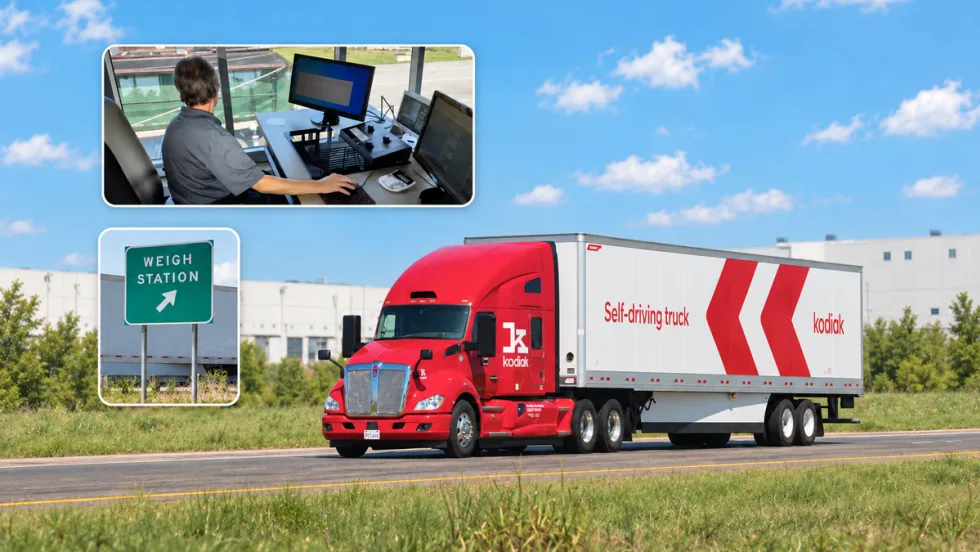
PrePass, Kodiak Connect Driverless Trucks to Roadside Enforcement
The system will allow enforcement agencies to verify Enhanced Inspection information and decide whether Kodiak’s autonomous trucks can bypass roadside screening sites.
Read More →

From One Generation to the Next: How Mentorship Builds Safer Truck Drivers
After three decades in trucking, Harold Perry shares what he's learned about driver safety, mentorship, and helping the next generation build confidence behind the wheel.
Read More →
FMCSA Pauses Biennial-Update Enforcement Amid Motus Transition
Carriers whose updates were due on or after June 1 have more time, while FMCSA works to stabilize its new registration system and warns of phishing sites impersonating its new carrier registration system, Motus.
Read More →
ZF Expands Commercial Vehicle Push in North America
ZF is expanding its North American commercial-vehicle presence with new transmission applications, electrification, trailer technology and autonomous-driving systems.
Read More →
Truck Drivers Need More Than Another Alert
Fleets have more visibility into truck health, safety events, and driver activity than ever. The next challenge is turning all that information into useful guidance for the person who has to decide what to do next.
Read More →
Tesla Wants a Self-Driving Semi. Are Cameras Enough?
Could Tesla’s camera-only autonomous driving technology work on an 80,000-pound Semi? In this commentary, HDT's Deborah Lockridge takes a look at Tesla, Cybercab, and how autonomous trucks see the road.
Read More →
What DOT’s Automated Vehicle Strategy Means for Trucking
The U.S. Department of Transportation issued a new automated-vehicle strategy that outlines plans for driverless-truck regulations, cross-state freight corridors, and federal safety standards.
Read More →
NYC Expands Speed, Pedestrian Safety Tech Across Fleet
New York City is expanding intelligent speed assistance and pedestrian-alert systems across its municipal fleet, moving the technologies from pilot programs into vehicle procurement and retrofit requirements.
Read More →