




Strange As It Seems, Clyde Hart Enjoys the Crossfire
Clyde Hart, (pictured), the man in charge of the federal truck and bus safety program, says he is enjoying himself – “as strange at that may seem.” It does seem strange, considering the crossfire he walked into
Clyde Hart, (pictured), the man in charge of the federal truck and bus safety program, says he is enjoying himself – “as strange at that may seem.”
It does seem strange, considering the crossfire he walked into last May when he became Acting Deputy Administrator of the Federal Motor Carrier Safety Administration.
The agency had just proposed driver scheduling rules that amounted to the biggest change in trucking operations since economic deregulation in 1980 – and truckers were alarmed, to put it mildly.
Hart’s job has been to keep the process moving despite conflicting pressures. From one angle he’s got trucking interests that want the proposal to go away altogether. From another, he’s got stakeholders who want exemptions from the rule. From a third, there are those who want the rule in effect immediately, as it is written. And then there has been the pressure from inside DOT, to preserve and validate a piece of work that has received tremendous criticism.
For example, one of Hart’s first tasks was to calm troubled waters in Congress. Members were besieged with calls from truckers complaining that the proposal would not improve safety and was vastly overpriced, and they wanted to know what the agency was up to.
Hart, who has the physical stature of an NFL lineman, is nimble in such circumstances. He may not have changed minds, but members were willing to reserve judgement after he acknowledged that the proposal’s economic impact needs reassessment, and promised substantive changes.
Since then, Hart has announced additional moves to signal the agency’s flexibility: He extended the comment period until Dec. 15, scheduled roundtable discussions where the industry can air its concerns, and said the agency is considering a supplemental rulemaking based on what it learns at the roundtable.
It cannot be said that these moves have quieted the industry’s alarm altogether, but they do give credence to his message: “We would rather do it right than do it quick.”
This part of his job, the public part, comes naturally to Hart. For years he has held prominent transportation positions in government, starting as an attorney at the former Interstate Commerce Commission and later becoming the senior Democratic counsel of the Senate Commerce, Science and Transportation Committee. In 1998, he was confirmed by the Senate as the Administrator of the Maritime Administration.
In taking on the FMCSA job, Hart answered a call for short-term political leadership at the newest agency in the federal government. Transportation Secretary Rodney Slater was having a difficult time filling the post because whoever took the job was going to lose it when the next administration comes starts in January 2001.
“I’m a political appointee,” Hart explained in an interview. “I would suspect that on Jan. 21, 2001, I walk out the door. I fully expect to join the exodus, if exodus there is.”
He would, however, prefer to stay: “I say that because it’s sort of like, what else would I do? I haven’t thought about anything else.”
Until Hart stepped into this job, the senior official at the safety agency was Julie Anna Cirillo, who now serves as the Acting Chief Safety Officer.
While Hart has played the role of conciliator, he also will pitch hardballs. When the American Trucking Associations got Sen. Richard Shelby, R-AL, to sponsor an amendment that would kill the hours of service proposal by cutting off its funding, Hart responded with tough language in a press release: “This is raw use of political power by specific trucking interests to stop progress.”
Softball, hardball – what’s the message to truckers?
"I would hope that anyone would see me as someone who wants very much to improve safety in the trucking industry,” Hart said. “Someone who has spent some years in his career worrying about the trucking industry and trying to make it better.”
He went on: “I think I am flexible. I think I do very much care about individual truckers – I’ve known a few, so I know what kind of job they do and how difficult it is.
“So if they just see me as somebody who is trying to be fair, who is trying to improve life for truckers . . . I’ll live with that.”
Hart supports the traditional stance of federal truck safety regulators: they see themselves as partners with the industry in a mutual pursuit of the same goal – not as cops on the beat.
"It would be nice to say that we are a cop and that our job is to police the industry, and in some respects that’s true. But the policing depends a lot on the consent of those being policed. We need their help . . . we don’t have enough people or money to [be cops] . . . so that means we have to be a partner.”
On hours of service, he sees a glass that is half-full.
“I think on some basic level . . . we have the makings of consent. Everybody seems to agree on the 24-hour clock. Everybody seems to agree on some period of rest over the weekend. Everybody agrees that you have to do something about the hours of service. So at that level you do have consent and I think that’s vital.
“There are, of course, other issues where there is no consent. We’ll have to get in there and muck around and try and come up with something everybody can live with. And I think we can do that. It’s not going to take place in the next three, six, nine months or even a year. But I think we can do that.”
There probably will always be a certain amount of contention over rules between the agency and the industry, Hart said. But he does hope to take some of the pressure off by activating the Motor Carrier Advisory Council. As outlined in the law that created the safety agency, the council would bring together representatives of all stakeholders – including safety advocacy groups – to advise the FMCSA chief on tough issues.
What does he want to achieve before his term is up next year?
“I want to have this agency as fully staffed as we can get it. I want to have this hours of service proposal on track, to mix my transportation metaphors, so whoever comes in can pick up the ball and continue with it. And I want a culture here that says we are an aggressive safety agency that works in partnership with the industry to come up with a safer industry and one that has the needs of the people who are in the industry in mind as well as the shipping public.
“If someone can say that about me, walking out the door, that’s great.”
More Drivers
Platform Science Adds Dispatch and Safety Tools
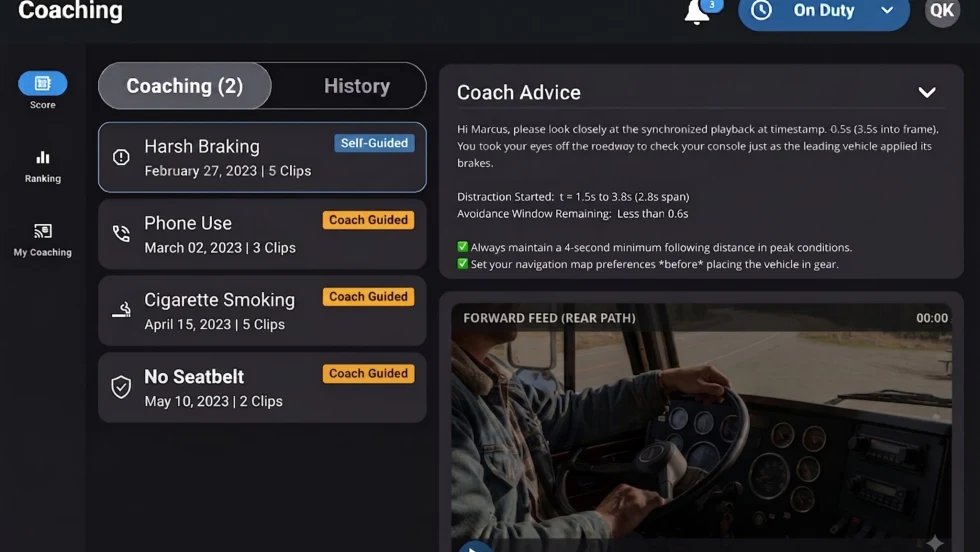
Four additions to PS Fleet help fleets monitor loads, manage driver coaching, share truck locations and adjust video system settings.
Read More →
When Language Stops the Truck: The Return of ELP Out-of-Service Orders
English language proficiency rules for commercial drivers aren’t new, but renewed out-of-service enforcement has raised the stakes. Here’s what carriers need to know before a driver reaches a roadside inspection.
Read More →
Samsara Launches Custom AI Agent Builder
Agent Studio lets fleets create AI tools for hours-of-service monitoring, reporting and driver support, including agents that communicate by phone.
Read More →
Trucker Path Expands Reserved Parking Network
Trucker Path has added close to 6,000 more truck parking spaces to its Trucker Path Reserved Parking Network with the addition of Safe Truck Parking.
Read More →
EEOC Sues Texas Trucking Company Over Driver Age Limits
The agency says Trancasa USA rejected applicants over 65 and applied tougher driving-record standards to those over 60.
Read More →
Nussbaum, Roehl Announce Second Driver Pay Increase This Year
This year has seen a swath of major truck driver pay increases as freight capacity has tightened.
Read More →
From One Generation to the Next: How Mentorship Builds Safer Truck Drivers
After three decades in trucking, Harold Perry shares what he's learned about driver safety, mentorship, and helping the next generation build confidence behind the wheel.
Read More →
Truck Drivers Need More Than Another Alert
Fleets have more visibility into truck health, safety events, and driver activity than ever. The next challenge is turning all that information into useful guidance for the person who has to decide what to do next.
Read More →
FMCSA Removes 110 Truck Driver Training Schools from Certified ELDT List
Federal regulators also are targeting more than 160 additional training providers and launching a nationwide audit of third-party CDL skills testers as part of a broader crackdown on trucking fraud.
Read More →
Hours of Service Pilot Programs: FMCSA Readies for 2027 Rollout
Two pilot programs could eventually reshape hours-of-service rules, giving truck drivers options to pause their 14-hour clock or use longer split sleeper rest periods.
Read More →