




Stevens Transport Outfits Half Its Fleet with OPS-1 Oil Refiner System
Oil Purification Systems (OPS), manufacturer of the OPS-1 Oil Refiner system, has announced that Stevens Transport has outfit nearly half the company's fleet of 1,600 trucks with the OPS-1 on-board oil refiner system.
Oil Purification Systems (OPS), manufacturer of the OPS-1 Oil Refiner system, has announced that Stevens Transport has outfit nearly half the company's fleet of 1,600 trucks with the OPS-1 on-board oil refiner system.
Eric Smith, Stevens Transport's director of maintenance and equipment, said, "With a large fleet of trucks, one of our most costly reoccurring maintenance expenses has been oil changes. The OPS-1 Oil Refiner enables us to decrease our maintenance costs with fewer oil changes, and also saves us money in decreasing the time required to take each truck off the road to perform an oil change. By keeping the oil cleaner, the system also helps extend the life of the engine as well as ensure compliance with EPA regulations."
He said as the entire fleet is outfitted with the OPS-1 system over the next couple of years, the company expects to save “more than a million dollars per year on the cost of oil changes alone."
The OPS-1 is an on-board oil refiner system that can be easily mounted on any brand of diesel truck engines. The OPS-1 reduces or eliminates the solid and liquid contaminants from engine oil, thereby greatly extending the time between oil changes – or eliminating them entirely. Instead of changing the oil every 30,000 miles, analysis of the oil determines the required interval for an oil change. Weighing only 11 pounds, the OPS-1 is a compact, two-piece system that can be split up for easy installation on the engine.
The company's fleet maintenance crews are continuing to install the OPS-1 on about 50 trucks per month. During the year, Stevens Transport estimates that it has achieved an 80 percent oil maintenance cost savings on each truck fitted with the system by eliminating three to five oil changes per year. By keeping the oil cleaner and preserving the engines, Stevens expects to be able to use its trucks a year or two longer, with an even greater savings on capital expenditures.
The company first installed the OPS-1 on three trucks in March 2003 for a pilot test. The first truck in the test ran 70,000 miles before an oil change was performed. The Stevens truck maintenance crew changed filters every 30,000 miles, and sent oil samples to a third-party laboratory for analysis.
Although the oil analysis at 70,000 miles didn't mandate an oil change, Stevens chose to take a conservative approach and change the oil during this testing phase. As the company became more comfortable relying on the oil analysis to determine oil change intervals, the second test truck ran approximately 140,000 miles, while the third truck was able to run 192,000 miles before an oil change was necessary. After the successful pilot test, Stevens Transport made the commitment to outfit its entire fleet, which is expected to be completed within the next two years.
Tom Bock, Oil Purification Systems vice president of operations, said, "With oil prices continually on the rise and new EPA regulations expected in 2007, Stevens Transport is ahead of the technology curve with its decision to outfit its entire fleet with the OPS-1 Oil Refiner. We are extremely pleased that they have chosen the OPS-1 to help their trucks run more efficiently."
More Drivers

Samsara Launches Custom AI Agent Builder
Agent Studio lets fleets create AI tools for hours-of-service monitoring, reporting and driver support, including agents that communicate by phone.
Read More →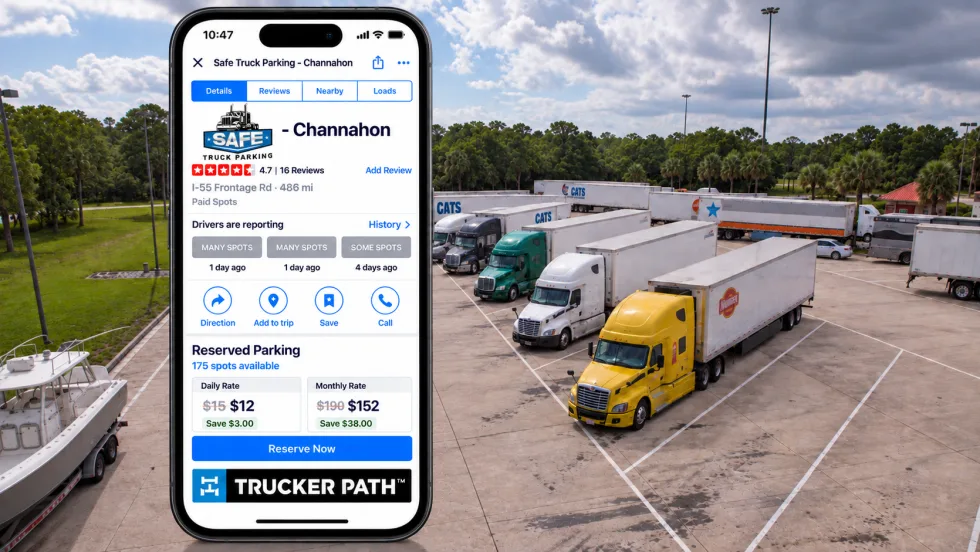
Trucker Path Expands Reserved Parking Network
Trucker Path has added close to 6,000 more truck parking spaces to its Trucker Path Reserved Parking Network with the addition of Safe Truck Parking.
Read More →
EEOC Sues Texas Trucking Company Over Driver Age Limits
The agency says Trancasa USA rejected applicants over 65 and applied tougher driving-record standards to those over 60.
Read More →
Nussbaum, Roehl Announce Second Driver Pay Increase This Year
This year has seen a swath of major truck driver pay increases as freight capacity has tightened.
Read More →
From One Generation to the Next: How Mentorship Builds Safer Truck Drivers
After three decades in trucking, Harold Perry shares what he's learned about driver safety, mentorship, and helping the next generation build confidence behind the wheel.
Read More →
Truck Drivers Need More Than Another Alert
Fleets have more visibility into truck health, safety events, and driver activity than ever. The next challenge is turning all that information into useful guidance for the person who has to decide what to do next.
Read More →
FMCSA Removes 110 Truck Driver Training Schools from Certified ELDT List
Federal regulators also are targeting more than 160 additional training providers and launching a nationwide audit of third-party CDL skills testers as part of a broader crackdown on trucking fraud.
Read More →
Hours of Service Pilot Programs: FMCSA Readies for 2027 Rollout
Two pilot programs could eventually reshape hours-of-service rules, giving truck drivers options to pause their 14-hour clock or use longer split sleeper rest periods.
Read More →
Medical Cards, English Proficiency Reshape Roadcheck Violations
Medical-card violations jumped to the top of the driver out-of-service list during CVSA’s 2026 International Roadcheck, while English-language proficiency violations appeared among the leading violations for the first time.
Read More →
Driver Trust Can Make or Break the Success of Fleet Safety Technology
New Teletrac Navman research suggests that onboarding, transparency about driver data, and positive feedback can play a significant role in how commercial drivers respond to safety and coaching technology.
Read More →