




States Invest VW Diesel Settlement in Clean Vehicle Technology
Millions of dollars in settlements from the VW diesel emissions cheating scandal will be made available for clean vehicle technology in California and Connecticut.

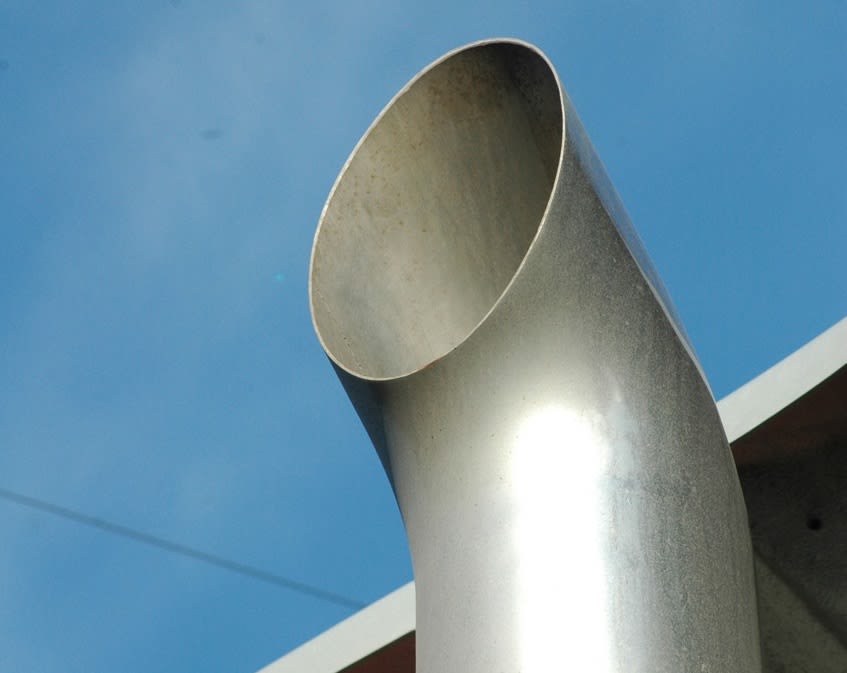
CARB has approved a plan to invest its $423 million settlement with Volkswagen over the diesel emissions cheating scandal in emissions reduction technology, at least $90 million of which will go to the heavy duty trucking sector.
Photo: Jim Park
Hundreds of millions of dollars in settlements from the VW diesel emissions cheating scandal will be made available for emissions reduction technology investment in California and Connecticut.
The California Air Resources Board has approved a plan to use the $423 million National VW Environmental Trust to invest in clean vehicle technologies with a large chunk of it aimed at the heavy-duty vehicle sector.
And Connecticut Gov. Dannel P. Malloy (D) announced that he was making $7.5 million from the VW settlement available for projects that would reduce NOx emissions in his state.
The $423 million National VW Environmental Trust Fund was the result of a partial settlement with Volkswagen and the State of California over the car manufacturer’s use of cheat devices that allowed its diesel-powered vehicles to pass emissions testing that violated the Clean Air Act. Volkswagen agreed to pay the U.S. a penalty of $1.45 billion for violating the CAA and also set up a $2.92 billion trust to go towards zero emissions vehicle infrastructure and technology.
CARB is allocating $90 million for zero emissions heavy-duty freight and drayage trucks and an additional $70 million for zero emissions port equipment and marine projects. The largest portion of the available funding, $120 million, will go towards zero emission public transit and school buses. California Senate Bill 92 required the state to use at least 35% of the Environmental Trust to benefit disadvantaged communities and the approved plan invests 50% of the available funds to those communities, according to CARB.
“This is a landmark moment in the saga of Volkswagen’s environmental violations,” said Mary D. Nichols CARB chair. “Over the next 10 years this plan will put in place not only tools to clean up VW’s excess emissions, but also to help achieve further reductions of smog-forming pollution for decades to come.”
Rather than divvying it up beforehand, Connecticut is making its $7.5 million settlement funding available through the state's Department of Energy and Environmental Protection for projects that would reduce NOx emissions. Application forms and guidance for the Diesel Emissions Mitigation Program are available on DEEP’s website. Project proposals must be submitted to DEEP by July 31.
“While it will be impossible to offset the entirety of pollution that resulted from VW’s emissions cheating, the release of these funds will help to improve air quality and protect public health in Connecticut,” said Gov. Malloy.
About 600,000 VW 2.0L and 3.0L diesel passenger vehicles sold in the U.S. were using the emissions test cheating software, of which 87,000 were sold in California. The illegal software was designed to operate emissions control equipment when a vehicle was being tested and then shut off when the cars were actually out on the road. An investigation determined that the altered vehicles emitted as much as 40 times the legal standard for NOx when the emissions equipment was switched off, according to CARB.
Related: CARB Fines Fleets for Hiring Trucks Not Meeting California Emissions Standards
More Fuel Smarts

How Volvo Updated Its D13 for EPA 2027 [Watch]
Volvo’s updated D13 promises lower emissions without sacrificing performance or fuel economy. Take a closer look at what changed inside the engine in this HDT Spotlight video.
Read More →
Diesel Price Spike Shortens Payback for Natural Gas Trucks, Report Says
Energy Vision estimates fleets could recover the higher purchase price of an RNG-fueled Class 8 tractor in 1.3 to 2.8 years under current fuel-price scenarios.
Read More →
Calstart Becomes Catalyst Mobility, Reflecting Broader Focus
Calstart is now Catalyst Mobility, reflecting the nonprofit’s growing national role in clean transportation, including zero-emission trucks, infrastructure and incentive programs.
Read More →

Record Diesel Prices Squeeze Trucking Fleets
Average U.S. diesel prices have climbed to nearly $6 a gallon, surpassing the 2022 record as tight refinery capacity and Middle East disruptions keep fuel costs elevated.
Read More →
How Fuel Delivery Shapes Engine Performance
Fuel delivery depends on more than what happens at the injector. For fleet, maintenance and technical professionals, looking at the full path from pump to injector can provide useful context for understanding engine performance.
Read More →
East Coast Port Launches $45M Electric Truck Push
The Port Authority of New York and New Jersey announced millions in incentives for zero-emission drayage trucks, yard tractors, and new charging hubs near the port.
Read More →
California Bill Could Shed Light on Electric Truck Prices
Why do battery-electric Class 8 trucks remain so expensive? A California bill headed to Gov. Gavin Newsom would give fleets and state agencies more visibility into what manufacturers charge.
Read More →
Detroit Opens Orders for EPA 2027 Engines
Detroit isn’t starting from scratch to meet EPA 2027 diesel emissions standards. Its Gen 6 DD13 and DD15 engines keep much of today’s platform while updating the fuel and aftertreatment systems.
Read More →
Zero-Emission Truck Corridor Planned for West Coast
California, Oregon, Washington, British Columbia and Baja California are coordinating plans for truck charging and hydrogen fueling from Canada to Mexico.
Read More →
A Closer Look at Kenworth’s Electric T880E Vocational Truck [Video]
Learn more about Kenworth's T880E battery-electric vocational truck at the Paccar Technical Center, including its range, applications, upfitting considerations, and PTO options, in this HDT Spotlight video.
Read More →