




SoCalGas Launches New Fuel Card Program
SoCalGas said its new fuel card program for fleets will help reduce greenhouse gas emissions from the heavy-duty transportation sector.

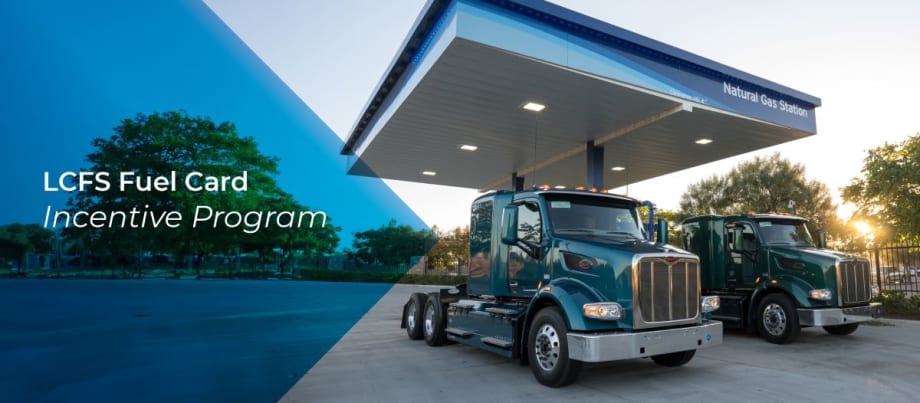
Pioritization for new SoCalGas fuel cards will be given to fleets with fewer than 10 vehicles.
Photo: SoCalGas
Southern California Gas (SoCalGas) announced today it will make $1.5 million available to provide funds for 50 fuel cards for heavy truck fleets. These fuel cards will help accelerate the transition to low- and zero-emissions vehicles in the heavy-duty transportation sector, the company said.
A $30,000 Fuel Card
For 90-days, starting today through Dec. 8, 2024, companies that purchase a qualifying vehicle can apply for a fuel card through SoCalGas' Low Carbon Fuel Standard (LCFS) Fuel Card Incentive Program.
The $30,000 fuel card is designed to help support the transition to cleaner fuels in alignment with the California Air Resource Board (CARB) Scoping Plan for reaching carbon neutrality, by decreasing the demand for petroleum fuels to help reduce greenhouse gas emissions and improve air quality.
"As a company with approximately 5,000 light-, medium- and heavy-duty vehicles, as well as trailers and equipment, we understand the financial challenges that come with transitioning to a low- or zero-emissions fleet," said Jawaad Malik, chief strategy and sustainability officer at SoCalGas. "By implementing innovative incentives like these fuel cards, we can help provide commercial fleet owners with significant cost savings to encourage their transition to a cleaner fleet, which ultimately contributes to a healthier environment and a more sustainable and resilient economy for California."
Under the CARB LCFS program, SoCalGas receives credits for procuring low emissions fuels.
The credits lower fuel prices at SoCalGas' 16 public access stations, which dispense 100% renewable natural gas (RNG). The creation of a fuel card incentive program is an additional way SoCalGas is giving credits back to customers in its service area to further support California's climate and clean air goals.
"We are excited that SoCalGas is offering this fuel card program that will provide significant savings for fleet operators," said Hal Meriwether, regional general manager for Rush Truck Centers in California. "As the nation's leading supplier of natural gas vehicles and consulting services, we are committed to helping customers make the best decisions for their business. This initiative makes the adoption of low- and zero-emission trucks more financially attractive for California fleets."
Small Fleets a Priority
To participate in the SoCalGas LCFS Fuel Card Incentive Program applicants must purchase a Class 8 Heavy-Duty natural gas truck on or after the launch date of Sept. 9, 2024. Prioritization will be given to fleets with fewer than 10 vehicles. Selected applicants will receive a fuel card worth $30,000 that can be used at SoCalGas public access stations, while cards last.
"We appreciate the collaboration with SoCalGas and their commitment to supporting and growing the renewable natural gas market," said Mark Jamieson, business development director at Cummins Alternative Technologies. "We're grateful this program will encourage heavy-duty and line haul fleets to experience renewable natural gas with the new Cummins X15N and the emission reductions that it can deliver."
SoCalGas said it is a leader among utilities in its sustainability goals and was among the first and largest natural gas distribution utilities in the United States to announce its aim to achieve net-zero GHG emissions by 2045.
As part of its ASPIRE 2045 sustainability strategy, SoCalGas has converted 38% of its over-the-road fleet1 to alternative fuel vehicles (AFV) with an aim to reach 50% by 2025 and operate a 100% zero-emissions fleet by 20352. SoCalGas was also recognized with the Leading Private Fleet Award at the Advanced Clean Transportation (ACT) Expo in 2022 acknowledging the company's efforts to go above and beyond what is required to achieve sustainability in fleet operations.
The LCFS program was initially implemented in 2011 and is designed to encourage the use of cleaner low-carbon transportation fuels in California and the production of those fuels to reduce GHG emissions in the transportation sector. Learn more about SoCalGas' LCFS Fuel Card Incentive Program at socalgas.com/FuelCard.
More Fuel Smarts

How Volvo Updated Its D13 for EPA 2027 [Watch]
Volvo’s updated D13 promises lower emissions without sacrificing performance or fuel economy. Take a closer look at what changed inside the engine in this HDT Spotlight video.
Read More →
Diesel Price Spike Shortens Payback for Natural Gas Trucks, Report Says
Energy Vision estimates fleets could recover the higher purchase price of an RNG-fueled Class 8 tractor in 1.3 to 2.8 years under current fuel-price scenarios.
Read More →
Calstart Becomes Catalyst Mobility, Reflecting Broader Focus
Calstart is now Catalyst Mobility, reflecting the nonprofit’s growing national role in clean transportation, including zero-emission trucks, infrastructure and incentive programs.
Read More →

Record Diesel Prices Squeeze Trucking Fleets
Average U.S. diesel prices have climbed to nearly $6 a gallon, surpassing the 2022 record as tight refinery capacity and Middle East disruptions keep fuel costs elevated.
Read More →
How Fuel Delivery Shapes Engine Performance
Fuel delivery depends on more than what happens at the injector. For fleet, maintenance and technical professionals, looking at the full path from pump to injector can provide useful context for understanding engine performance.
Read More →
East Coast Port Launches $45M Electric Truck Push
The Port Authority of New York and New Jersey announced millions in incentives for zero-emission drayage trucks, yard tractors, and new charging hubs near the port.
Read More →
California Bill Could Shed Light on Electric Truck Prices
Why do battery-electric Class 8 trucks remain so expensive? A California bill headed to Gov. Gavin Newsom would give fleets and state agencies more visibility into what manufacturers charge.
Read More →
Detroit Opens Orders for EPA 2027 Engines
Detroit isn’t starting from scratch to meet EPA 2027 diesel emissions standards. Its Gen 6 DD13 and DD15 engines keep much of today’s platform while updating the fuel and aftertreatment systems.
Read More →
Zero-Emission Truck Corridor Planned for West Coast
California, Oregon, Washington, British Columbia and Baja California are coordinating plans for truck charging and hydrogen fueling from Canada to Mexico.
Read More →
A Closer Look at Kenworth’s Electric T880E Vocational Truck [Video]
Learn more about Kenworth's T880E battery-electric vocational truck at the Paccar Technical Center, including its range, applications, upfitting considerations, and PTO options, in this HDT Spotlight video.
Read More →