




Small Percentage of Drivers Represent Highest Distracted Driving Risk
A study of drivers observed through an in-cab video/vehicle data safety system found that a small percent of drivers are most likely to be involved in a distracted driving behavior when they do something dangerous like swerve or slam on the brakes
A study of drivers observed through an in-cab video/vehicle data safety system found that a small percent of drivers are most likely to be involved in a distracted driving behavior when they do something dangerous like swerve or slam on the brakes.
The SmartDrive Distracted Driving Index summarized the 2010 performance of commercial drivers observed during a benchmark period prior to starting the SmartDrive Safety program. SDDI data is compiled using in-vehicle recorders that capture video, audio and vehicle data during sudden stops, swerves, collisions and other risky driving maneuvers.
The study covered more than 13.8 million video events recorded and 34,466 commercial drivers.
Reviewing this data lets SmartDrive quantify distractions such as cell phone usage, text messaging, use of maps or navigation, doing paperwork, and other actions. The percentages reflect how often such a distraction was observed when a risky driving maneuver, like a swerve or collision, was recorded.
The study showed that the top 5 percent of drivers with the most driving distractions were distracted 67 percent of the time during which a risky driving maneuver was observed - nearly six times more often than the rest of the drivers.
Overall, the study found that 9.7 percent of the time risky driving maneuvers were observed, distracted driving activities were also observed.
Two particularly risky distractions are more common among a small percentage the benchmark drivers - using a handheld mobile phone and operating a handheld device. In both instances just 5 percent of the drivers accounted for the majority of events involving those devices - 57 percent of all mobile phone incidents captured and 52 percent of all operating-handheld-device incidents.
The nine most common distractions observed in conjunction with a risky driving maneuver were:
* Object in Hand, 44.5%, which includes mp3 players, PDAs and paperwork
* Talking on a Handheld Mobile Phone, 13.4%
* Beverage, 12.7%
* Food, 10.1%
* Smoking, 9.9%
* Operating a Handheld Device, 9.1%
* Talking/Listening Mobile Phone - Hands Free, 5.2%
* Manifest, Map or Navigation, 1%
* Grooming/Personal Hygiene, 0.6%
More Safety & Compliance
A Camera Isn't a Safety Program. Here's What Brokers Are Screening for Now
Footage alone may not be enough to pass broker vetting processes. Here's what counts as a defensible safety program now.
Read More →
Marijuana and Trucking’s Drug-Testing Dilemma
Marijuana is getting stronger, laws are changing, and drug tests still can’t reliably establish impairment. What does that mean for truck drivers and the fleets that employ them?
Read More →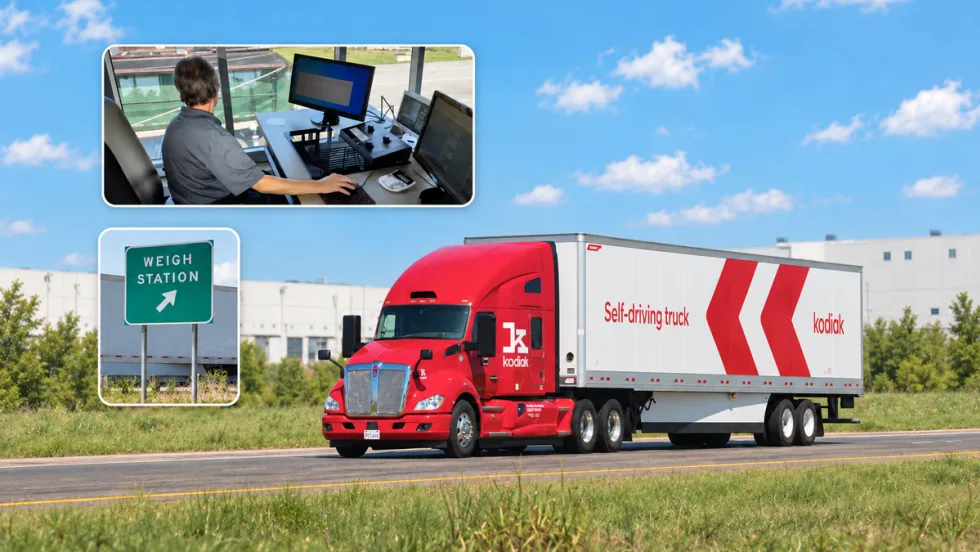
PrePass, Kodiak Connect Driverless Trucks to Roadside Enforcement
The system will allow enforcement agencies to verify Enhanced Inspection information and decide whether Kodiak’s autonomous trucks can bypass roadside screening sites.
Read More →

From One Generation to the Next: How Mentorship Builds Safer Truck Drivers
After three decades in trucking, Harold Perry shares what he's learned about driver safety, mentorship, and helping the next generation build confidence behind the wheel.
Read More →
FMCSA Pauses Biennial-Update Enforcement Amid Motus Transition
Carriers whose updates were due on or after June 1 have more time, while FMCSA works to stabilize its new registration system and warns of phishing sites impersonating its new carrier registration system, Motus.
Read More →
ZF Expands Commercial Vehicle Push in North America
ZF is expanding its North American commercial-vehicle presence with new transmission applications, electrification, trailer technology and autonomous-driving systems.
Read More →
Truck Drivers Need More Than Another Alert
Fleets have more visibility into truck health, safety events, and driver activity than ever. The next challenge is turning all that information into useful guidance for the person who has to decide what to do next.
Read More →
Tesla Wants a Self-Driving Semi. Are Cameras Enough?
Could Tesla’s camera-only autonomous driving technology work on an 80,000-pound Semi? In this commentary, HDT's Deborah Lockridge takes a look at Tesla, Cybercab, and how autonomous trucks see the road.
Read More →
What DOT’s Automated Vehicle Strategy Means for Trucking
The U.S. Department of Transportation issued a new automated-vehicle strategy that outlines plans for driverless-truck regulations, cross-state freight corridors, and federal safety standards.
Read More →
NYC Expands Speed, Pedestrian Safety Tech Across Fleet
New York City is expanding intelligent speed assistance and pedestrian-alert systems across its municipal fleet, moving the technologies from pilot programs into vehicle procurement and retrofit requirements.
Read More →