




Sleep Apnea Program Offered Commercial Motor Carriers
Precision Pulmonary Diagnostics, creators of a sleep apnea detection and treatment program targeted toward the commercial vehicle industry, announced full availability of its comprehensive solution for enhancing truck driver safet
Precision Pulmonary Diagnostics, creators of a sleep apnea detection and treatment program targeted toward the commercial vehicle industry, announced full availability of its comprehensive solution for enhancing truck driver safety
and lowering health care costs for motor carriers.
The announcement follows completion of nearly three years of design and testing of Precision Pulmonary's patent-pending online screening tool and sleep apnea detection and treatment program.
In conjunction with Schneider National, Dr. Mark Berger, president of Precision Pulmonary, reported that all necessary aspects of research and development were covered. In addition, Houston-based SYSCO Corp., North America's leading foodservice marketer and distributor, will begin the program in the fall. "Working with Schneider to fine-tune our program was, and continues to be, a great opportunity," he said. "We are very pleased with the results they have experienced so far and look forward to working with SYSCO."
SYSCO will begin using the online screening tool with a select number of drivers in the fall. Pending the results from the initial testing, additional areas of the company will begin testing as well.
"We recognize sleep apnea as a problem that we can address in a proactive manner," said Sandra Carson, assistant vice president of safety & crisis management for SYSCO. "From what we have seen, Precision Pulmonary's program is designed to quickly and effectively diagnose and treat our employees, and we are looking forward to getting started."
"When government and industry-led sleep apnea studies showed that 28 percent of truck drivers were at risk, we knew this was an area in which we needed to focus," said Wendy Sullivan, RN/occupational health manager at Schneider National. "Precision Pulmonary's program is designed for trucking. They understand the drivers' world of 'don't take me out of service' and 'don't make me wait'. That was very important to us and to the success of the program."
According to Angela Fish, Schneider National director of benefits, post treatment for the 778 drivers that were found to have sleep apnea and treated for it, Schneider National is realizing:
• A savings of $500-$708 in health care costs per treated driver per month
• A 30 percent reduction in accident frequency due to eliminating driver fatigue
• A 1.9 times improvement in driver retention
"In partnership with Precision Pulmonary," explained Fish, "we reduced our healthcare costs an average of 58% for our treated drivers. This program has been a huge success for us."
For more information go to www.precisionpulmonary.com.
More Safety & Compliance
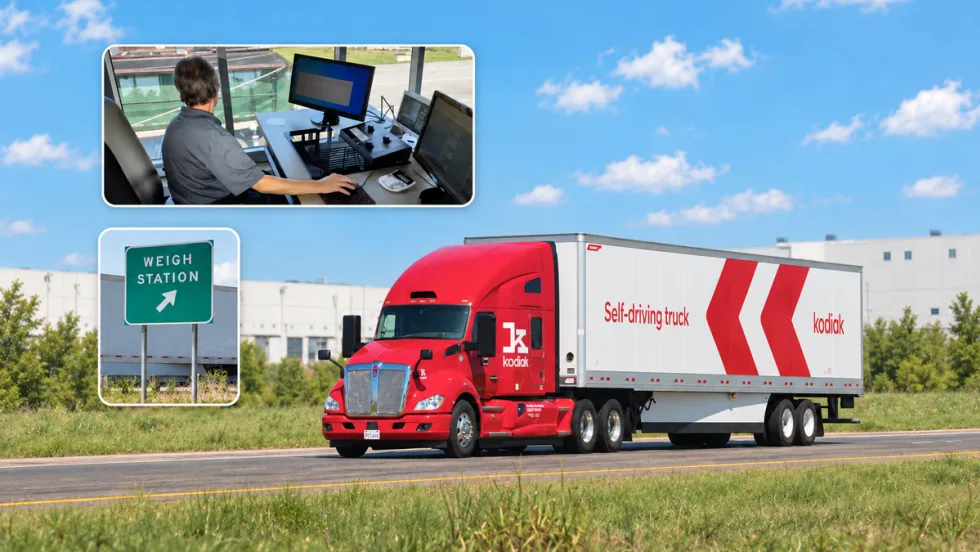
PrePass, Kodiak Connect Driverless Trucks to Roadside Enforcement
The system will allow enforcement agencies to verify Enhanced Inspection information and decide whether Kodiak’s autonomous trucks can bypass roadside screening sites.
Read More →
From One Generation to the Next: How Mentorship Builds Safer Truck Drivers
After three decades in trucking, Harold Perry shares what he's learned about driver safety, mentorship, and helping the next generation build confidence behind the wheel.
Read More →
FMCSA Pauses Biennial-Update Enforcement Amid Motus Transition
Carriers whose updates were due on or after June 1 have more time, while FMCSA works to stabilize its new registration system and warns of phishing sites impersonating its new carrier registration system, Motus.
Read More →
ZF Expands Commercial Vehicle Push in North America
ZF is expanding its North American commercial-vehicle presence with new transmission applications, electrification, trailer technology and autonomous-driving systems.
Read More →
Truck Drivers Need More Than Another Alert
Fleets have more visibility into truck health, safety events, and driver activity than ever. The next challenge is turning all that information into useful guidance for the person who has to decide what to do next.
Read More →
Tesla Wants a Self-Driving Semi. Are Cameras Enough?
Could Tesla’s camera-only autonomous driving technology work on an 80,000-pound Semi? In this commentary, HDT's Deborah Lockridge takes a look at Tesla, Cybercab, and how autonomous trucks see the road.
Read More →
What DOT’s Automated Vehicle Strategy Means for Trucking
The U.S. Department of Transportation issued a new automated-vehicle strategy that outlines plans for driverless-truck regulations, cross-state freight corridors, and federal safety standards.
Read More →
NYC Expands Speed, Pedestrian Safety Tech Across Fleet
New York City is expanding intelligent speed assistance and pedestrian-alert systems across its municipal fleet, moving the technologies from pilot programs into vehicle procurement and retrofit requirements.
Read More →
FMCSA Removes 110 Truck Driver Training Schools from Certified ELDT List
Federal regulators also are targeting more than 160 additional training providers and launching a nationwide audit of third-party CDL skills testers as part of a broader crackdown on trucking fraud.
Read More →
Beyond DOT Compliance: What Makes a Trucking Fleet Truly Safe?
A trucking fleet can follow every rule and still make unsafe decisions. The real test comes when safety conflicts with freight, productivity, or cost.
Read More →