





More DOT News: Trucking Groups Applaud Confirmation of Derek Barrs as FMCSA Administrator
Senate Confirms New Head of Multimodal Freight Office
“Industry has long lamented the fact that ‘freight doesn’t vote.’ The introduction of the Freight Office was hailed as finally giving a voice to freight," said Michael Rutherford, the new Assistant Secretary for Multimodal Freight Infrastructure & Policy.
October 8, 2025
Credit:
HDT Graphic/USDOT
5 min to read
The Senate recently confirmed Michael Rutherford as the first Assistant Secretary for Multimodal Freight Infrastructure & Policy. He will head up the relatively new Office of Multimodal Freight Infrastructure and Policy, or the Multimodal Freight Office for short, working on initiatives related to the efficient movement of freight across all modes.
The office was established in 2023 during the Biden Administration to oversee the maintenance and improvement of the nation’s freight network and supply chains across transportation modes. It was originally conceived in the 2020 National Freight Strategic Plan.
In Rutherford’s prepared testimony before the Senate Committee on Commerce, Science, and Transportation on July 23, he noted, “Industry has long lamented the fact that ‘freight doesn’t vote.’ The introduction of the Freight Office was hailed as finally giving a voice to freight. While much has been accomplished, still much more is expected.”
Rutherford is responsible for developing national freight policy and data-sharing initiatives while working closely with industry and transportation leaders as well as state and local DOTs, according to a DOT news release.
He will also oversee all freight-related grant programs, research efforts, and lead working groups across the DOT, including efforts related to tackling the problem of cargo theft.
Rutherford's Experience
Rutherford, after a stint in retail in Europe, joined CSX in 2008, starting out in Intermodal “before ultimately managing everything moving on the railroad except Intermodal and Coal,” as he said during his testimony.
“The mission of the Freight Office goes well beyond simply creating ease-of-doing business by establishing a primary (though not sole) point of contact for all things freight-related.
"Ad hoc coordination must make way for a more systematic and holistic approach to freight planning throughout U.S. DOT, while partnering with state DOTs and across the administration as appropriate.”
More About the Multimodal Freight Office
Congress specified that OST-F shall:
Administer and oversee certain multimodal freight grant programs
Promote and facilitate the sharing of information between the private and public sectors with respect to freight issues
Conduct research on improving multimodal freight mobility, and oversee the freight research activities of the various agencies within the department
Assist cities and states in developing freight mobility and supply chain expertise
Liaise and coordinate with other federal departments and agencies
The Multimodal Freight Office was part of DOT’s implementation of the Bipartisan Infrastructure Law. Initially, it was led by Deputy Assistant Secretary for Multimodal Freight Infrastructure and Policy Allison Dane Camden, who held that position until January of this year.
The deputy assistant secretary position over the freight office is currently held by Cathy Gautreaux, who at one time was deputy administrator of the Federal Motor Carrier Safety Administration before moving to the National Highway Traffic Safety Administration.
Freight Office Initiatives
The Multimodal Freight Office has not been sitting around waiting for Rutherford’s confirmation. There are several initiatives currently underway.
National Multimodal Freight Network
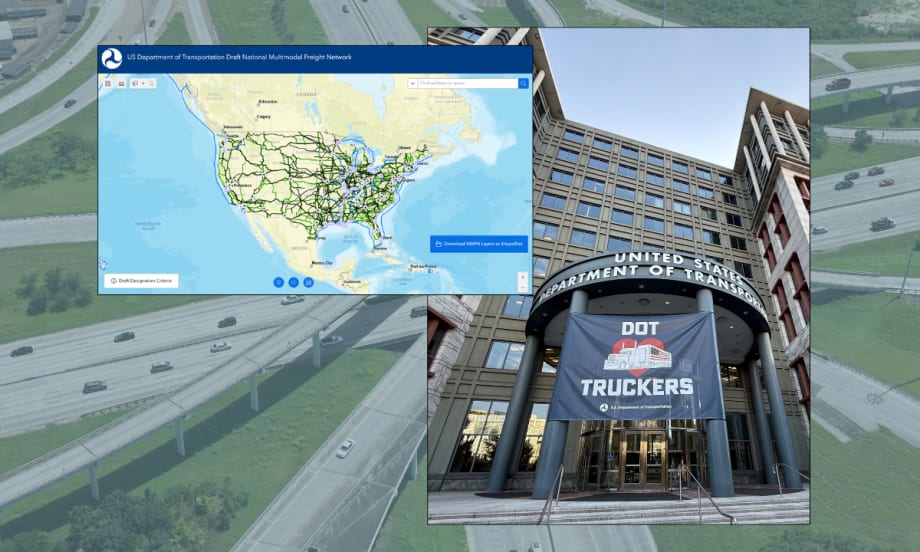
The draft map of the National Multimodal Freight Network, which will designate highways, railways, waterways, ports and airports that are critical to freight movement and global and domestic supply chains, was published for public comment by the DOT shortly before President Trump took office in January.
In his testimony, Rutherford said, “The proposed Draft National Multimodal Freight Network, with over 78 thousand roadway miles, 80 thousand rail miles, 21 thousand waterway miles, 140 marine ports and 65 airports, plays a fundamental role in much of the activities of the Freight Office.
"Given this significance, we must get it right. If confirmed, the Freight Office will follow up on all concerns regarding the current draft, including those regarding ‘missing mileage’ in some states.”
National Freight Strategic Plan
That network, he said, is foundational to the office’s 2025 update to the National Freight Strategic Plan published in 2020. A request for information on that update was published in July; comments were due in August.
According to the department’s website, the revised plan will “account for new goals, data-driven strategies, and emerging technologies shaping freight mobility, reliability, and resilience. The 2025 NFSP will inform the next half-decade of freight policy, investment, and innovation.”
As Rutherford explained in his testimony, “The National Freight Strategic Plan aims to drive and align with State DOT freight plans to bolster economic growth and international competitiveness based on a shared vision of the future.
“In addition to addressing bottlenecks and bringing key infrastructure back to a state of good repair, this requires identifying critical freight facilities and corridors with vital interconnections to enhance overall performance of our nation’s freight system.
“If confirmed, I will work to ensure the timely update of the National Freight Strategic Plan consistent with current market dynamics including shifting trade flows, the reshoring of manufacturing, and a renewed emphasis on industries of national importance.”
FLOW Program
The freight office also continues to advance DOT’s Freight Logistics Optimization Works (FLOW) program, which was a public-private initiative set up to greater transparency across supply chain networks, helping make the supply chain more resilient and adaptable in the face of disruptions such as the Covid-19 pandemic.
Rutherford in his testimony said that, “recognizing that you cannot manage what you do not know, Freight Logistics Optimization Works or FLOW provides freight stakeholders with invaluable supply chain visibility, enabling them to react more proactively to forward-looking changes in the operating environment at our nation’s ports.” However, he said there was still much potential for improvement.
Cargo Theft
Another initiative already under way regards cargo theft. The DOT published a “request for information” notice in September with a comment period that closes October 19.
In that notice, it says, “Although law enforcement agencies and industry stakeholders track incidents, reporting is fragmented and inconsistent, and national-level visibility is limited. DOT is uniquely positioned to improve coordination across modes, support data collection, and strengthen resilience by working with law enforcement, industry, industry and federal partners.”
More Fleet Management

Sponsored•September 16, 2026
Color Match Smarter: Tools That Restore & Perform
For fleet managers and collision repair professionals keeping heavy-duty trucks on the road, getting the color right the first time isn't just about appearance — it's about efficiency, turnaround time, and bottom-line results. Discover how today's digital color tools are transforming the repair process from guesswork to precision.
Read More →
FMCSA Pauses Biennial-Update Enforcement Amid Motus Transition
Carriers whose updates were due on or after June 1 have more time, while FMCSA works to stabilize its new registration system and warns of phishing sites impersonating its new carrier registration system, Motus.
Read More →
Sponsored•September 14, 2026
2026 Blueprint for Countering Smarter Supply Chain Theft
Cargo theft is no longer just the cost of doing business. It's a multi-billion-dollar criminal enterprise exploiting vulnerabilities across your fleet, drivers, and supply chain.
Read More →


Sponsored•September 1, 2026
How Telematics Improves Visibility, Control, and Performance in Refrigerated Fleets
Explore how telematics help refrigerated fleets improve visibility, uptime, efficiency, compliance, and cargo protection across connected cold chain operations.
Read More →
What the U.S.-Canada Trade War Means for Trucking
Escalating U.S.-Canada tariffs could disrupt cross-border freight, reduce truck volumes, raise costs, and create new uncertainty for carriers on both sides of the border.
Read More →
What Are Trucking’s Top Concerns for 2026?
The American Transportation Research Institute wants to know what's worrying trucking fleet managers, drivers, and other stakeholders in its annual Industry Issues survey.
Read More →
American Trucking Associations Looks for a New Leader
ATA President and CEO Chris Spear abruptly left his job at the association on August 21, at a pivotal time for the trucking industry.
Read More →
Public Wi-Fi Cybersecurity Risks: How Truck Drivers and Fleets Can Protect Their Data
Public Wi-Fi can expose truck drivers and fleets to credential theft, malware, and other cyber threats. Here’s how to reduce the risk on the road.
Read More →
For Nicky Cupp, Fleet Innovation Starts With Frustration
HDT Truck Fleet Innovator Nicky Cupp turns everyday pain points at Fraley & Schilling into opportunities for better technology and smarter processes.
Read More →
Adam Buttgenbach’s Approach to Electric Trucks: Start With Where They Fit
HDT Truck Fleet Innovator Adam Buttgenbach helped PepsiCo build one of North America’s largest EV fleets by focusing on where electric trucks make operational sense.
Read More →