




Senate Committee First Out of Chute with Highway Bill
Last week the Senate Environment and Public Works Committee unanimously reported out a bill that would reauthorize the federal highway program for two years. One move does not make a chess game, but it's a welcome developmen
Last week the Senate Environment and Public Works Committee unanimously reported out a bill that would reauthorize the federal highway program for two years. One move does not make a chess game, but it's a welcome development
for those in the transportation community who have been waiting for action since the current program expired more than two years ago.
The measure faces daunting obstacles to passage by the full Senate.
Most significantly, it still is missing a key funding provision. The bill calls for $109 billion over the two years, which would keep spending at current levels plus inflation, but the funding that will be available from the Highway Trust Fund falls about $12 billion below that.
The EPW Committee is counting on one of its key members, Sen. Max Baucus, D-Mont., who also chairs the Senate Finance Committee, to find the $12 billion.
"We will, one way or another, by hook or crook, find the resources on a bipartisan basis to pay for this bill," Baucus said at yesterday's markup session.
Baucus said that he thought he had found the money in a tax law change regarding the calculation of modified adjusted gross income, but the House got to it first to pay for the repeal of the 3% withholding requirement on payments to government vendors.
Sen. James Inhofe, R-Okla., the ranking Republican on the committee, made it clear that if the money cannot be found, the bill will not move forward.
"Everything we're doing today is predicated on finding an additional $12 billion," he said. The bill "is not going anywhere outside of this committee until we find that funding. In the event that doesn't happen, it's back to the drawing board."
Hurdles Ahead
Another hurdle the bill must clear is achieving consensus on how highway funds are distributed among the states. Under population-based distribution formula, some states get more money than they collect through the Highway Trust Fund, while others get less. This leads to a political tug-of-war that still must be fought.
In addition, there is much more work to be done by other Senate committees on the highway package. This bill, called Moving Ahead for Progress in the 21st Century (MAP-21), is just one of several measures the Senate must pass.
The Senate Finance Committee must clear the funding portion. The Senate Banking Committee has jurisdiction over transit issues and has been working on an infrastructure bank initiative. And the Senate Commerce Committee is working on a safety bill that may go to markup next month.
MAP-21 consolidates some 90 federal transportation programs down to fewer than 30, in order to eliminate duplication and focus resources. For example, it would merge the Interstate Maintenance, National Highway System and part of the Highway Bridge programs into one program that focuses on the most critical stretches of road.
The bill also eliminates earmarks, and proposes reforms to expedite project delivery.
In addition, it boosts funding for the Transportation Infrastructure Finance and Innovation program, which leverages federal money by providing loans, loan guarantees and lines of credit to pay for highway projects of national and regional significance. Funding would go from $122 million to $1 billion a year, and the cap on federal cost-sharing would go from 33% to 49%.
The bill would create a new National Freight Network Program, which would provide funds to states to improve cargo movement and intermodal connectors.
Other Provisions
Other provisions target performance management issues. For example, the bill would hold states and metropolitan planning organizations accountable for improving the condition and performance of their assets, the committee said in its summary. It also aims to improve planning processes to help states and MPOs make better use of their resources.
The bill contains an important compromise over funding for transportation enhancements, projects such as bicycle and pedestrian paths, and beautification.
"This was a huge problem, a divide between Democrats and Republicans," said Sen. Boxer. The solution, which many committee members publicly embraced, is to keep dedicated funding for enhancements but give states more flexibility to choose how to spend the money.
The bill also contains a "Jason's Law" provision, which would provide funding for truck parking facilities. This commemorates truck driver Jason Rivenburg, who was murdered in March, 2009, while parked at an abandoned gas station in South Carolina, a place drivers frequented because they could not find space at established rest areas.
The bill does not address truck weight issues. The leaders of the EPW Committee decided not to accept any weight amendments in order to move the bill quickly, according to a spokesperson for the Coalition for Transportation Productivity.
CTP, which aims to get weight reform into the final reauthorization bill, is focusing its efforts on the House version of the bill. The coalition's measure would allow states to raise the truck weight limit from 80,000 to 97,000 pounds on Interstate highways, provided the truck is equipped with at least six axles. It includes a provision to increase the heavy vehicle use tax from $550 to $800 a year, to cover the additional expense that these trucks would cause for bridge maintenance.
Reaction
Reaction from the highway community was generally positive, with reservations.
"It's a step forward, but we're not near the finish line," said Mary Phillips, senior vice president for legislative affairs at American Trucking Associations.
ATA is very supportive of the bill's focus on freight, she said. "The pie is not getting any bigger, and giving freight $2 billion, that's pretty significant."
Phillips also is pleased that the bill does not expand tolling on the Interstate System, and she noted that it requires projects such as trails and safe roads to schools to compete with other projects for funding.
Like most of the highway community, ATA prefers the six-year term that the House is considering in its bill, over the shorter term of this bill. The EPW Committee, led by Sen. Barbara Boxer, D-Calif., believes the two-year approach makes it easier to raise the money for full funding, and creates some breathing room for coming to agreement on how to raise more money for a long-term bill.
One concern ATA has about the bill is that it increases the eligibility of rail, maritime and transit projects for National Highway System funds, Phillips said.
In addition, ATA has concerns about the expansion of the TIFIA program because it may open the door to increased use of tolling as a way to pay back project loans. Phillips noted, however, that the payback does not necessarily require tolling. "We're not a great supporter of TIFIA, but it's not our biggest concern," she said.
ATA President and CEO Bill Graves applauded the bill's approach to reforming the Department of Transportation.
"By consolidating the myriad of federal programs into just a handful of major initiatives, including one dedicated solely to the movement of freight, this draft ensures that federal dollars will be spent more wisely," Graves said in a statement.
John Horsley, executive director of the American Association of State Highway and Transportation Officials, commended the committee for trying to preserve existing levels of highway investment and urged quick action in the next step.
"After more than two years of short-term extensions and with an economy desperate for an immediate boost, action on this multiyear surface transportation reauthorization bill should occur as soon as possible," Horsley said.
"We fully recognize that money alone will not deliver the transportation network our nation requires, and that is why we strongly support program reforms. We also believe that failing to supplement current Highway Trust Fund revenues would lead to a mo
More Drivers
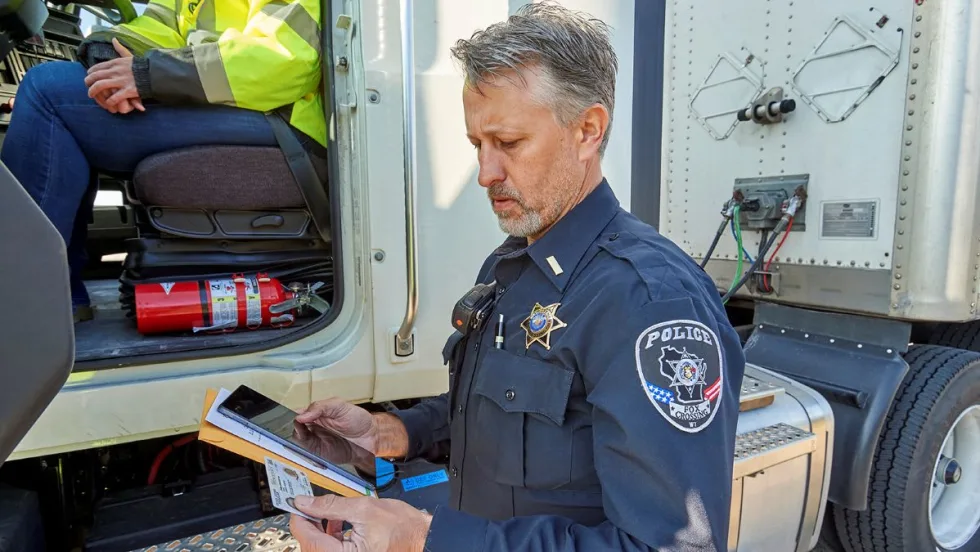
When Language Stops the Truck: The Return of ELP Out-of-Service Orders
English language proficiency rules for commercial drivers aren’t new, but renewed out-of-service enforcement has raised the stakes. Here’s what carriers need to know before a driver reaches a roadside inspection.
Read More →
Samsara Launches Custom AI Agent Builder
Agent Studio lets fleets create AI tools for hours-of-service monitoring, reporting and driver support, including agents that communicate by phone.
Read More →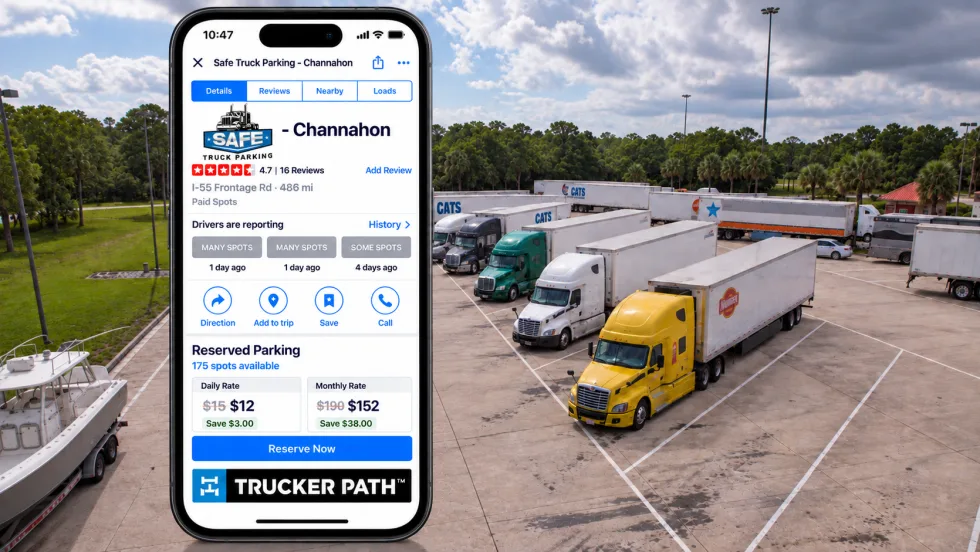
Trucker Path Expands Reserved Parking Network
Trucker Path has added close to 6,000 more truck parking spaces to its Trucker Path Reserved Parking Network with the addition of Safe Truck Parking.
Read More →
EEOC Sues Texas Trucking Company Over Driver Age Limits
The agency says Trancasa USA rejected applicants over 65 and applied tougher driving-record standards to those over 60.
Read More →
Nussbaum, Roehl Announce Second Driver Pay Increase This Year
This year has seen a swath of major truck driver pay increases as freight capacity has tightened.
Read More →
From One Generation to the Next: How Mentorship Builds Safer Truck Drivers
After three decades in trucking, Harold Perry shares what he's learned about driver safety, mentorship, and helping the next generation build confidence behind the wheel.
Read More →
Truck Drivers Need More Than Another Alert
Fleets have more visibility into truck health, safety events, and driver activity than ever. The next challenge is turning all that information into useful guidance for the person who has to decide what to do next.
Read More →
FMCSA Removes 110 Truck Driver Training Schools from Certified ELDT List
Federal regulators also are targeting more than 160 additional training providers and launching a nationwide audit of third-party CDL skills testers as part of a broader crackdown on trucking fraud.
Read More →
Hours of Service Pilot Programs: FMCSA Readies for 2027 Rollout
Two pilot programs could eventually reshape hours-of-service rules, giving truck drivers options to pause their 14-hour clock or use longer split sleeper rest periods.
Read More →
Medical Cards, English Proficiency Reshape Roadcheck Violations
Medical-card violations jumped to the top of the driver out-of-service list during CVSA’s 2026 International Roadcheck, while English-language proficiency violations appeared among the leading violations for the first time.
Read More →