




Schneider Upgrades Mexico Direct Intermodal Service
Trucking company Schneider National has unveiled a new interchange offering for moving freight across the U.S.-Mexico border that it says is a faster, more efficient option for shippers.
Trucking company Schneider National has unveiled a new interchange offering for moving freight across the U.S.-Mexico border that it says is a faster, more efficient option for shippers.
Last month it began servicing Mexico cross-border intermodal loads through a steel-wheel interchange in Jackson, Miss. Schneider Intermodal’s Mexico Direct loads now travel between Chicago and Jackson on the Canadian National Railway and between Jackson and Mexico on the Kansas City Southern Railway.
“Until recently, a Mexico Direct shipment interchanged in Houston,” said Jim Filter, senior vice president, Intermodal Commercial Management, Schneider National. “There, it traveled 55 miles by truck, through a congested area, to get to the ramp that brought it to the next leg of the journey. The new interchange in Jackson eliminates all that. The load stays on the train and keeps moving, which saves customers at least one full day of transit time.”
Filter adds that Schneider is especially versed at simplifying International Commercial Terms (Incoterms), which often add complexity for cross-border shippers.
“CN believes its close collaboration with Schneider and KCS will make the complex border-crossing process a smooth and seamless one, improving supply chain efficiencies, lowering transit times and making our mutual customers more competitive in their markets,” said J. J. Ruest, CN executive vice-president and chief marketing officer.
In addition to its Mexico City–based operations, Schneider operates at four ramps in Laredo, Monterrey, San Luis Potosi and Toluca to service shippers’ freight needs.
Schneider has been operating its nonstop, borderless intermodal service since 2006,
More Fleet Management

How Telematics Improves Visibility, Control, and Performance in Refrigerated Fleets
Explore how telematics help refrigerated fleets improve visibility, uptime, efficiency, compliance, and cargo protection across connected cold chain operations.
Read More →
What the U.S.-Canada Trade War Means for Trucking
Escalating U.S.-Canada tariffs could disrupt cross-border freight, reduce truck volumes, raise costs, and create new uncertainty for carriers on both sides of the border.
Read More →
What Are Trucking’s Top Concerns for 2026?
The American Transportation Research Institute wants to know what's worrying trucking fleet managers, drivers, and other stakeholders in its annual Industry Issues survey.
Read More →

American Trucking Associations Looks for a New Leader
ATA President and CEO Chris Spear abruptly left his job at the association on August 21, at a pivotal time for the trucking industry.
Read More →
Public Wi-Fi Cybersecurity Risks: How Truck Drivers and Fleets Can Protect Their Data
Public Wi-Fi can expose truck drivers and fleets to credential theft, malware, and other cyber threats. Here’s how to reduce the risk on the road.
Read More →
For Nicky Cupp, Fleet Innovation Starts With Frustration
HDT Truck Fleet Innovator Nicky Cupp turns everyday pain points at Fraley & Schilling into opportunities for better technology and smarter processes.
Read More →
Adam Buttgenbach’s Approach to Electric Trucks: Start With Where They Fit
HDT Truck Fleet Innovator Adam Buttgenbach helped PepsiCo build one of North America’s largest EV fleets by focusing on where electric trucks make operational sense.
Read More →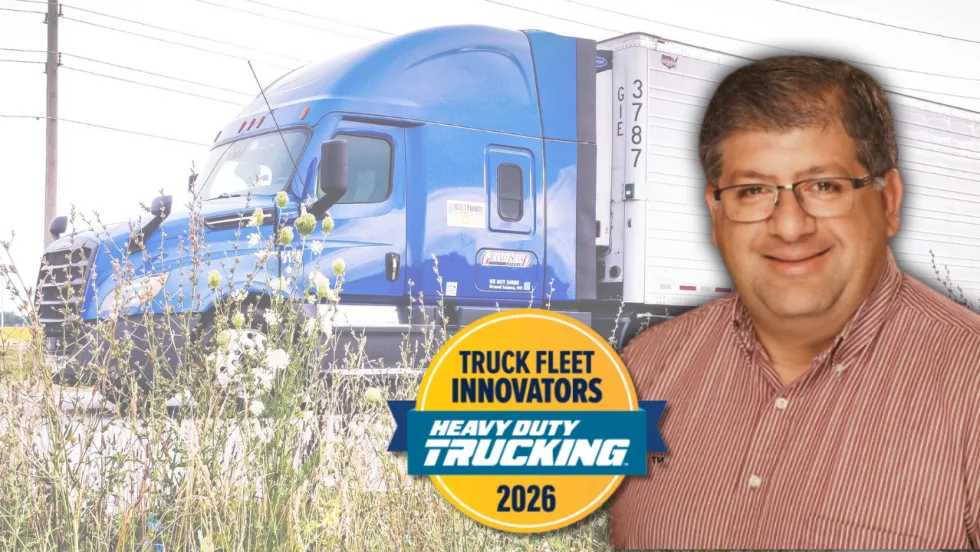
Deen Albert: Let Automation Do the Math, People Make the Decisions
HDT Truck Fleet Innovator Deen Albert makes sure people are still at the heart of operations at Grand Island Express, even while adopting artificial intelligence tools. AI-assisted dispatch helped boost revenue 25% with the same number of trucks.
Read More →
Trimble’s New AI Agent Takes Aim at Fleet Back-Office Busywork
Arc Agent works across Trimble TMS products to automate repetitive tasks such as freight orders, maintenance, invoices, fuel costs and more.
Read More →
How HDT’s 2026 Truck Fleet Innovators Are Rethinking Fleet Operations
Meet five trucking leaders who are challenging assumptions, solving operational problems, and putting innovative ideas to work.
Read More →