




Schneider National's Driver Training Program Lauded
Schneider National Inc. has received an Excellence in Practice Award from the American Society for Training and Development (ASTD).
Schneider National Inc. has received an Excellence in Practice Award from the American Society for Training and Development (ASTD).
The ASTD recognized nine companies with Excellence in Practice Awards, with Schneider National recognized in the Learning Technologies category for its simulation-based driver-training program.
"We are truly honored to be recognized by the world's foremost organization for training and development professionals," said Tim Fliss, executive vice president of human resources for Schneider National. "Schneider's driver training is known as the gold standard within its industry, and the achievement of this distinguished award drives us closer to becoming a most admired company among all industries."
In 2004, Schneider's driver training group implemented the use of simulation-based training using ground simulators, equipment similar to flight simulators but designed to develop skills for driving on roadways. Since then, the company has lowered its new driver dropout and termination rates by nearly 10 percent, and lowered accident frequency and severity by as much as 20 percent. Overall the implementation of simulation-based training has saved Schneider National millions of dollars.
"We are passionate about providing our drivers with the very best training, using the most advanced technology and learning platforms to protect their safety and the safety of the motoring public," said Don Osterberg, vice president, safety and driver training at Schneider National. "By implementing systems such as MPRI's driver training simulator, Schneider has created more effective teaching tools and a safer, more productive driver force."
More Safety & Compliance

A Camera Isn't a Safety Program. Here's What Brokers Are Screening for Now
Footage alone may not be enough to pass broker vetting processes. Here's what counts as a defensible safety program now.
Read More →
Marijuana and Trucking’s Drug-Testing Dilemma
Marijuana is getting stronger, laws are changing, and drug tests still can’t reliably establish impairment. What does that mean for truck drivers and the fleets that employ them?
Read More →
PrePass, Kodiak Connect Driverless Trucks to Roadside Enforcement
The system will allow enforcement agencies to verify Enhanced Inspection information and decide whether Kodiak’s autonomous trucks can bypass roadside screening sites.
Read More →

From One Generation to the Next: How Mentorship Builds Safer Truck Drivers
After three decades in trucking, Harold Perry shares what he's learned about driver safety, mentorship, and helping the next generation build confidence behind the wheel.
Read More →
FMCSA Pauses Biennial-Update Enforcement Amid Motus Transition
Carriers whose updates were due on or after June 1 have more time, while FMCSA works to stabilize its new registration system and warns of phishing sites impersonating its new carrier registration system, Motus.
Read More →
ZF Expands Commercial Vehicle Push in North America
ZF is expanding its North American commercial-vehicle presence with new transmission applications, electrification, trailer technology and autonomous-driving systems.
Read More →
Truck Drivers Need More Than Another Alert
Fleets have more visibility into truck health, safety events, and driver activity than ever. The next challenge is turning all that information into useful guidance for the person who has to decide what to do next.
Read More →
Tesla Wants a Self-Driving Semi. Are Cameras Enough?
Could Tesla’s camera-only autonomous driving technology work on an 80,000-pound Semi? In this commentary, HDT's Deborah Lockridge takes a look at Tesla, Cybercab, and how autonomous trucks see the road.
Read More →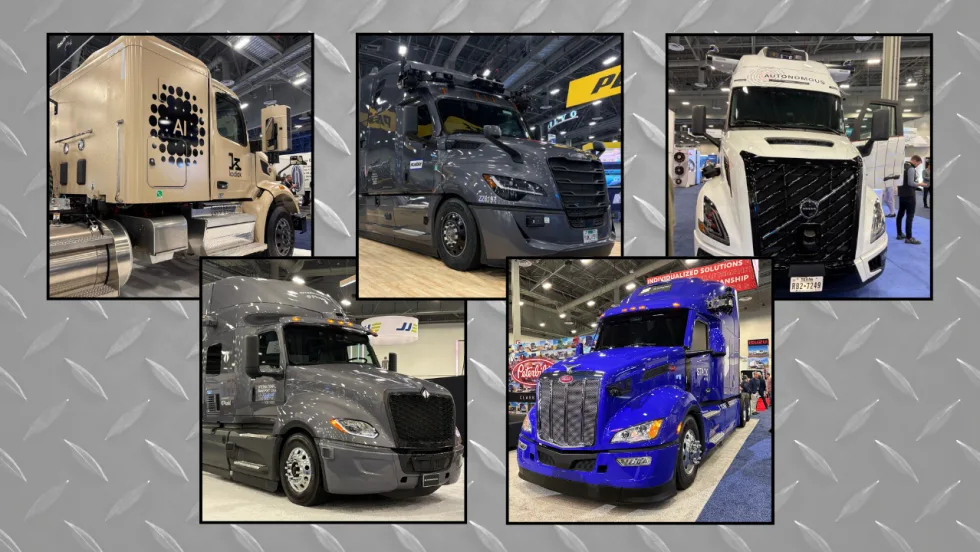
What DOT’s Automated Vehicle Strategy Means for Trucking
The U.S. Department of Transportation issued a new automated-vehicle strategy that outlines plans for driverless-truck regulations, cross-state freight corridors, and federal safety standards.
Read More →
NYC Expands Speed, Pedestrian Safety Tech Across Fleet
New York City is expanding intelligent speed assistance and pedestrian-alert systems across its municipal fleet, moving the technologies from pilot programs into vehicle procurement and retrofit requirements.
Read More →