





How to Make Automatic Emergency Braking Right For Your Fleet
Safety Group Calls for Updating Brake/Stop Lamp Regulations
A lot has changed since brake/stop lamp regulations were written, from LED lamps to electric trucks. It's time for those regulations to be updated, says the Transportation Safety Equipment Institute.
August 9, 2024
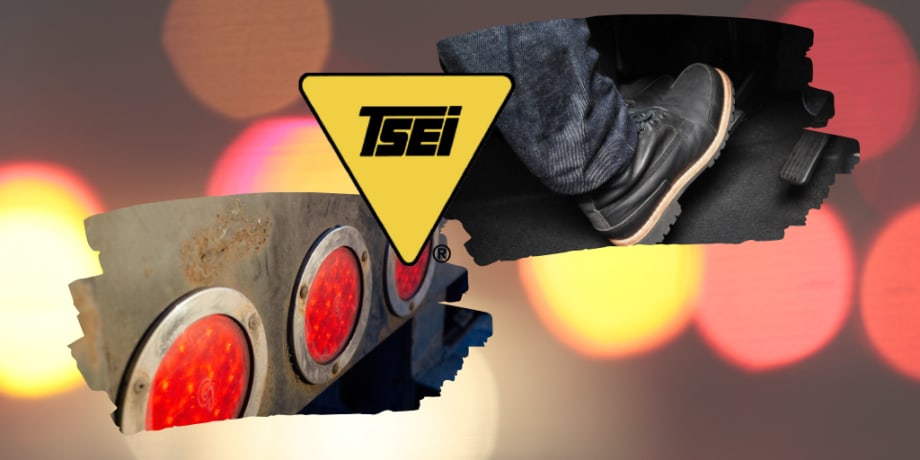
Stop lamps, or brake lights, may not let following drivers know if the vehicle is slowing or stopped under some conditions.
Image: HDT Graphic
3 min to read
Referencing a recent recall related to active brake assist, changing lighting technology, as well as the growing number of electric vehicles, the Transportation Safety Equipment Institute is calling for regulations for brake/stop lamps be updated.
As the industry deals with automated emergency braking, autonomous vehicles, automated driver assistance systems, pulsating brake lamps, and vehicles rear-ending stopped vehicles (such as garbage trucks, emergency vehicles, and trailers), the Institute reexamined original regulations and subsequent interpretations.
Established in 1962, the Transportation Safety Equipment Institute is a non-profit organization with a mission to enhance the safety of ground vehicles through government/industry collaboration and the advancement of lighting, reflective, audio, and video/vision technologies.
It recently issued a policy/position statement that identifies nine situations where brake/stop lamp operation may be inconsistent and could lead to more accidents.
Technology and our understanding regarding how the brain and eye function have advanced significantly over the last two decades, noted the group.
With the advent of LED lamps that are controlled by sophisticated electronics, NHTSA regulations put into place decades ago, before LEDs, need to be modernized, considering new information from neuroscience and human factors research.
Autonomous vehicles are in their infancy, the institute points out, “and now is the right time to establish how they will perceive the environment, detect vulnerable road users, and respond to stimuli registered by their sensors and cameras.”
Even on advanced safety systems that are a stepping-stone to autonomous vehicles, brake lights may be an issue. A recent recall was issued for a number of Freightliner Custom Chassis vehicles because the brake lights may not iluminate when the brakes are automatically applied during an active brake assist event.
What a Stop Lamp Doesn’t Tell You
Federal Motor Vehicle Safety Standard No. 108 refers to these devices as “stop lamps.” Two SAE standards incorporated in the regulations define “stop lamps” as “lamps which indicate the intention of the operator of a vehicle to stop or diminish speed by braking.”
“However, stop lamps are essentially braking lamps, which indicate an intention of the driver, regardless of what the vehicle is doing," says the institute. "For instance, if a driver releases his or her foot from the accelerator pedal, the vehicle will slow. This could be defined as a driver intent to slow the vehicle, but this simple action does not command illumination of the lamps.”
Some examples:
In a vehicle with an automatic transmission, the driver must keep a foot on the brake pedal to avoid the vehicle moving, except on an incline of “just the right” angle where the forward torque overcomes the gravity of the vehicle.
Several vehicles have a feature to stop the engine from running when the vehicle is stationary for some period of time. The engine may restart on its own to maintain electrical energy for accessories. The engine may be programmed to restart when the driver removes the foot from the brake pedal or when the accelerator pedal is depressed. It may not be necessary to depress the brake pedal when stopped.
Diesel-powered vehicles may have an exhaust brake or other engine retarder. These devices do not require the brake pedal to be depressed, so when activated, the stop lamps may or may not illuminate, even though the vehicle is slowing.
New electric vehicles often have a feature to use the regenerative forces of the motor to slow the vehicle. Many such vehicles allow for “one pedal” operation, making it possible to bring the vehicle to a completely stationary state without depressing the brake pedal. It does not appear to be standardized as to when or if the stop lamps should be illuminated under such conditions.
The TSEI recommends that NHTSA closely study current lighting and conspicuity technologies and behavioral and neuroscientific research, as well as exemptions, implementations, trends, state regulations, and other federal agency regulations (FHWA, FMCSA, etc.) to inform a rewrite of FMVSS 108 before 2027 with a compliance target of September 2029 (MY 2030).
Topics:Safety & Compliance
More Safety & Compliance
PrePass Intelligence Mines Fleet Bypass, Toll and Safety Data
PrePass Intelligence helps fleets measure bypass savings, flag potential toll overcharges, and spot suspicious transactions by combining data from separate systems.
Read More →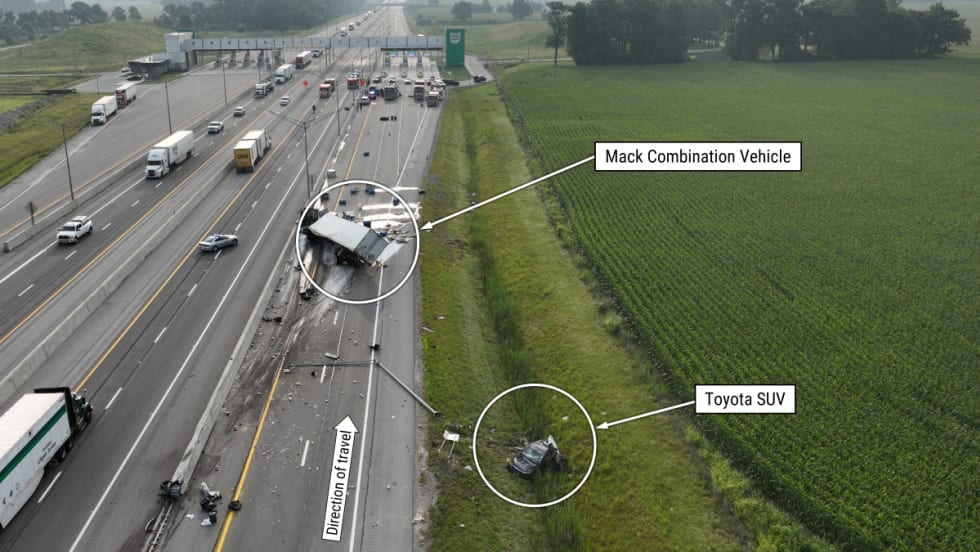
Fatal Crash Exposes Toll Plaza Risks
An NTSB investigation found that last-minute lane changes and large speed differences at an Ohio toll plaza created a hazard the truck driver couldn't avoid in time.
Read More →
When Language Stops the Truck: The Return of ELP Out-of-Service Orders
English language proficiency rules for commercial drivers aren’t new, but renewed out-of-service enforcement has raised the stakes. Here’s what carriers need to know before a driver reaches a roadside inspection.
Read More →
Sponsored•October 6, 2026
A Camera Isn't a Safety Program. Here's What Brokers Are Screening for Now
Footage alone may not be enough to pass broker vetting processes. Here's what counts as a defensible safety program now.
Read More →
Marijuana and Trucking’s Drug-Testing Dilemma
Marijuana is getting stronger, laws are changing, and drug tests still can’t reliably establish impairment. What does that mean for truck drivers and the fleets that employ them?
Read More →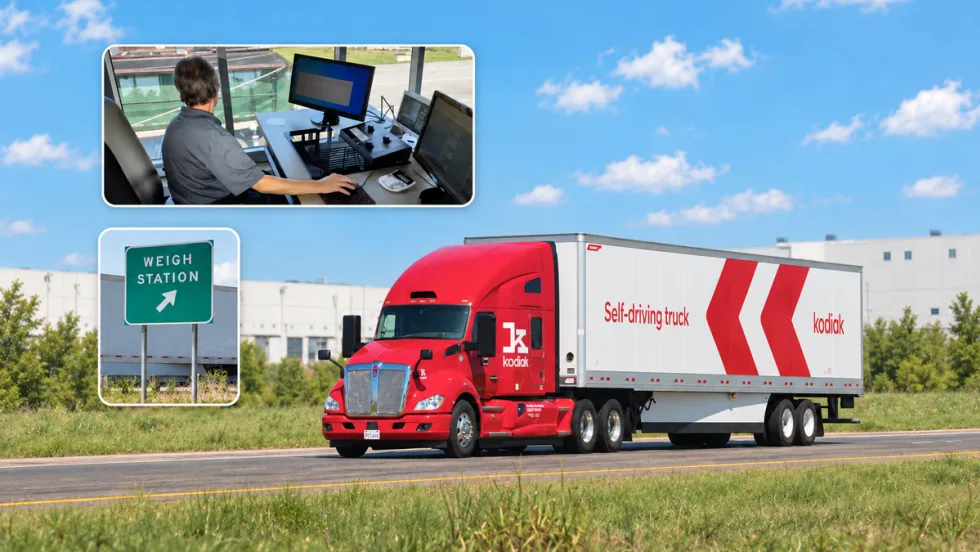
PrePass, Kodiak Connect Driverless Trucks to Roadside Enforcement
The system will allow enforcement agencies to verify Enhanced Inspection information and decide whether Kodiak’s autonomous trucks can bypass roadside screening sites.
Read More →
From One Generation to the Next: How Mentorship Builds Safer Truck Drivers
After three decades in trucking, Harold Perry shares what he's learned about driver safety, mentorship, and helping the next generation build confidence behind the wheel.
Read More →
FMCSA Pauses Biennial-Update Enforcement Amid Motus Transition
Carriers whose updates were due on or after June 1 have more time, while FMCSA works to stabilize its new registration system and warns of phishing sites impersonating its new carrier registration system, Motus.
Read More →
ZF Expands Commercial Vehicle Push in North America
ZF is expanding its North American commercial-vehicle presence with new transmission applications, electrification, trailer technology and autonomous-driving systems.
Read More →
Truck Drivers Need More Than Another Alert
Fleets have more visibility into truck health, safety events, and driver activity than ever. The next challenge is turning all that information into useful guidance for the person who has to decide what to do next.
Read More →