




Ryder Notches 15% Rise for Record Q1 Revenue of $2.2 Billion
Ryder has reported that in the first quarter of 2019, revenue and earnings before tax grew in all three of its business segments-- fleet management, dedicated transportation, and supply chain solutions.

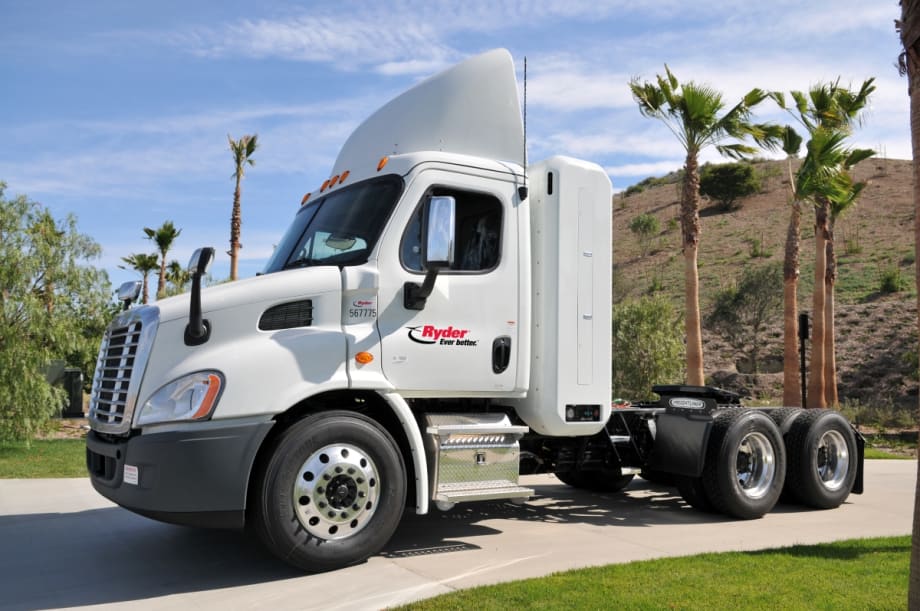
According to Ryder, it is "on pace" to meet or beat its 2019 revenue growth targets in all business segments.
Photo: Ryder System Inc.
Ryder System, Inc. (NYSE: R) reported on April 30 that in the first quarter of 2019, revenue and earnings before tax grew in all three of its business segments-- fleet management, dedicated transportation, and supply chain solutions. The Miami-based company said that performance reflected both new business and higher volumes.
First quarter GAAP EPS was up 24% to $0.87 and comparable EPS was up 16% to $1.11, reflecting revenue growth and improved operating performance, Ryder also stated.
"We are pleased to report double-digit operating revenue and earnings growth, driven by strong performance in our contractual businesses,” commented Ryder Chairman and CEO Robert Sanchez. “This growth reflects continued outsourcing trends and the impact of our sales and marketing initiatives. We outperformed our forecast, primarily due to better than anticipated impact of the new lease accounting standard and to a lesser extent stronger performance in ChoiceLease and Dedicated.”
He added that the company is “encouraged by accelerated growth in the ChoiceLease fleet, which increased organically by a record 4,200 vehicles this quarter, with 40% of the growth coming from customers new to outsourcing. Once these customers outsource their fleets to us, we typically expand and retain these relationships for decades.”
Sanchez stated that Ryder’s transactional rental and used vehicles sales businesses performed in line with expectations and that used vehicle inventory levels remain within our target range. He also said that both the Dedicated Transportation Solutions and Supply Chain Solutions businesses saw earnings improvement reflecting revenue growth and stronger operating performance.
"Turning to our longer-term strategic initiatives, we’re excited by the positive results we saw from our Atlanta pilot of COOP by Ryder and have expanded the platform to South Florida,” Sanchez added. He explained that COOPis the “first and only asset-sharing platform of its kind for commercial vehicles, which enables fleet owners to generate revenue from their underutilized vehicles and provides an asset-light earnings source for Ryder."
First Quarter Business Segment Operating Results
In the Fleet Management Solutions business segment, total revenue was $1.35 billion, up 9% compared with $1.24 billion in the year-earlier period. FMS operating revenue (a non-GAAP measure excluding fuel) was $1.14 billion, up 10% from the year-earlier period. Ryder ChoiceLease (lease) revenue increased 8%, reflecting a larger average fleet size and higher prices on replacement vehicles. The lease fleet grew by 4,200 vehicles for the quarter. Commercial rental revenue increased 15% from the prior year due to higher demand and pricing.
FMS earnings before tax were $60.9 million, up 12%, compared with $54.3 million in 2018, reflecting ChoiceLease and to a lesser extent commercial rental growth. Lease results benefited from fleet growth, reflecting strong outsourcing trends and our sales and marketing initiatives. Commercial rental performance improved due to stronger demand and higher pricing. Rental power fleet utilization was 74.9% for the first quarter consistent with the year-earlier period.
Both lease and rental performance benefited from a significant maintenance cost recovery item. These benefits were offset by higher depreciation of $8.6 million due to vehicle residual-value changes and accelerated depreciation, as well as higher liability insurance costs related to development of prior years' claims. In addition, overheads were higher, reflecting growth-related investments in sales, marketing, and technology.
Used vehicle results slightly declined from the prior year as increased sales of used vehicles at higher prices were offset by higher valuation adjustments on a larger inventory. FMS earnings before tax as a percentage of FMS total revenue and FMS operating revenue (a non-GAAP measure) were 4.5% and 5.3%, respectively, both are up by 10 basis points from the prior year.
In the Dedicated Transportation Solutions segment, total revenue was up 17% to $350 million and DTS operating revenue (a non-GAAP measure excluding fuel and subcontracted transportation) was up 17% to $236 million compared with the year-earlier period. DTS total and operating revenue growth reflects new business, customer expansions, and increased volumes.
DTS earnings before tax of $17.4 million increased 33% compared with $13.1 million in 2018, due to revenue growth, improved operating performance, and favorable insurance results related to development of prior years' claims. DTS earnings before tax as a percentage of DTS total revenue and DTS operating revenue (a non-GAAP measure) were 5.0% and 7.4%, respectively, up 60 and 90 basis points from the year-earlier period.
In the Supply Chain Solutions segment, total revenue was up 28% to $636 million and SCS operating revenue (a non-GAAP measure excluding fuel and subcontracted transportation) was up 25% to $477 million compared with the year-earlier period. SCS operating revenue growth largely reflects new business, increased volumes, and higher pricing. Total and operating revenue growth also reflects the acquisition of MXD Group, Inc., re-branded as Ryder Last Mile, during the second quarter of 2018.
SCS earnings before tax of $32.3 million increased 27% in the first quarter of 2019 compared with $25.5 million in 2018, driven by revenue growth. SCS earnings before tax as a percentage of SCS total revenue and SCS operating revenue (a non-GAAP measure) were 5.1% and 6.8%, respectively, down 10 basis points and up 10 basis points from the year-earlier period.
2019 Earnings Forecast
Commenting on the company’s outlook, Sanchez said, "We continue to see a healthy economic environment and customers remain confident in making long-term contractual commitments. In addition, demand for rental and used vehicles remains favorable, however, we continue to plan for a somewhat softer year-over-year comparisons in the second half. Overall, we are on track to meet our earnings expectations for the full year with a modestly better than expected impact from lease accounting.
"We are on pace to meet or beat our 2019 revenue growth targets in all business segments,” he continued. “In rental, our strategy to leverage e-commerce growth by expanding our medium-duty truck fleet is proceeding well. In used vehicles sales, we are expanding our retail sales capacity to handle additional volume and we continue to expect pricing to be slightly down, particularly in the second half of the year. In addition, we anticipate executing well on our recently announced maintenance cost initiative for the full year.”
Turning to the outlook for Ryder’s supply chain solutions business, Sanchez said that the company “expects revenue comparisons to turn negative in the second half of the year due to previously announced lost business; however, year-over-year earnings are expected to improve.
“In dedicated transportation solutions,” he added, “we expect continued improvements in operating performance. Finally, our capital spending and leverage outlook remains consistent with our prior expectations."
More Fleet Management

Color Match Smarter: Tools That Restore & Perform
For fleet managers and collision repair professionals keeping heavy-duty trucks on the road, getting the color right the first time isn't just about appearance — it's about efficiency, turnaround time, and bottom-line results. Discover how today's digital color tools are transforming the repair process from guesswork to precision.
Read More →
FMCSA Pauses Biennial-Update Enforcement Amid Motus Transition
Carriers whose updates were due on or after June 1 have more time, while FMCSA works to stabilize its new registration system and warns of phishing sites impersonating its new carrier registration system, Motus.
Read More →
2026 Blueprint for Countering Smarter Supply Chain Theft
Cargo theft is no longer just the cost of doing business. It's a multi-billion-dollar criminal enterprise exploiting vulnerabilities across your fleet, drivers, and supply chain.
Read More →


How Telematics Improves Visibility, Control, and Performance in Refrigerated Fleets
Explore how telematics help refrigerated fleets improve visibility, uptime, efficiency, compliance, and cargo protection across connected cold chain operations.
Read More →
What the U.S.-Canada Trade War Means for Trucking
Escalating U.S.-Canada tariffs could disrupt cross-border freight, reduce truck volumes, raise costs, and create new uncertainty for carriers on both sides of the border.
Read More →
What Are Trucking’s Top Concerns for 2026?
The American Transportation Research Institute wants to know what's worrying trucking fleet managers, drivers, and other stakeholders in its annual Industry Issues survey.
Read More →
American Trucking Associations Looks for a New Leader
ATA President and CEO Chris Spear abruptly left his job at the association on August 21, at a pivotal time for the trucking industry.
Read More →
Public Wi-Fi Cybersecurity Risks: How Truck Drivers and Fleets Can Protect Their Data
Public Wi-Fi can expose truck drivers and fleets to credential theft, malware, and other cyber threats. Here’s how to reduce the risk on the road.
Read More →
For Nicky Cupp, Fleet Innovation Starts With Frustration
HDT Truck Fleet Innovator Nicky Cupp turns everyday pain points at Fraley & Schilling into opportunities for better technology and smarter processes.
Read More →
Adam Buttgenbach’s Approach to Electric Trucks: Start With Where They Fit
HDT Truck Fleet Innovator Adam Buttgenbach helped PepsiCo build one of North America’s largest EV fleets by focusing on where electric trucks make operational sense.
Read More →