





Related: Ryder Turns to Uber to Transport Drivers and Technicians
Ryder System Expands COOP Peer-to-Peer Digital Rental Platform to South Florida
Ryder's COOP is a peer-to-peer digital platform that allows businesses to reliably and safely rent vehicles from each other, while offering a more cost-effective and accessible alternative to traditional rental methods.
January 24, 2019
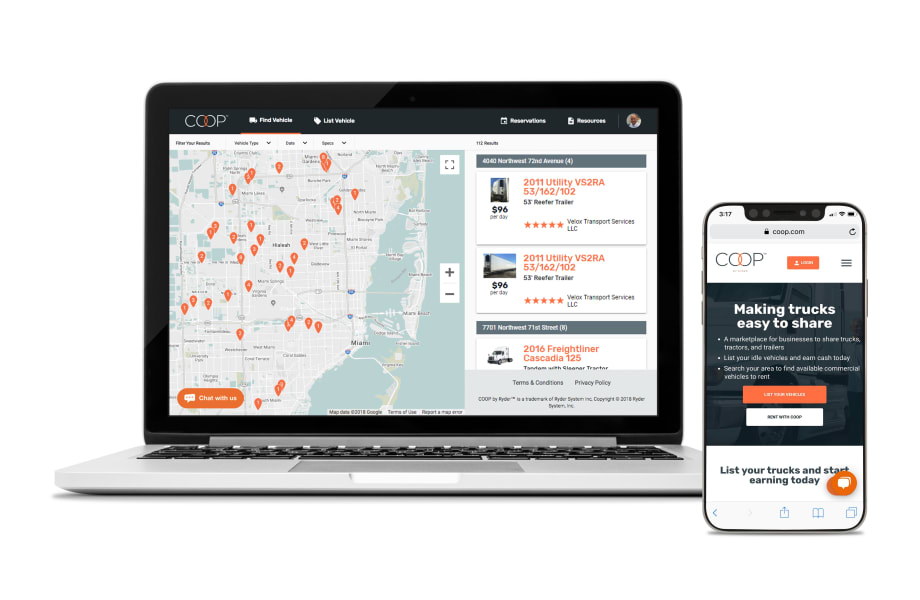
Ryder says the South Florida area is a natural fit for its COOP leasing and rental platform due to major capacity constraints stemming from nationwide truck utilization pressure as well as seasonality spikes in the area, especially around flower and tourism season.
Photo: Ryder System
2 min to read
Ryder System says it has launched its COOP truck rental platform into the South Florida market. COOP is a peer-to-peer digital platform that allows businesses to reliably and safely rent from each other, according to Ryder.
The company says the platform offers a more cost-effective and accessible alternative to the traditional rental counter, creating new ways for businesses and fleet owners to generate income and recoup costs from idle vehicles. Ryder says COOP is the first system of its kind for commercial vehicles.
Ryder said it selected South Florida as a next-step deployment to help customers working in and near the Port of Miami, a major hub for global commerce. It is also an area experiencing major capacity constraints stemming from nationwide truck utilization pressure. Seasonality spikes in the area, especially around flower and tourism season, are also contributing to a need for available box trucks, semi-trucks, trailers, and refrigerated vehicles in the region. Ryder says COOP is part of the solution to these challenges, as renters can use the flexibility of the platform to reserve trucks on a case-by-case basis.
One company that's excited to start generating revenue from its company vehicles through the COOP platform is Brokers Cartage, a Miami-based transportation company with a commercial fleet of dry and refrigerated vehicles. "We have seen the results of COOP in Georgia and are thrilled to join the platform," said Mario Allanic, operations manager at Brokers Cartage. "COOP is a great tool that makes a lot of sense for us in the South Florida market.”
According to Ryder, Atlanta-based companies including The Atlanta Opera, Sutherland's Foodservice, and Crossover Entertainment Group have seen a notable positive impact on their bottom lines from lending and borrowing underutilized trucks with COOP. In less than a year, companies that have used COOP to share trucks have generated nearly $7,000 on average, and some have netted over $30,000.
Since launch, Ryder has updated the COOP digital platform to include its 24/7 roadside assistance and free Uber rides to a pick-up location for borrowers. In addition, COOP offers a revenue calculator to help lenders estimate their earning potential. Based on user feedback, replacement vehicle coverage and advanced user ratings were added to the platform as well. In early 2019, lenders will also be able to set their own prices and access revenue summary analytics. A mobile application will be available for Android and iOS users in 2019.
More Fleet Management

Sponsored•September 16, 2026
Color Match Smarter: Tools That Restore & Perform
For fleet managers and collision repair professionals keeping heavy-duty trucks on the road, getting the color right the first time isn't just about appearance — it's about efficiency, turnaround time, and bottom-line results. Discover how today's digital color tools are transforming the repair process from guesswork to precision.
Read More →
FMCSA Pauses Biennial-Update Enforcement Amid Motus Transition
Carriers whose updates were due on or after June 1 have more time, while FMCSA works to stabilize its new registration system and warns of phishing sites impersonating its new carrier registration system, Motus.
Read More →
Sponsored•September 14, 2026
2026 Blueprint for Countering Smarter Supply Chain Theft
Cargo theft is no longer just the cost of doing business. It's a multi-billion-dollar criminal enterprise exploiting vulnerabilities across your fleet, drivers, and supply chain.
Read More →


Sponsored•September 1, 2026
How Telematics Improves Visibility, Control, and Performance in Refrigerated Fleets
Explore how telematics help refrigerated fleets improve visibility, uptime, efficiency, compliance, and cargo protection across connected cold chain operations.
Read More →
What the U.S.-Canada Trade War Means for Trucking
Escalating U.S.-Canada tariffs could disrupt cross-border freight, reduce truck volumes, raise costs, and create new uncertainty for carriers on both sides of the border.
Read More →
What Are Trucking’s Top Concerns for 2026?
The American Transportation Research Institute wants to know what's worrying trucking fleet managers, drivers, and other stakeholders in its annual Industry Issues survey.
Read More →
American Trucking Associations Looks for a New Leader
ATA President and CEO Chris Spear abruptly left his job at the association on August 21, at a pivotal time for the trucking industry.
Read More →
Public Wi-Fi Cybersecurity Risks: How Truck Drivers and Fleets Can Protect Their Data
Public Wi-Fi can expose truck drivers and fleets to credential theft, malware, and other cyber threats. Here’s how to reduce the risk on the road.
Read More →
For Nicky Cupp, Fleet Innovation Starts With Frustration
HDT Truck Fleet Innovator Nicky Cupp turns everyday pain points at Fraley & Schilling into opportunities for better technology and smarter processes.
Read More →
Adam Buttgenbach’s Approach to Electric Trucks: Start With Where They Fit
HDT Truck Fleet Innovator Adam Buttgenbach helped PepsiCo build one of North America’s largest EV fleets by focusing on where electric trucks make operational sense.
Read More →