




Roadway Conditions Key to Saving Lives
Roadway conditions were found to be a significant factor contributing to U.S. highway fatalities, accounting for more than half of death
Roadway conditions were found to be a significant factor contributing to U.S. highway fatalities, accounting for more than half of deaths
, according to a recent study by the Pacific Institute for Research and Evaluation.
The study, called "On a Crash Course: The Dangers and Health Costs of Deficient Roadways," reported that roadway deficiencies contributed to more than 22,000 fatalities and 38 percent of non-fatal injuries, costing the country more than $217 billion annually. In order to reduce highway deaths and costs, the Pacific Institute for Research and Evaluation calls for the U.S. government to make the roadway environment more protective and forgiving.
"If we put as much focus on improving road safety conditions as we do in urging people not to drink and drive, we'd save thousands of lives and billions of dollars every year," said Dr. Ted Miller, principal study author. "Safer drivers and safer cars remain vitally important, but safer roadways are critical to saving lives, preventing injuries and reducing costs."
Of the $217 billion in costs of roadway conditions, $20 billion went toward medical costs, $46 billion to productivity costs, $52 billion to property damage and other resource costs, and $99 billion to quality of life costs which measure the value of pain, suffering, and loss of enjoyment of life by those injured or killed in crashes and their families. In contrast, the U.S. is spending $59 billion annually in roadway capital improvements, according to the Federal Highway Administration. Crashes linked to road conditions are also costing American businesses an estimated $22 billion and taxpayers over $12 billion every year, the study found.
Other top costs in the study included $130 billion for alcohol, $97 billion for speeding and $60 billion for failing to wear a safety belt.
"Recent concerns about swine flu pale in comparison to the number of crash victims I treat," said Dr. Jared Goldberg, an emergency room physician in Alexandria, Va. "In medical terms, highway fatalities and injuries have reached epidemic proportions, and efforts to prevent further spread of this plague are essential. In the absence of a true vaccine to defend ourselves, fixing dangerous roads would help prevent traffic crashes from occurring in the first place."
The study recommends ways of improving the road systems to help save lives and reduce injuries, including replacing non-forgiving poles with breakaway poles, using brighter and more durable pavement markings, adding rumble strips to shoulders, mounting more guardrails or safety barriers, and installing better signs with easier-to-read legends. More large-scale suggestions included adding or widening shoulders, improving roadway alignment, replacing or widening narrow bridges, reducing pavement edges and abrupt drop offs, and clearing more space adjacent to roadways.
The report also measured crash costs by each state. Those with the highest total cost from crashes related to road deficiencies included Alabama, California, Florida, Georgia, Illinois, New York, North Carolina, Pennsylvania, Tennessee and Texas.
For more information on the study, visit www.transportationconstructioncoalition.org.
More Safety & Compliance
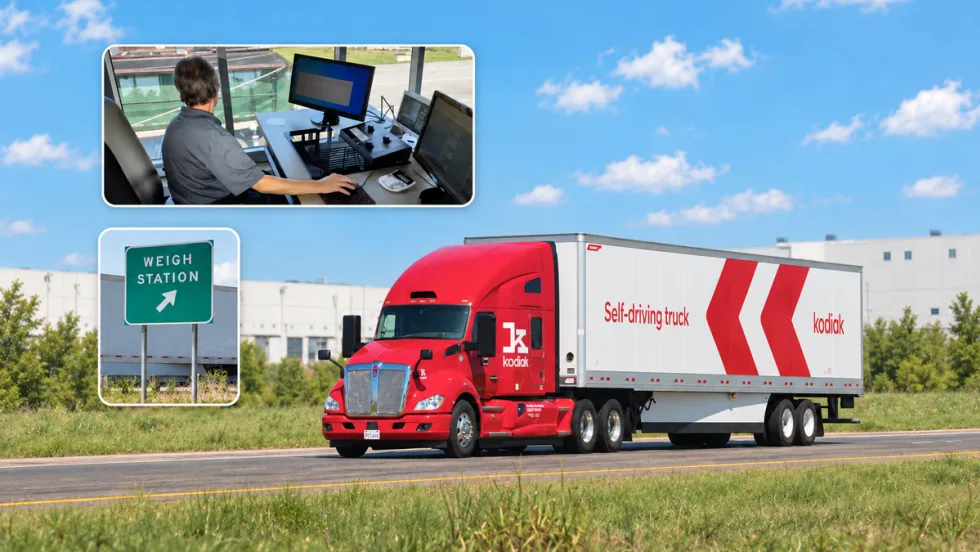
PrePass, Kodiak Connect Driverless Trucks to Roadside Enforcement
The system will allow enforcement agencies to verify Enhanced Inspection information and decide whether Kodiak’s autonomous trucks can bypass roadside screening sites.
Read More →
From One Generation to the Next: How Mentorship Builds Safer Truck Drivers
After three decades in trucking, Harold Perry shares what he's learned about driver safety, mentorship, and helping the next generation build confidence behind the wheel.
Read More →
FMCSA Pauses Biennial-Update Enforcement Amid Motus Transition
Carriers whose updates were due on or after June 1 have more time, while FMCSA works to stabilize its new registration system and warns of phishing sites impersonating its new carrier registration system, Motus.
Read More →
ZF Expands Commercial Vehicle Push in North America
ZF is expanding its North American commercial-vehicle presence with new transmission applications, electrification, trailer technology and autonomous-driving systems.
Read More →
Truck Drivers Need More Than Another Alert
Fleets have more visibility into truck health, safety events, and driver activity than ever. The next challenge is turning all that information into useful guidance for the person who has to decide what to do next.
Read More →
Tesla Wants a Self-Driving Semi. Are Cameras Enough?
Could Tesla’s camera-only autonomous driving technology work on an 80,000-pound Semi? In this commentary, HDT's Deborah Lockridge takes a look at Tesla, Cybercab, and how autonomous trucks see the road.
Read More →
What DOT’s Automated Vehicle Strategy Means for Trucking
The U.S. Department of Transportation issued a new automated-vehicle strategy that outlines plans for driverless-truck regulations, cross-state freight corridors, and federal safety standards.
Read More →
NYC Expands Speed, Pedestrian Safety Tech Across Fleet
New York City is expanding intelligent speed assistance and pedestrian-alert systems across its municipal fleet, moving the technologies from pilot programs into vehicle procurement and retrofit requirements.
Read More →
FMCSA Removes 110 Truck Driver Training Schools from Certified ELDT List
Federal regulators also are targeting more than 160 additional training providers and launching a nationwide audit of third-party CDL skills testers as part of a broader crackdown on trucking fraud.
Read More →
Beyond DOT Compliance: What Makes a Trucking Fleet Truly Safe?
A trucking fleet can follow every rule and still make unsafe decisions. The real test comes when safety conflicts with freight, productivity, or cost.
Read More →