




Roads Can Be Safer, Top Federal Highway Official Says
Acting Federal Highway Administrator Jim Ray issued a "call to arms" on highway safety last week, urging state Departments of Transportation to adopt more coordinated, systemwide approaches to reduce crashes
Acting Federal Highway Administrator Jim Ray issued a "call to arms" on highway safety last week, urging state Departments of Transportation to adopt more coordinated, systemwide approaches to reduce crashes.
"Safety is our top priority and, while the fatality rate on our nation's roads is the lowest in history, we are always seeking new ways to prevent tragedies where lives are lost," said Ray, the nation's top highway official. "We owe it to the traveling public to work even more creatively."
Each year, nearly 43,000 people - motorists, passengers and pedestrians - die on America's roads. Though the fatality rate - 1.41 per 100 million vehicle miles traveled - is the lowest in the nation's history, the number of fatalities has hovered at about the same point for nearly five years.
FHWA safety officials met with transportation officials and safety experts in an online conference - a "webinar" - as part of a new effort to improve roadway safety nationally. In it, the agency strongly recommended better use of nine tools that are key to reducing roadway fatalities each year:
* Roadway Safety Audits - State DOTs should formalize the use of these audits, which are comprehensive evaluations of existing or planned roads or intersections to identify potential safety improvements.
* Rumble Strips and Rumble Stripes - Used in centerline and shoulders, these cost-effective devices have shown demonstrable improvement in warning drivers of lane departure, reducing by 14 percent head-on collisions and opposite-direction sideswipe crashes. Shoulder rumble strips and stripes have shown a 38 percent reduction in run-off-road crashes on freeways, and between 13-18 percent on rural roads.
* Median Barriers - Used to separate opposing traffic on divided highways, these barriers have a long track record of reducing cross-median collisions. States are encouraged to consider using cable median barriers where appropriate to further heighten roadway safety.
* Safety Edge - This paving technique, giving a 30- to 35-degree slope to the road's edge, reduces the risk to drivers if their tire inadvertently falls over an otherwise near-vertical road-edge leading to loss of vehicle control and rollover crashes.
* Roundabouts - Roundabouts have demonstrated a 60- to 87-percent reduction in crashes.
* Turning Lanes at Stop-Controlled Intersections - at intersections with significant turning volume, turning lanes for right- and left-turns on major road approaches can dramatically reduce crashes - in some cases, by as much as 55 percent.
* Yellow Change Intervals - red-light running crashes at intersections, which too frequently result in fatalities, can be reduced by properly setting yellow-light signals. Studies show a one-second increase in the yellow signal interval can reduce red-light violations by as much as 50 percent.
* Medians and Pedestrian Refuge Areas in Urban and Suburban Areas - Raised medians or pedestrian refuge areas at pedestrian crossings at marked crosswalks have shown a 46 percent reduction in pedestrian crashes. FHWA recommends that medians be between 4 and 8 feet wide to improve pedestrian safety.
* Walkways - Ensuring a sidewalk or pathway exists near a roadway can reduce pedestrian crashes by as much 88 percent. FHWA recommends a pathway of at least 4 feet wide of stabilized or paved surface in areas routinely used by pedestrians.
To review the FHWA's new policy, please visit http://safety.fhwa.dot.gov/policy/memo071008.htm.
More Safety & Compliance
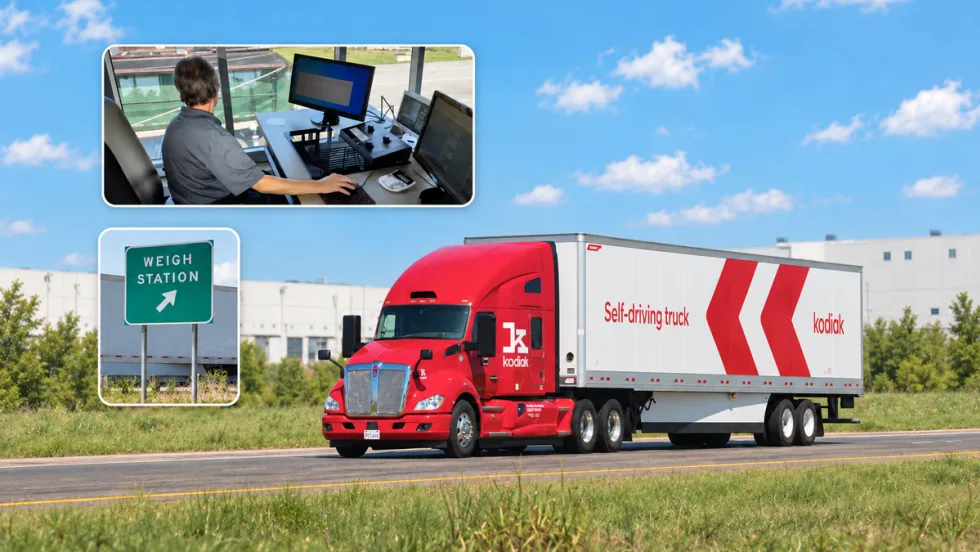
PrePass, Kodiak Connect Driverless Trucks to Roadside Enforcement
The system will allow enforcement agencies to verify Enhanced Inspection information and decide whether Kodiak’s autonomous trucks can bypass roadside screening sites.
Read More →
From One Generation to the Next: How Mentorship Builds Safer Truck Drivers
After three decades in trucking, Harold Perry shares what he's learned about driver safety, mentorship, and helping the next generation build confidence behind the wheel.
Read More →
FMCSA Pauses Biennial-Update Enforcement Amid Motus Transition
Carriers whose updates were due on or after June 1 have more time, while FMCSA works to stabilize its new registration system and warns of phishing sites impersonating its new carrier registration system, Motus.
Read More →
ZF Expands Commercial Vehicle Push in North America
ZF is expanding its North American commercial-vehicle presence with new transmission applications, electrification, trailer technology and autonomous-driving systems.
Read More →
Truck Drivers Need More Than Another Alert
Fleets have more visibility into truck health, safety events, and driver activity than ever. The next challenge is turning all that information into useful guidance for the person who has to decide what to do next.
Read More →
Tesla Wants a Self-Driving Semi. Are Cameras Enough?
Could Tesla’s camera-only autonomous driving technology work on an 80,000-pound Semi? In this commentary, HDT's Deborah Lockridge takes a look at Tesla, Cybercab, and how autonomous trucks see the road.
Read More →
What DOT’s Automated Vehicle Strategy Means for Trucking
The U.S. Department of Transportation issued a new automated-vehicle strategy that outlines plans for driverless-truck regulations, cross-state freight corridors, and federal safety standards.
Read More →
NYC Expands Speed, Pedestrian Safety Tech Across Fleet
New York City is expanding intelligent speed assistance and pedestrian-alert systems across its municipal fleet, moving the technologies from pilot programs into vehicle procurement and retrofit requirements.
Read More →
FMCSA Removes 110 Truck Driver Training Schools from Certified ELDT List
Federal regulators also are targeting more than 160 additional training providers and launching a nationwide audit of third-party CDL skills testers as part of a broader crackdown on trucking fraud.
Read More →
Beyond DOT Compliance: What Makes a Trucking Fleet Truly Safe?
A trucking fleet can follow every rule and still make unsafe decisions. The real test comes when safety conflicts with freight, productivity, or cost.
Read More →