




I-80 Toll Plan Rejected Again
Pennsylvania's efforts to put tolls on Interstate 80 have once again been thwarted, as the federal government rejected the third proposal the state has submitted for approval
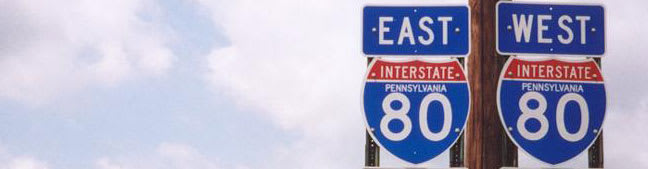
Pennsylvania's efforts to put tolls on Interstate 80 have once again been thwarted, as the federal government rejected the third proposal the state has submitted for approval.
The Pennsylvania Department of Transportation and the Pennsylvania Turnpike Commission submitted a joint application to the U.S. Department of Transportation's Federal Highway Administration last fall requesting permission to implement tolls on I-80. The application was the third such attempt by the Commonwealth after two previous applications were denied.
Federal rules require tolls on an interstate be dedicated to improvements on that highway. Pennsylvania's plan, however, called for the income from the tolls to be spread around the state, and so it was rejected.
Act 44 of 2007 called for the tolling of I-80 and additional revenue from the Pennsylvania Turnpike to provide $532 million per year for road and bridge repairs and $414 million per year for public transit agencies across the state.
Gov. Ed Rendell said he believed the federal regulators were wrong, according to Reuters news service, saying, "In these issues the Bush administration was much more favorable."
In 2008, the Federal Highway Administration rejected a similar proposal from the state, saying there was no basis to conclude that the proposed lease payments were legitimate operating costs.
In explaining that rejection, FHWA officials said, "Tolling interstates is a viable option for many states to fund highway improvements or to improve performance conditions. Because we are legally bound to ensure applications for this program meet all congressionally mandated requirements, however, we are regrettably unable to approve this application."
INDUSTRY REACTION
Many groups in trucking and other walks of life opposed the plan, including communities along I-80, which feared they would lose business.
A study released last fall found that tolling the highway would increase crash rates and decrease consumer spending along the route because truckers and vehicles would use alternative routes to avoid tolls.
The Owner-Operator Independent Drivers Association was quick to put out a statement praising the FHWA's decision, calling it "a great day for truckers, Pennsylvania taxpayers and all highway users." If passed, OOIDA, said, "such a contract would have locked the citizens of Pennsylvania into a contract that would negatively affect their children and grandchildren while the state's highway funding has disgracefully been squandered away on non-highway projects," said the statement.
NATSO, the group representing truckstop and travel plazas, called the decision "a major victory for highway-based businesses."
STATE FUNDING FALLOUT
According to the Philadelphia Inquirer, in anticipation of getting the approval, the Pennsylvania Turnpike Commission already has borrowed more than $2 billion to pay for transportation projects around the state. To repay that money, the commission will need to increase tolls on the Pennsylvania Turnpike in coming years.
Gov. Rendell plans to call a special session of the legislature to fill the gap left by the Federal Highway Administration decision.
"We have to deal with the fallout of this decision; there is no way that we can just do nothing," Rendell said. "We'll look at every option on the table. This is a dire situation with significant consequences."
Without I-80 toll revenues, funding for roads and bridges will be cut by about $300 million per year, according to the governor. This means PennDOT will not be able to repair about 100 bridges and 300 miles of roads each year. Funding for 73 public transit systems that provide more than 400 million rides a year to residents in all 67 counties will drop by $160 million per year, resulting in service cuts and fewer capital improvement projects.
Despite record state and federal investments in highways and bridges in the past seven years, Pennsylvania still has approximately 5,600 structurally deficient bridges -- the highest number of any state -- and approximately 6,000 miles of roads that are in need of repair, according to the governor's office.
"The people of Pennsylvania understand there is no free ride. They know what happened in Minneapolis and New Orleans," Rendell added. "People understand that if they want safe bridges, good roads, and potholes eliminated, you cannot wait for the pothole fairy to do it -- you've got to pay for it."
More Drivers

Truck Drivers Need More Than Another Alert
Fleets have more visibility into truck health, safety events, and driver activity than ever. The next challenge is turning all that information into useful guidance for the person who has to decide what to do next.
Read More →
FMCSA Removes 110 Truck Driver Training Schools from Certified ELDT List
Federal regulators also are targeting more than 160 additional training providers and launching a nationwide audit of third-party CDL skills testers as part of a broader crackdown on trucking fraud.
Read More →
Hours of Service Pilot Programs: FMCSA Readies for 2027 Rollout
Two pilot programs could eventually reshape hours-of-service rules, giving truck drivers options to pause their 14-hour clock or use longer split sleeper rest periods.
Read More →
Medical Cards, English Proficiency Reshape Roadcheck Violations
Medical-card violations jumped to the top of the driver out-of-service list during CVSA’s 2026 International Roadcheck, while English-language proficiency violations appeared among the leading violations for the first time.
Read More →
Driver Trust Can Make or Break the Success of Fleet Safety Technology
New Teletrac Navman research suggests that onboarding, transparency about driver data, and positive feedback can play a significant role in how commercial drivers respond to safety and coaching technology.
Read More →
EEOC Sues KLLM Over Alleged Sex Discrimination in Driver Training
KLLM is facing a federal sex-discrimination lawsuit over policies the EEOC alleges put female truck driver trainees at a disadvantage.
Read More →
FMCSA Moves to Codify English Language Requirements for Commercial Drivers
By changing regulations on English-language proficiency requirements for commercial drivers, rather than relying on a guidance memo, the FMCSA said future administrations won't be able to walk back the Trump administration's stricter enforcement with just a memo.
Read More →
Drivers Put Western Star Trucks to the Test at Star Nation Experience
Watch to get an inside look at the Western Star trucks, technology, and community behind the Star Nation Experience 2026!
Read More →
Trump Administration Looks to Put More Veterans Behind the Wheel
The Freedom Haulers program pulls together existing and expanded programs at several federal agencies to recruit veterans to drive commercial heavy-duty trucks and cut the red tape for them to get a CDL, training, and employment.
Read More →
Putting Mack’s Command Steer to the Test
A test drive of Mack’s Command Steer active steering system evaluates how it can make truck driving easier and less tiring.
Read More →