




President Calls for Measures to Address Oil Speculation
President Barack Obama proposed new measures Tuesday to address oil market manipulation, calling on lawmakers to increase penalties on those involved in manipulative practices and for increased funding for the agency that's supposed to police the markets
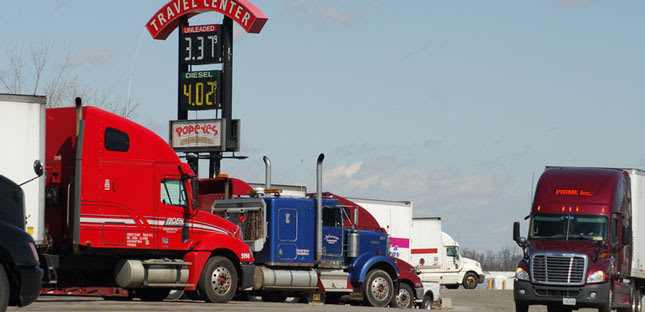
High fuel prices prompted President Obama to call for measures to limit oil market manipulation.
President Barack Obama proposed new measures Tuesday to address oil market manipulation, calling on lawmakers to increase penalties on those involved in manipulative practices and for increased funding for the agency that's supposed to police the markets.
"We can't afford a situation where speculators artificially manipulate markets by buying up oil, creating the perception of a shortage, and driving prices higher, only to flip the oil for a quick profit," Obama said in the White House Rose Garden.
Republicans, however, called the move a gimmick, saying the real solution is allow more oil drilling, while Democrats said it wasn't enough.
The five-part plan includes:
1. Requesting Immediate Funding to Put More "Cops on the Beat" Overseeing Oil Markets: The President is calling on Congress to pass an immediate increase in funding to support at least a six-fold increase in the surveillance and enforcement staff for oil futures market trading at the Commodity Futures Trading Commission.
2. Funding Critical Technology Upgrades in the Oversight and Surveillance of Energy Market Activity: The President is also requesting that Congress provide the CFTC funding for critical IT upgrades to strengthen monitoring of energy market activity.
3. Substantially Increasing Civil and Criminal Penalties for Manipulation in Key Energy Markets: The proposal includes a 10-fold increase in maximum civil and criminal penalties for manipulative activity in oil futures markets. These heightened penalties will make sure that penalties reflect the seriousness of misconduct.
4. Empowering the CFTC to Raise Margin Requirements in Oil Futures Markets: The president is also calling on Congress to act immediately to give the CFTC authority to direct exchanges to raise margin requirements to address increased price volatility or prevent excessive speculation or manipulation. This authority will help limit disruptions and reduce volatility in oil markets.
5. Taking Immediate Steps to Expand Access to CFTC Data to Better Understand Trading Trends in Oil Markets: These executive actions will allow additional analysis of CFTC's data to look for patterns and better understand trading activity in energy markets, according to the White House.
The CME Group, the world's largest operator of futures exchanges, said the actions could actually backfire. "Taking away from exchanges the ability to manage margins would make the markets less efficient, less tied to fundamentals and would create the potential to push the hedgers out of the market, which would make oil more expensive for all consumers," the company said in a statement.
Speculation is not the problem, said American Fuel & Petrochemical Manufacturers President Charles T. Drevna in a statement.
"To the extent that there is any manipulation in the marketplace, the government should investigate and take corrective actions," Drevna said. "Historical data shows speculators are not the primary force impacting prices at the pump. In fact, U.S. refiners count on financial markets to hedge against potentially higher crude oil costs, which work to prevent consumer costs from increasing further."
Drevna also called for increasing North American oil and natural gas production.
For more information:
White House Fact Sheet
Obama Introduces Oil Speculation Task Force, 4/26/2011
ATA Among Those Calling for Reform of Commodities Markets, 2/4/2010
Regulators Probing Oil Futures Trading, 5/30/2008
U.S. Commodity Futures Trading Commission website
More Drivers

When Language Stops the Truck: The Return of ELP Out-of-Service Orders
English language proficiency rules for commercial drivers aren’t new, but renewed out-of-service enforcement has raised the stakes. Here’s what carriers need to know before a driver reaches a roadside inspection.
Read More →
Samsara Launches Custom AI Agent Builder
Agent Studio lets fleets create AI tools for hours-of-service monitoring, reporting and driver support, including agents that communicate by phone.
Read More →
Trucker Path Expands Reserved Parking Network
Trucker Path has added close to 6,000 more truck parking spaces to its Trucker Path Reserved Parking Network with the addition of Safe Truck Parking.
Read More →
EEOC Sues Texas Trucking Company Over Driver Age Limits
The agency says Trancasa USA rejected applicants over 65 and applied tougher driving-record standards to those over 60.
Read More →
Nussbaum, Roehl Announce Second Driver Pay Increase This Year
This year has seen a swath of major truck driver pay increases as freight capacity has tightened.
Read More →
From One Generation to the Next: How Mentorship Builds Safer Truck Drivers
After three decades in trucking, Harold Perry shares what he's learned about driver safety, mentorship, and helping the next generation build confidence behind the wheel.
Read More →
Truck Drivers Need More Than Another Alert
Fleets have more visibility into truck health, safety events, and driver activity than ever. The next challenge is turning all that information into useful guidance for the person who has to decide what to do next.
Read More →
FMCSA Removes 110 Truck Driver Training Schools from Certified ELDT List
Federal regulators also are targeting more than 160 additional training providers and launching a nationwide audit of third-party CDL skills testers as part of a broader crackdown on trucking fraud.
Read More →
Hours of Service Pilot Programs: FMCSA Readies for 2027 Rollout
Two pilot programs could eventually reshape hours-of-service rules, giving truck drivers options to pause their 14-hour clock or use longer split sleeper rest periods.
Read More →
Medical Cards, English Proficiency Reshape Roadcheck Violations
Medical-card violations jumped to the top of the driver out-of-service list during CVSA’s 2026 International Roadcheck, while English-language proficiency violations appeared among the leading violations for the first time.
Read More →