





Related: The Electrics are Coming
Platooning, Electrified Cascadia in the Works at Daimler Trucks North America
ORLANDO – Advanced technology, from platooning to electric trucks – both of which you'll be seeing soon from the nation's biggest truck maker – was a key topic of a reporter roundtable with Daimler Trucks North America President and CEO Roger Nielsen during the American Trucking Associations Management Conference & Exhibition.
October 23, 2017
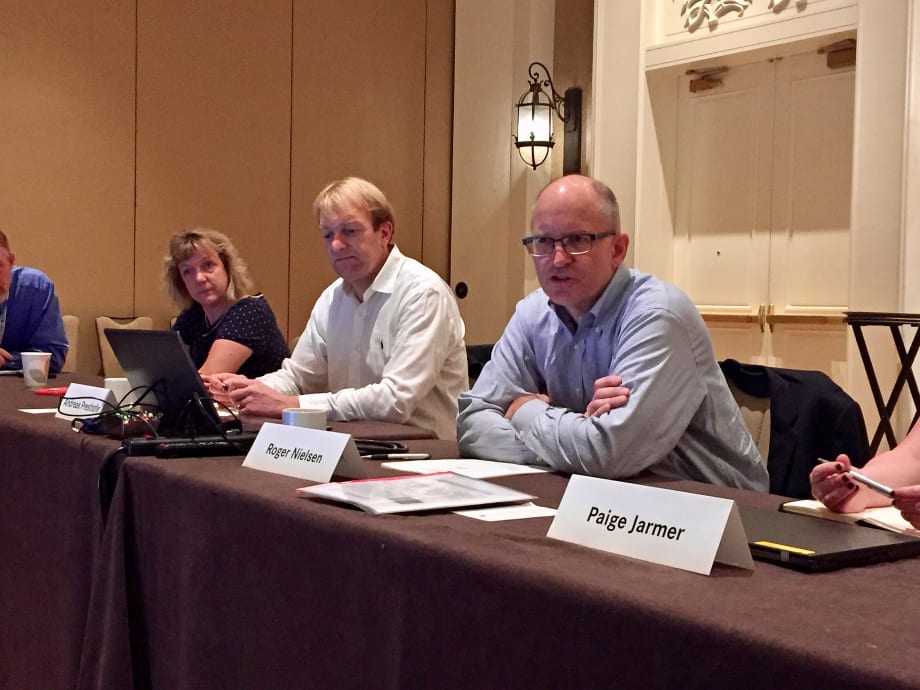
Daimler Trucks North America President and CEO Roger Nielsen talks to reporters during the ATA MC&E. Photo: Deborah Lockridge
6 min to read

ORLANDO – Platooning and electric trucks – both of which you'll be seeing soon from the nation's biggest truck maker – were key topics of a reporter roundtable with Daimler Trucks North America President and CEO Roger Nielsen during the American Trucking Associations Management Conference & Exhibition.
Nielsen told reporters that exciting, headline-grabbing topics such as platooning, advanced driver assistance systems, and automated technology are only pieces of a larger puzzle. He compared his company's research on automated technology to the space program, where society benefitted from many of the technology developments adapted from the race to the moon.
“We didn’t end up going to the moon and finding gold, it’s more about what we discovered along the way.”
For example, a new active lane keeping feature, which Nielsen said should be available soon from DTNA, is a step on the path to platooning and other automated and driver assistance technologies.
“We believe active lane keeping is absolutely required to make platooning work properly,” Nielsen said. “We are not ready to announce a market availability of platooning yet, although you’ll see us come out soon with active lane keeping as yet another advanced driver assistance system.That is the way to go and with platooning, that’s absolutely going to be required to keep the driver of the second truck safe and less fatigued.”
As it announced at the North American Commercial Vehicle Show last month, DTNA has been testing its own platooning system.
“If you haven't driven in truck number two [in a platoon] you should do it sometime; it’ll scare the crap out of you, because you’re just not used to driving 45 feet behind a stainless silver trailer door.”
He emphasized that DTNA does not want to use terms like “autonomous” or “driverless trucks.”
“You’ll see us change the language to advanced driver assistance systems, or active safety, you won't see us talk about autonomous. The idea that trucks are going to be driverless in our near future - we don’t believe in that.”
A driver’s job is much more than simply steering and acceleration, he said. The job includes customer service, pre- and post-trip inspection, and handling issues that come up on the road.
“I can’t imagine hitting a truck and pulling over to exchange license and insurance and finding out there’s no driver,” he said. "Society simply isn’t ready for a “driverless truck.”
"There’s a lot that goes on in an autonomous driving situation that still is hard to program."
Nielsen used a four-way stop as an example of a situation that is intuitively navigated by a human driver but autonomous vehicles still have a hard time dealing with.
"With autonomous driving, you can't catch the eyes of the driver who’s to the right or left of you at a four-way stop and that’s key to getting through a four-way stop. You all look at each other to figure out who’s going to do what. We’ve seen incidents where [autonomous] cars get stopped at an intersection because heavy traffic never clears and the car is programmed to only cross the intersection if it’s legal. You‘ll sit at that green light for 100 [cycles] in rush hour traffic waiting for an opening."
“These types of things are hard to go in and program. Every instance that a truck driver would encounter on a freeway or highway or side street, to do autonomous driving you have to imagine that."
However, Nielsen said that the development of autonomous technology is important because it has resulted in many of the latest safety features.
“Everything we’re doing on active safety leads us on that path…. Anything that could make a truck drive without a driver can also help make a truck driver safer.”
Electric trucks
While autonomus trucks are still a ways off, electric trucks are more likely to become a reality in the immediate future. Nielsen pointed out that the Mitsubishi Fuso eCanter, owned by DTNA’s parent company, is being tested by two big carriers — UPS in the U.S. and 7-11 in Japan.
"With eCanter we really have the first commercially viable electrified battery electric vehicle in the market being sold in volume," Nielsen said. "We have it out on a two-year lease. We call this eCanter version 1.0 and version 2.0 will be introduced in two years.”
"Version 2.0 will be a vehicle that is designed from the ground up to be electric. You’ll see weight taken out of it and power put into it to increase the range."
In Europe, Daimler created the Mercedes Urban eTruck, a medium truck with a range about double that of the eCanter and the type of GVWs that make sense on heavier vehicles. Trials are going on with eight customers.
In the U.S. DTNA is working to electrify a Cascadia for the heavy-duty market, and “you will see it rather soon on the road,” Nielsen said. “We won’t put out a press release on it and drive it and see if you guys can catch up to us.”
Real-world advances
However, Nielsen noted, this high tech wizardry is just a part of what DTNA is working on.
“Advanced technologies, be it platooning, be it automated driving, or battery electric vehicles, do not dominate our discussions or developments,” Nielsen said. “Our development plan is to bring fuel efficiency and active safety to our customers year over year.”
Among the things it’s working on in the near term, DTNA is getting ready for its next round of fuel economy improvements on the Freightliner Cascadia.
“We’ve done well keeping ahead of the competition,” Nielsen said. “The competition never sleeps, but neither do we.” Nielsen said DTNA is working on new “taller” tandem drive axles that will require a multi-million dollar investment in new machining capabilities to manufacture the larger gears.
Another big focus for the company is the Detroit Connect platform. The Detroit Connect mobile app was announced for Freightliner and Western Star customers who have an active Detroit Connect subscription. Through the app, Customers can access information about their vehicles’ performance without needing to be at a desk or on a computer. The Detroit Connect Virtual Technician remote diagnostic system also supports remote fault event diagnostics for Detroit DT12 automated manual transmissions, the company announced.
The company also announced that additional features for Detroit Connect Remote Updates, such as fleet-initiated remote engine parameter programming and Detroit-initiated firmware updates, will be rolled out to new Cascadia customers.
These over the air updates, Nielsen said, are part of a number of ways the company is working to improve customer uptime.
“It’s another initiative we have in place to eliminate every instance where a truck has to come into the dealership to be serviced. It’s like having to take your iPhones back to the genius bar every time you need a new iOS.”
More Fuel Smarts
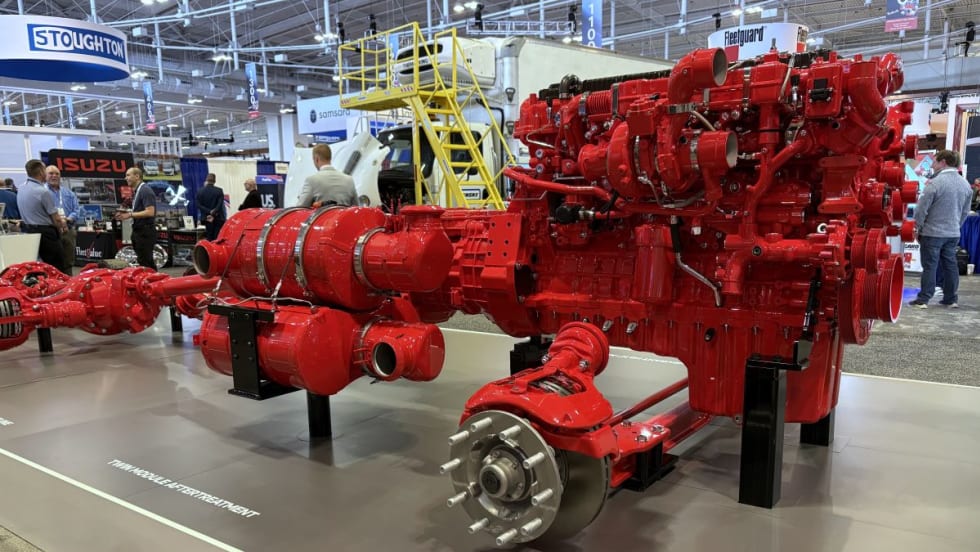
Cummins Adjusts 2027 Engine Rollout After EPA Proposal
The engine maker will gradually introduce its new Model Year 2027 diesel engines while continuing to offer current models during the transition, citing the EPA's proposed emissions rule changes.
Read More →
EPA Proposal Could Ease 2027 Truck Costs and Buying Uncertainty
The proposal doesn't change the tougher NOx standard, but it would revise key implementation requirements that manufacturers say have driven up costs and complicated fleet purchasing decisions.
Read More →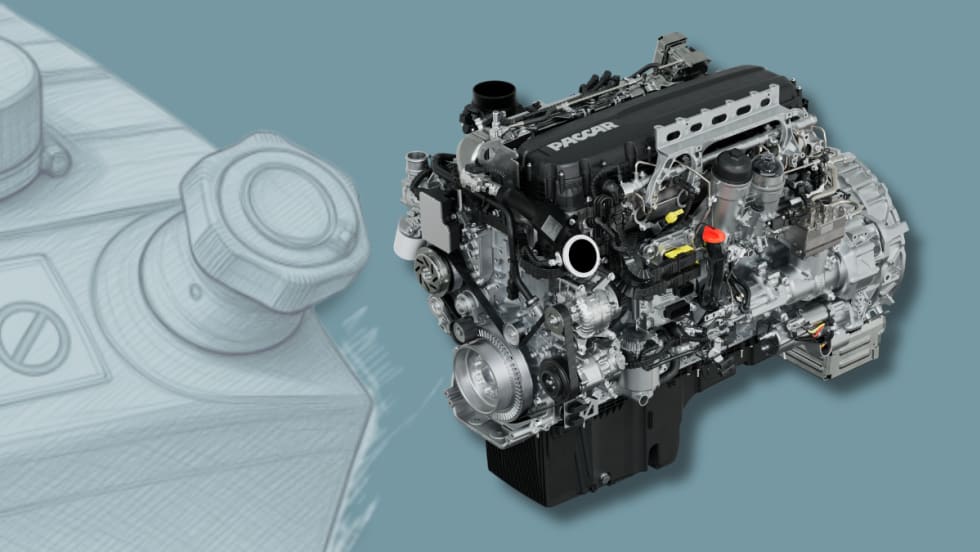
Cummins, Paccar Ease DEF Derates After EPA Guidance
Updated diesel engine software gives truck operators more time to address emissions-system issues while staying compliant with EPA emissions standards.
Read More →
Maintenance in the Messy Middle Part 3: Biodiesel
Biodiesel can reduce emissions, improve fuel-system lubricity and use existing diesel infrastructure. But NACFE’s Messy Middle maintenance report says fleets must actively manage storage, cold-weather operation, filters and oil drain intervals to avoid problems.
Read More →
Sponsored•July 1, 2026
Enhance Fleet Performance with High-Efficiency Auxiliary Power Units
Drive sustainable cost savings while increasing driver comfort during short- and long-haul logistics operations.
Read More →
Maintenance in the ‘Messy Middle’ Part 2: Renewable Diesel Fuel
NACFE's latest Messy Middle Powertrain Service & Maintenance report says renewable diesel gives fleets an opportunity to reduce carbon emissions without changing trucks, fueling infrastructure or maintenance practices. But technicians still need to understand several important operational differences.
Read More →
The Diesel Engine Enters NACFE’s ‘Messy Middle’
NACFE’s new Messy Middle Powertrain Service & Maintenance report says keeping modern diesel engines running now depends as much on software, diagnostics and data as traditional mechanical service.
Read More →
DTNA Software Update Gives Truckers More Time Before DEF Derates Take Effect
The changes reflect EPA guidance aimed at reducing downtime caused by emissions-system faults while maintaining compliance requirements.
Read More →
New Agentic Predictive Maintenance Report Demonstrates How Degraded Aftertreatment Systems Waste Fuel
Questar analyzed a large mixed-class fleet and discovered it was wasting as much as $30 in fuel per vehicle, per day, because of mechanically degraded aftertreatment systems.
Read More →
New York City's Microhub Project is Delivering Results
Trucking, last-mile delivery companies, and environmental advocates like what they are seeing so far with New York's microhub program.
Read More →