




Related: Why U.S. Xpress is Getting Help With Fuel Economy Testing
PIT Group to Hold its First U.S. Fuel Economy Trials
Montreal-based research and engineering firm PIT Group has announced it will hold its first set of Energotest fuel-economy trials in the U.S. at Uvalde, Tex., from Feb. 13-17, 2017.
by Staff
December 14, 2016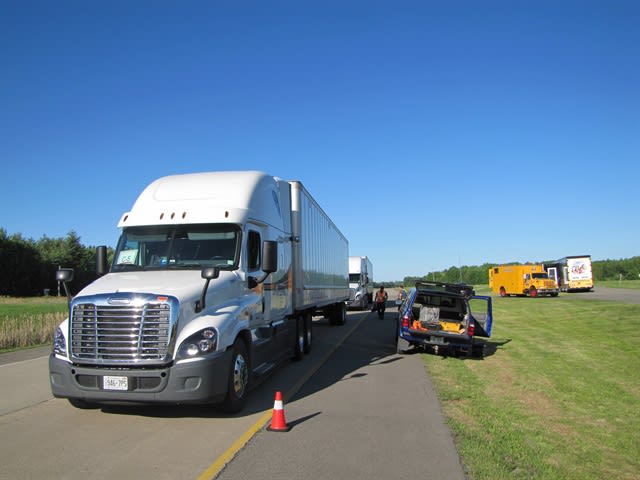
Photo: PIT Group
2 min to read
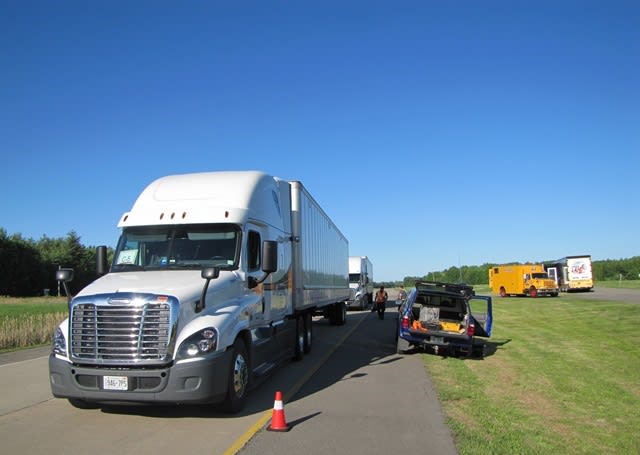
Photo: PIT Group
Montreal-based research and engineering firm PIT Group has announced it will hold its first set of Energotest fuel-economy trials in the U.S. at Uvalde, Tex., from Feb. 13-17, 2017.
The Energotest will be held at Continental Truck Tires Uvalde' Proving Grounds and will showcase the company’s ability to provide accurate performance fuel-economy data to fleets and technology providers.
Each Energotest event gives transportation companies the ability to take part in a road testing laboratory experience, according to PIT. The firm then uses the data it gains to evaluate the economic and environmental impact of green technologies.
"This first Energotest in the U.S. will showcase the credibility of our team of highly qualified experts by providing accurate, verified data on the performance of technologies for fleets and technology providers in the U.S.," said PIT Group Manager Yves Provencher. "Thanks to a thorough process using cutting-edge equipment, Energotest will help fleets rest assured they are obtaining high-quality, reliable results."
Since 2007, PIT has evaluated over 270 technologies and operational practices during Energotest events it held in Canada. The tests have involved vehicles, including hybrid trucks, tractor and trailer aerodynamic devices, tires and wheel balancing systems, tarp systems for dump trailers, fuel, oil and gear lube additives, and alignment and tire pressure settings.
In recent months, PIT has worked to expand its offerings in the U.S. and is now providing verification services for electronic logging devices in accordance with FMCSA procedures.
During an Energotest, PIT uses the SAE J1321 testing method to evaluate technology’s impact on fuel consumption, which it says provides the most accurate results.
“We measure fuel consumption on a track where every possible variable is controlled,” said Provencher. “The result is a fuel saving projection that is highly representative of what a fleet can expect to realize in actual over the road service. While we may test as many as 20 technologies during one week-long Energotest event, each test is completed in one or two consecutive days, which removes uncertainties associated with tests that are performed over several days or even weeks.”
Registration is open for technology suppliers interested in participating in the PIT Group U.S. Energotest.
For more information, click here.
More Fuel Smarts

How Volvo Updated Its D13 for EPA 2027 [Watch]
Volvo’s updated D13 promises lower emissions without sacrificing performance or fuel economy. Take a closer look at what changed inside the engine in this HDT Spotlight video.
Read More →
Diesel Price Spike Shortens Payback for Natural Gas Trucks, Report Says
Energy Vision estimates fleets could recover the higher purchase price of an RNG-fueled Class 8 tractor in 1.3 to 2.8 years under current fuel-price scenarios.
Read More →
Calstart Becomes Catalyst Mobility, Reflecting Broader Focus
Calstart is now Catalyst Mobility, reflecting the nonprofit’s growing national role in clean transportation, including zero-emission trucks, infrastructure and incentive programs.
Read More →

Record Diesel Prices Squeeze Trucking Fleets
Average U.S. diesel prices have climbed to nearly $6 a gallon, surpassing the 2022 record as tight refinery capacity and Middle East disruptions keep fuel costs elevated.
Read More →
Sponsored•September 9, 2026
How Fuel Delivery Shapes Engine Performance
Fuel delivery depends on more than what happens at the injector. For fleet, maintenance and technical professionals, looking at the full path from pump to injector can provide useful context for understanding engine performance.
Read More →
East Coast Port Launches $45M Electric Truck Push
The Port Authority of New York and New Jersey announced millions in incentives for zero-emission drayage trucks, yard tractors, and new charging hubs near the port.
Read More →
California Bill Could Shed Light on Electric Truck Prices
Why do battery-electric Class 8 trucks remain so expensive? A California bill headed to Gov. Gavin Newsom would give fleets and state agencies more visibility into what manufacturers charge.
Read More →
Detroit Opens Orders for EPA 2027 Engines
Detroit isn’t starting from scratch to meet EPA 2027 diesel emissions standards. Its Gen 6 DD13 and DD15 engines keep much of today’s platform while updating the fuel and aftertreatment systems.
Read More →
Zero-Emission Truck Corridor Planned for West Coast
California, Oregon, Washington, British Columbia and Baja California are coordinating plans for truck charging and hydrogen fueling from Canada to Mexico.
Read More →
A Closer Look at Kenworth’s Electric T880E Vocational Truck [Video]
Learn more about Kenworth's T880E battery-electric vocational truck at the Paccar Technical Center, including its range, applications, upfitting considerations, and PTO options, in this HDT Spotlight video.
Read More →