




Panama Canal Opens Larger Locks; Impact on U.S. Logistics Unclear
After many delays, the larger locks of the Panama Canal opened this weekend, allowing larger ships carrying intermodal shipping containers coming from Asia to access East Coast and Southeast ports. While there has been much speculation that this could shift cargo traffic away from the busy West Coast ports, how exactly things will play out is yet to be seen.

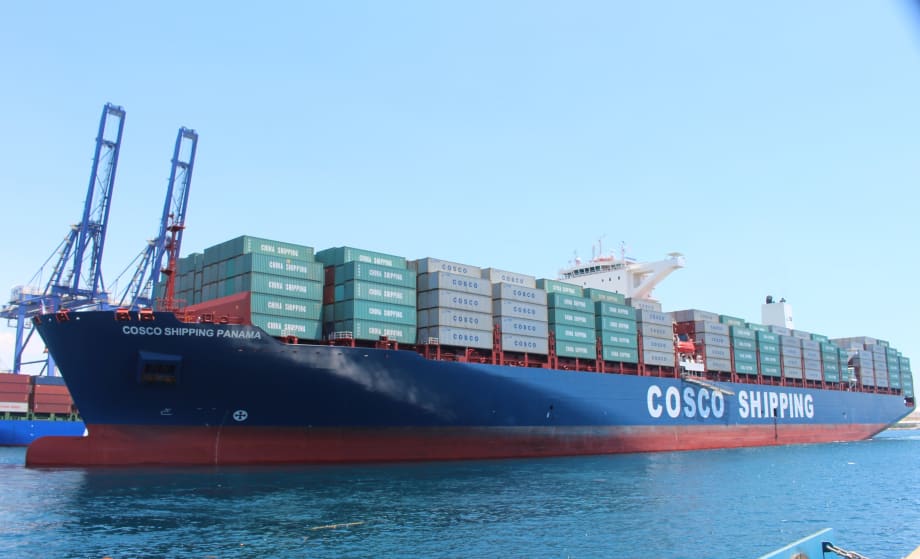
The container vessel COSCO Shipping Panama made the inaugural transit of the expanded Panama Canal on Sunday, June 26, after a 14-day journey. It has a container carrying capacity of 9,472 TEUs. Photo: Panama Canal
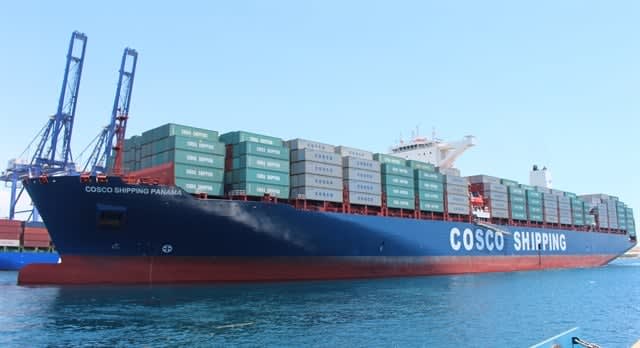
The container vessel COSCO Shipping Panama made the inaugural transit of the expanded Panama Canal on Sunday, June 26, after a 14-day journey. It has a container carrying capacity of 9,472 TEUs.Photo: Panama Canal
After many delays, the larger locks of the Panama Canal opened this weekend, allowing larger ships carrying intermodal shipping containers coming from Asia to access East Coast and Southeast ports. While there has been much speculation that this could shift cargo traffic away from the busy West Coast ports, how exactly things will play out is yet to be seen.
The new locks can handle container ships that carry up to about 13,000 twenty-foot-equvalent units, or TEUs, depending on the design — nearly three times the 4,500-to-5,000-TEU capacity of Panamax vessels previously using the canal.
That means more cargo containers from Asia filled with consumer goods will be able to take a direct, all-water route to East Coast and southern ports. Some believe this will push growth of more regional trucking on both coasts, rather than the long-haul trucking of containers, or goods that have been trucked to distribution centers and offloaded into trailers.
The canal’s online booking system already shows 155 slots booked for the larger post-Panamax ships through the year, about 60% heading to the Atlantic, according to a report released by CBRE, a commercial real estate services company.
On the East and Gulf Coasts, ports have been making huge investments in dredging and other improvements so they can handle the larger ships.
However, even before the availability of the larger canal, these ports already have been pulling some traffic away from the West Coast, reports the Journal of Commerce, as contract disputes and labor uncertainty have made the congested West Coast ports less attractive to shippers. During the nine months ending in March 2016, their market share inched up to nearly 34%, up from 29% two years earlier, according to PIERS, a sister product of JOC.com within IHS.
Currently, about 63% of container ships docking at the Ports of Los Angeles and Long Beach are the post-Panamax vessels that can carry up to 14,000 TEUs, reports the LA Press Telegram.
However, many analysts are predicting a milder impact for the West Coast than previously was thought would happen. For one thing, there have been delays in some of those East Coast/Gulf Coast port improvements.
Gerry Wang, chief executive of Seaspan Corp., which charters large container ships to shipping lines, told the Wall Street Journal earlier this year that cargo shipping carriers are wary about the ability of the ports to handle the vessels.
In addition, we’ve seen the introduction of megaships that won’t fit through even the larger Panama Canal. Last December, the CMA CGM Benjamin Franklin, the largest container ship ever to call at a North American port with a capacity of 18,000 TEUs, docked at the Port of Los Angeles.
And actually, there's already been a shift over the past several years. CBRE notes that the major East and Gulf Coast ports accounted for nearly all of North America’s cargo volume growth last year. The West Coast’s market share dropped to 52% of all TEU volume last year, down from 54% in 2014 and 57% in 2010.
“This shifting preference means that the opening of the widened Panama Canal… likely won’t have as large an impact on cargo destinations as previously thought," says a CBRE announcement of the report. "Much of the cargo that could be transferred from West to East Coast delivery has already shifted.”
In order to fully take advantage of the cost and time savings of sending cargo via larger ships through the canal directly to the East Coast, businesses will have to reinvent their supply chain networks, not something that gets undertaken quickly.
However, longer-term factors could make the East Coast more compelling with or without the larger canal. Still, other long term factors will slowly make the East Coast more compelling, David Egan, head of industrial research in the Americas for CBRE, told the WSJ. East Coast ports will eventually catch up in terms of infrastructure, as costs in China rise, low-cost manufacturing may move to places such as India and Africa, where going through the Pacific may not make sense anyway.
More Fleet Management

Why Private Fleets Are Taking More Freight
Private fleets are putting their own trucks on demanding customers and high-cost lanes as companies seek greater control over service, costs, and capacity.
Read More →
Color Match Smarter: Tools That Restore & Perform
For fleet managers and collision repair professionals keeping heavy-duty trucks on the road, getting the color right the first time isn't just about appearance — it's about efficiency, turnaround time, and bottom-line results. Discover how today's digital color tools are transforming the repair process from guesswork to precision.
Read More →
FMCSA Pauses Biennial-Update Enforcement Amid Motus Transition
Carriers whose updates were due on or after June 1 have more time, while FMCSA works to stabilize its new registration system and warns of phishing sites impersonating its new carrier registration system, Motus.
Read More →


2026 Blueprint for Countering Smarter Supply Chain Theft
Cargo theft is no longer just the cost of doing business. It's a multi-billion-dollar criminal enterprise exploiting vulnerabilities across your fleet, drivers, and supply chain.
Read More →
How Telematics Improves Visibility, Control, and Performance in Refrigerated Fleets
Explore how telematics help refrigerated fleets improve visibility, uptime, efficiency, compliance, and cargo protection across connected cold chain operations.
Read More →
What the U.S.-Canada Trade War Means for Trucking
Escalating U.S.-Canada tariffs could disrupt cross-border freight, reduce truck volumes, raise costs, and create new uncertainty for carriers on both sides of the border.
Read More →
What Are Trucking’s Top Concerns for 2026?
The American Transportation Research Institute wants to know what's worrying trucking fleet managers, drivers, and other stakeholders in its annual Industry Issues survey.
Read More →
American Trucking Associations Looks for a New Leader
ATA President and CEO Chris Spear abruptly left his job at the association on August 21, at a pivotal time for the trucking industry.
Read More →
Public Wi-Fi Cybersecurity Risks: How Truck Drivers and Fleets Can Protect Their Data
Public Wi-Fi can expose truck drivers and fleets to credential theft, malware, and other cyber threats. Here’s how to reduce the risk on the road.
Read More →
For Nicky Cupp, Fleet Innovation Starts With Frustration
HDT Truck Fleet Innovator Nicky Cupp turns everyday pain points at Fraley & Schilling into opportunities for better technology and smarter processes.
Read More →