





Related: CVSA Offers Roadside Inspection Course for Motor Carriers
Out-of-Service Rates Fall in CVSA Roadcheck Inspection Blitz
June’s Commercial Vehicle Safety Alliance International Roadcheck inspection blitz once again placed thousands of vehicles and drivers out-of-service, but at lower rates than last year – except in hours-of-service violations, which were the focus of the event.
September 13, 2018
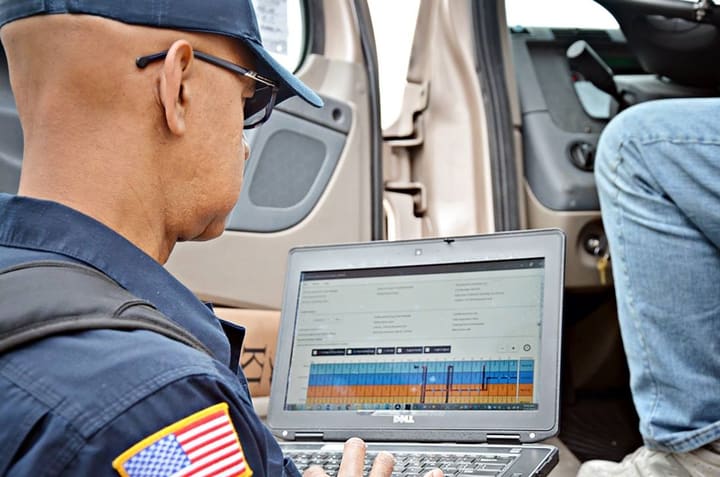
Out-of-service rates dropped slightly for vehicles and drivers in the latest CVSA International Roadcheck.
Photo via FMCSA
3 min to read
June’s Commercial Vehicle Safety Alliance International Roadcheck inspection blitz once again placed thousands of vehicles and drivers out-of-service, but at lower rates than last year – except in hours-of-service violations, which were the focus of the event.
Roadcheck, June 5-7, saw North American inspectors conduct 67,502 Level I, II, or III inspections, up from 62,013 the year before. Out-of-service rates for vehicles and drivers dropped slightly from 2017, with 21.6% of vehicles and 3.9% of drivers being placed out of service. Last year’s rates were 23% and 4.2% respectively.
Every CVSA Roadcheck has a point of emphasis for the year, and for 2018, the safety agency chose to focus on hours-of-service compliance. Hours-of-service violations were by far the largest contributor to driver out-of-service conditions this year at 43.7%, though the rate is a little misleading, the group notes, because it still represented less than 2% of all inspections.
When taken as a whole, wheels and brake-related issues made up the bulk of out-of-service violations. From the 15,981 total vehicle out-of-service conditions, there were 4,536 brake system violations, 3,058 tire and wheel violations, and 2,612 brake adjustment violations. Last year, cargo securement was the second most common out-of-service violation, and was the emphasis for that year’s International Roadcheck. In 2018, cargo securement was the fourth most common vehicle violation.
After hours-of-service violations, drivers were most commonly placed out of service for having the wrong class license and falsifying record of duty status at 21.4% and 10.1% respectively.
International Roadcheck is a three-day enforcement event when CVSA-certified inspectors conduct large-scale, high-visibility roadside inspections of commercial trucks and buses and their drivers. These inspections occurred at inspection sites, weigh stations and roving patrol locations along roadways throughout the 72-hour enforcement initiative. As mentioned earlier, inspectors performed either Level I, II, or III inspections, however the majority, 45,400, inspections were NAS Level I.
This was the 31st year of the International Roadcheck, which is sponsored by the CVSA with participation by the Federal Motor Carrier Safety Administration, the Canadian Council of Motor Transport Administrators, and Mexico’s Secretariat of Communications and Transportation.
During an inspection, if an inspector identifies critical inspection items on a vehicle with specific violations, he or she will render the vehicle out of service, which means mechanical defects must be corrected in order for the vehicle to be permitted to proceed. A driver found to be in violation of the conditions in the out-of-service criteria will be placed out of service until the condition can be rectified.
Once violations of the regulations have been identified and documented on a roadside inspection report, roadside enforcement personnel use the CVSA NAS Out-of-Service Criteria as the pass-fail criteria for inspections.
If no violations of the critical vehicle inspection items are found during an eligible inspection, a CVSA decal will be applied as a visual indicator that the vehicle successfully passed an inspection conducted by a CVSA-certified inspector. The NAS Level I Inspection and NAS Level V Vehicle-Only Inspections are the only inspections eligible for issuance of a CVSA decal.
More Safety & Compliance
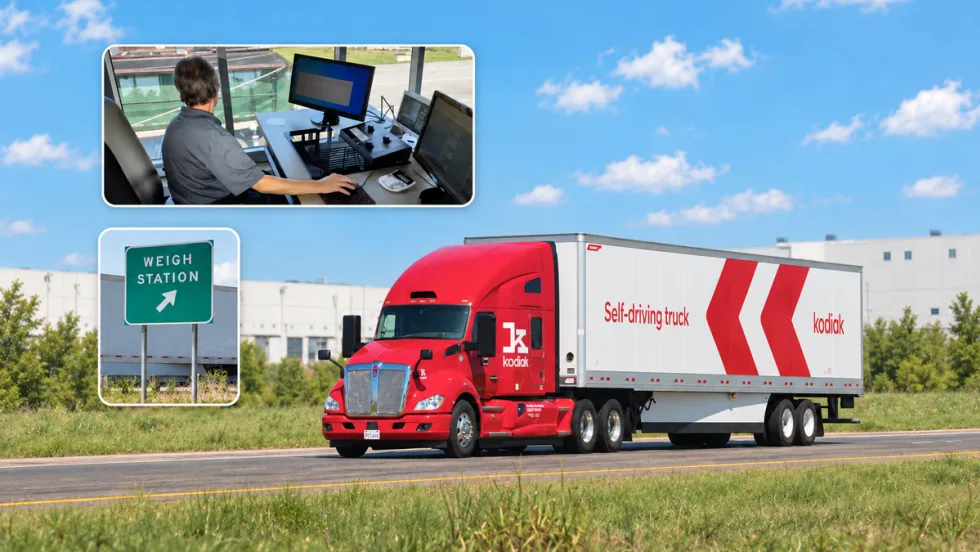
PrePass, Kodiak Connect Driverless Trucks to Roadside Enforcement
The system will allow enforcement agencies to verify Enhanced Inspection information and decide whether Kodiak’s autonomous trucks can bypass roadside screening sites.
Read More →
From One Generation to the Next: How Mentorship Builds Safer Truck Drivers
After three decades in trucking, Harold Perry shares what he's learned about driver safety, mentorship, and helping the next generation build confidence behind the wheel.
Read More →
FMCSA Pauses Biennial-Update Enforcement Amid Motus Transition
Carriers whose updates were due on or after June 1 have more time, while FMCSA works to stabilize its new registration system and warns of phishing sites impersonating its new carrier registration system, Motus.
Read More →
ZF Expands Commercial Vehicle Push in North America
ZF is expanding its North American commercial-vehicle presence with new transmission applications, electrification, trailer technology and autonomous-driving systems.
Read More →
Truck Drivers Need More Than Another Alert
Fleets have more visibility into truck health, safety events, and driver activity than ever. The next challenge is turning all that information into useful guidance for the person who has to decide what to do next.
Read More →
Tesla Wants a Self-Driving Semi. Are Cameras Enough?
Could Tesla’s camera-only autonomous driving technology work on an 80,000-pound Semi? In this commentary, HDT's Deborah Lockridge takes a look at Tesla, Cybercab, and how autonomous trucks see the road.
Read More →
What DOT’s Automated Vehicle Strategy Means for Trucking
The U.S. Department of Transportation issued a new automated-vehicle strategy that outlines plans for driverless-truck regulations, cross-state freight corridors, and federal safety standards.
Read More →
NYC Expands Speed, Pedestrian Safety Tech Across Fleet
New York City is expanding intelligent speed assistance and pedestrian-alert systems across its municipal fleet, moving the technologies from pilot programs into vehicle procurement and retrofit requirements.
Read More →
FMCSA Removes 110 Truck Driver Training Schools from Certified ELDT List
Federal regulators also are targeting more than 160 additional training providers and launching a nationwide audit of third-party CDL skills testers as part of a broader crackdown on trucking fraud.
Read More →
Beyond DOT Compliance: What Makes a Trucking Fleet Truly Safe?
A trucking fleet can follow every rule and still make unsafe decisions. The real test comes when safety conflicts with freight, productivity, or cost.
Read More →