




OOIDA Appealing Dismissal of Lawsuit Against CARB
The association’s original lawsuit, on behalf of its small-business trucking members, was filed against CARB in December of last year in connection with the agency’s truck and bus regulations.


The Owner-Operator Independent Drivers Association will appeal a recent court order dismissing its lawsuit against the California Air Resources Board.
The association’s original lawsuit, on behalf of its small-business trucking members, was filed against CARB in December of last year in the U.S. District Court, Eastern District of California, in connection with the agency’s truck and bus regulations.
The court dismissed the lawsuit in late October saying that OOIDA failed to include the U.S. Environmental Protection Agency in the lawsuit as an “indispensable party” and that the court lacked jurisdiction over the challenge. The court said the EPA had approved CARB’s regulation as written, and whether or not they had the power to do so should be reviewed by a court of appeals.
OOIDA contends the CARB regulations violate the commerce vlause of the U.S. Constitution and that only Congress has the power to regulate interstate commerce. The commerce clause prohibits state laws and regulations that discriminate against interstate commerce or unduly burden interstate commerce. OOIDA is seeking an injunction, saying the regulations are unconstitutional and discriminates against out-of-state truckers.
OOIDA says that CARB regulations have caused, and will continue to cause, irreparable harm to truckers who have been shut out of the California market because of the costs of compliance.
CARB regulations that went into effect on the first of 2012 require 1996-2006 model year trucks more than 14,000 pounds to be replaced or retrofitted with particulate matter filters and prohibits older trucks that have not been replaced or retrofitted from operating on public roads in California.
More Fleet Management

How Telematics Improves Visibility, Control, and Performance in Refrigerated Fleets
Explore how telematics help refrigerated fleets improve visibility, uptime, efficiency, compliance, and cargo protection across connected cold chain operations.
Read More →
What the U.S.-Canada Trade War Means for Trucking
Escalating U.S.-Canada tariffs could disrupt cross-border freight, reduce truck volumes, raise costs, and create new uncertainty for carriers on both sides of the border.
Read More →
What Are Trucking’s Top Concerns for 2026?
The American Transportation Research Institute wants to know what's worrying trucking fleet managers, drivers, and other stakeholders in its annual Industry Issues survey.
Read More →

American Trucking Associations Looks for a New Leader
ATA President and CEO Chris Spear abruptly left his job at the association on August 21, at a pivotal time for the trucking industry.
Read More →
Public Wi-Fi Cybersecurity Risks: How Truck Drivers and Fleets Can Protect Their Data
Public Wi-Fi can expose truck drivers and fleets to credential theft, malware, and other cyber threats. Here’s how to reduce the risk on the road.
Read More →
For Nicky Cupp, Fleet Innovation Starts With Frustration
HDT Truck Fleet Innovator Nicky Cupp turns everyday pain points at Fraley & Schilling into opportunities for better technology and smarter processes.
Read More →
Adam Buttgenbach’s Approach to Electric Trucks: Start With Where They Fit
HDT Truck Fleet Innovator Adam Buttgenbach helped PepsiCo build one of North America’s largest EV fleets by focusing on where electric trucks make operational sense.
Read More →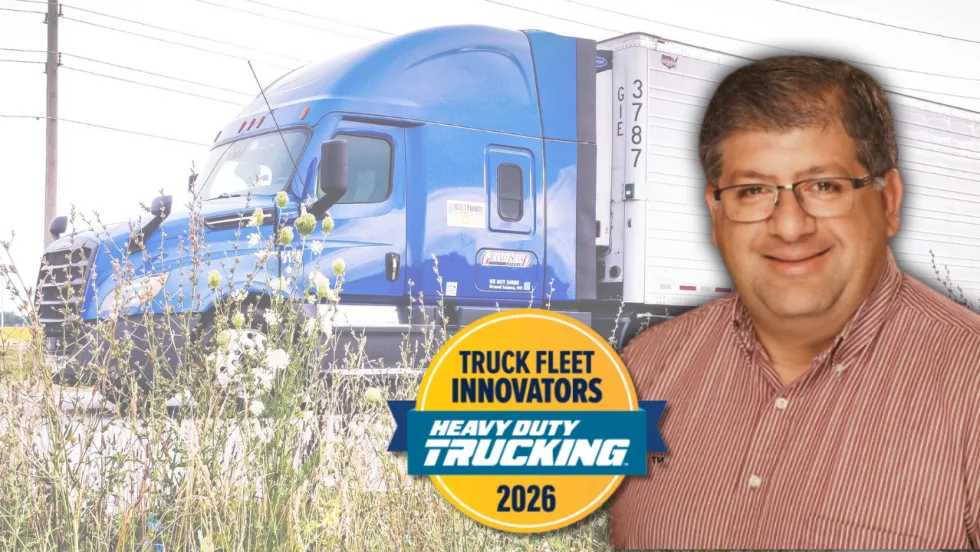
Deen Albert: Let Automation Do the Math, People Make the Decisions
HDT Truck Fleet Innovator Deen Albert makes sure people are still at the heart of operations at Grand Island Express, even while adopting artificial intelligence tools. AI-assisted dispatch helped boost revenue 25% with the same number of trucks.
Read More →
Trimble’s New AI Agent Takes Aim at Fleet Back-Office Busywork
Arc Agent works across Trimble TMS products to automate repetitive tasks such as freight orders, maintenance, invoices, fuel costs and more.
Read More →
How HDT’s 2026 Truck Fleet Innovators Are Rethinking Fleet Operations
Meet five trucking leaders who are challenging assumptions, solving operational problems, and putting innovative ideas to work.
Read More →