




NTTC Recognizes Dupre’ Transport for Safety Performance
Dupre’ Transport’s liquid and dry bulk operations from the chemical, site and tank operations will be recognized for safety next month during the National Tank Truck Carriers 58th conference in San Antonio, Texas
Dupre’ Transport’s liquid and dry bulk operations from the chemical, site and tank operations will be recognized for safety next month during the National Tank Truck Carriers 58th conference in San Antonio, Texas.
Dupre’ will be honored for its 2005 personnel safety performance in the 15- to 22-million mile class.
“Our safety vision is to be the safest transportation and logistics company in North America,” said Al Lacombe, director of safety & security for Dupre’. “We are proud to receive this validation as we continue our journey towards our safety vision. Our dedicated team of professional drivers and leaders supported by our safety department has worked together to make this happen.”
Founded in 1945, NTTC is a trade association composed of 200 trucking companies that specialize in the nationwide distribution of bulk liquids, industrial gases and dry products in cargo tank motor vehicles. In addition to carrier members, NTTC is supported by more than 250 suppliers of goods and services to the tank truck industry as associate members.
Dupre’ Transport has more than 750 team members that will produce over $100 million in revenue in 2006. The company operates more than 30 profit centers in six states. The company's two business groups, Dupre' Tank and Dupre' Logistics, are headquartered in Lafayette, La.
For details, visit www.dupretransport.com.
More Safety & Compliance

A Camera Isn't a Safety Program. Here's What Brokers Are Screening for Now
Footage alone may not be enough to pass broker vetting processes. Here's what counts as a defensible safety program now.
Read More →
Marijuana and Trucking’s Drug-Testing Dilemma
Marijuana is getting stronger, laws are changing, and drug tests still can’t reliably establish impairment. What does that mean for truck drivers and the fleets that employ them?
Read More →
PrePass, Kodiak Connect Driverless Trucks to Roadside Enforcement
The system will allow enforcement agencies to verify Enhanced Inspection information and decide whether Kodiak’s autonomous trucks can bypass roadside screening sites.
Read More →

From One Generation to the Next: How Mentorship Builds Safer Truck Drivers
After three decades in trucking, Harold Perry shares what he's learned about driver safety, mentorship, and helping the next generation build confidence behind the wheel.
Read More →
FMCSA Pauses Biennial-Update Enforcement Amid Motus Transition
Carriers whose updates were due on or after June 1 have more time, while FMCSA works to stabilize its new registration system and warns of phishing sites impersonating its new carrier registration system, Motus.
Read More →
ZF Expands Commercial Vehicle Push in North America
ZF is expanding its North American commercial-vehicle presence with new transmission applications, electrification, trailer technology and autonomous-driving systems.
Read More →
Truck Drivers Need More Than Another Alert
Fleets have more visibility into truck health, safety events, and driver activity than ever. The next challenge is turning all that information into useful guidance for the person who has to decide what to do next.
Read More →
Tesla Wants a Self-Driving Semi. Are Cameras Enough?
Could Tesla’s camera-only autonomous driving technology work on an 80,000-pound Semi? In this commentary, HDT's Deborah Lockridge takes a look at Tesla, Cybercab, and how autonomous trucks see the road.
Read More →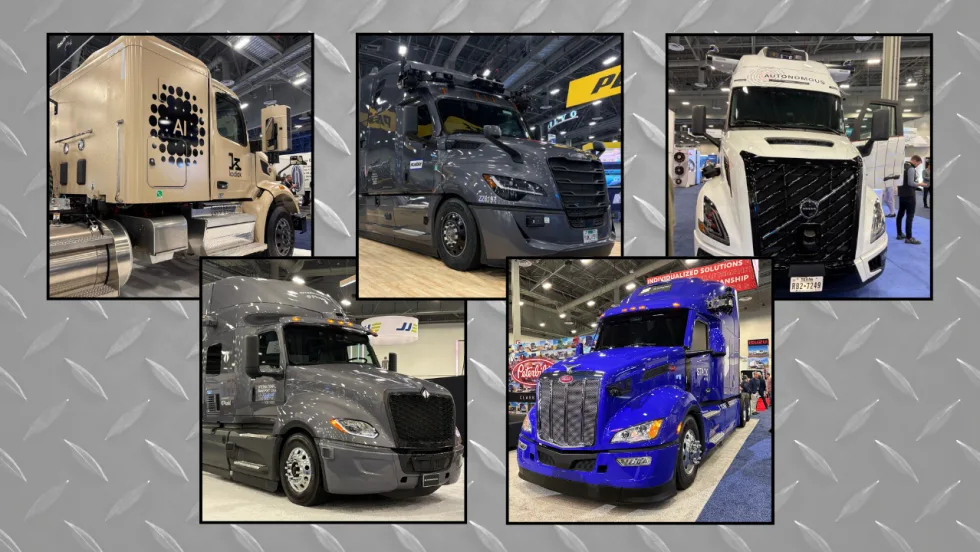
What DOT’s Automated Vehicle Strategy Means for Trucking
The U.S. Department of Transportation issued a new automated-vehicle strategy that outlines plans for driverless-truck regulations, cross-state freight corridors, and federal safety standards.
Read More →
NYC Expands Speed, Pedestrian Safety Tech Across Fleet
New York City is expanding intelligent speed assistance and pedestrian-alert systems across its municipal fleet, moving the technologies from pilot programs into vehicle procurement and retrofit requirements.
Read More →