





You also might like: Port of Long Beach Prioritizes 'Two-Way' Intermodal Moves
NRF: U.S. Container Port Traffic Expected to Grow Dramatically
Imports at the nation’s largest retail container ports are expected to grow dramatically during the first half of 2021, which is likely to exacerbate ongoing problems with congestion and turnaround times.
March 8, 2021
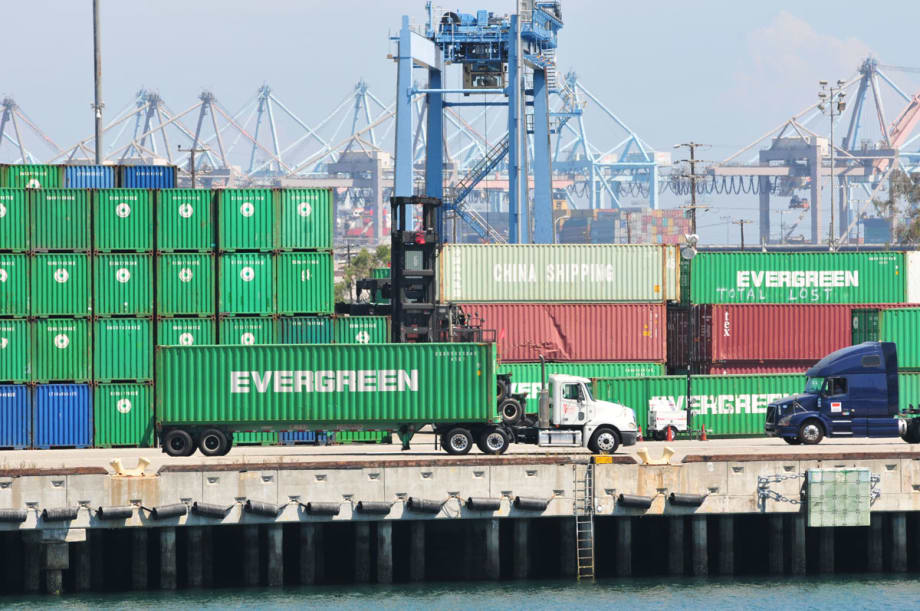
The Port of Long Beach is one of the ports where the Federal Maritime Commission is looking into problems with delays.
Photo: Jim Park
2 min to read
Imports at the nation’s largest retail container ports are expected to grow dramatically during the first half of 2021, which is likely to exacerbate ongoing problems with congestion and turnaround times.
Container imports are expected to increase, as more people get vaccinated against COVID-19 and turn to more in-store shopping, according to the monthly Global Port Tracker report released March 8 by the National Retail Federation and Hackett Associates.
U.S. ports covered by Global Port Tracker handled 2.06 million Twenty-Foot Equivalent Units in January. With a 13% year-over-year increase, it was the busiest January since NRF began tracking imports in 2002 and the first time the month has ever topped the 2 million TEU mark. (A TEU is one 20-foot container or its equivalent.)
This means trucking companies operating in busy cargo ports will likely only see conditions worsen with congestion and delays.
In a survey earlier this year of local, regional and national trucking organizations, the Harbor Trucking Association found that that costs and disruption arising from detention and demurrage (D&D) are threatening the nation’s intermodal carriers. More than half, 56%, reported critical negative effects on their business and 89% saying it has a highly negative effect.
Sixty-four percent (64%) of respondents reported that more than 15% of their containers were incurring D&D charges (with 32% incurring charges on more than 20% of their containers). and “no appointment available” was the most commonly cited reason for dispute of these charges.
And it's not just the southern California ports that are seeing problems.
The Federal Maritime Commission is in the process of investigating problems at a number of the nation's busiest ports. The investigation, announced last November, was prompted by the severe bottlenecks at a number of U.S. ocean ports. The commission is investigatin to see whether ocean lines’ detention, demurrage, and container policies are making the situation worse. Commissioner Rebecca Dye last month said she would issue "information demand orders" to ocean carriers and marine terminal operators to gather information to determine if legal obligations related to detention and demurrage practices are being met. The orders cover carriers and terminal operators at the Port of Los Angeles, the Port of Long Beach, and the Port of New York and New Jersey.
Last month, truck drivers protested outside the Port of Baltimore’s container terminal for the second time in two years, saying congestion is causing hours-long waits for cargo, reported the Baltimore Sun.
More Fleet Management

Sponsored•September 16, 2026
Color Match Smarter: Tools That Restore & Perform
For fleet managers and collision repair professionals keeping heavy-duty trucks on the road, getting the color right the first time isn't just about appearance — it's about efficiency, turnaround time, and bottom-line results. Discover how today's digital color tools are transforming the repair process from guesswork to precision.
Read More →
FMCSA Pauses Biennial-Update Enforcement Amid Motus Transition
Carriers whose updates were due on or after June 1 have more time, while FMCSA works to stabilize its new registration system and warns of phishing sites impersonating its new carrier registration system, Motus.
Read More →
Sponsored•September 14, 2026
2026 Blueprint for Countering Smarter Supply Chain Theft
Cargo theft is no longer just the cost of doing business. It's a multi-billion-dollar criminal enterprise exploiting vulnerabilities across your fleet, drivers, and supply chain.
Read More →


Sponsored•September 1, 2026
How Telematics Improves Visibility, Control, and Performance in Refrigerated Fleets
Explore how telematics help refrigerated fleets improve visibility, uptime, efficiency, compliance, and cargo protection across connected cold chain operations.
Read More →
What the U.S.-Canada Trade War Means for Trucking
Escalating U.S.-Canada tariffs could disrupt cross-border freight, reduce truck volumes, raise costs, and create new uncertainty for carriers on both sides of the border.
Read More →
What Are Trucking’s Top Concerns for 2026?
The American Transportation Research Institute wants to know what's worrying trucking fleet managers, drivers, and other stakeholders in its annual Industry Issues survey.
Read More →
American Trucking Associations Looks for a New Leader
ATA President and CEO Chris Spear abruptly left his job at the association on August 21, at a pivotal time for the trucking industry.
Read More →
Public Wi-Fi Cybersecurity Risks: How Truck Drivers and Fleets Can Protect Their Data
Public Wi-Fi can expose truck drivers and fleets to credential theft, malware, and other cyber threats. Here’s how to reduce the risk on the road.
Read More →
For Nicky Cupp, Fleet Innovation Starts With Frustration
HDT Truck Fleet Innovator Nicky Cupp turns everyday pain points at Fraley & Schilling into opportunities for better technology and smarter processes.
Read More →
Adam Buttgenbach’s Approach to Electric Trucks: Start With Where They Fit
HDT Truck Fleet Innovator Adam Buttgenbach helped PepsiCo build one of North America’s largest EV fleets by focusing on where electric trucks make operational sense.
Read More →