




High Schoolers See the Road From a Truck Driver’s Point of View
No-Zone Know-How
The students file in, noisy as teenagers usually are, finding seats, setting down books with a thud, chattering about the upcoming football game or last night's date. What they're about to learn today could save their lives.
by Staff
September 12, 20004 min to read
The students file in, noisy as teenagers usually are, finding seats, setting down books with a thud, chattering about the upcoming football game or last night's date. What they're about to learn today could save their lives.
It's a driver's education class in Athens, Ala., and today's guest speakers are from Decatur, Ala.-based Bestway Services. It's just one of many such appearances for Bestway Safety Director Jeff Bills and truck driver Harold Fanning, who's also a pastor at an area church.
This is the first school appearance of the fall season for them, but they do these presentations on sharing the road with trucks throughout the year, not only for schools but also for civic organizations, churches, corporations, safety fairs and so on.
What Can Heppen if You're Too Close in Front of a Big Truck
They start the class with a demonstration set up with model trucks and cars, demonstrating the blind spots on a tractor-trailer.
"Anyone ever take a can and smash it on the ground?" Bills asks the class. "That's what can happen if you're too close in front of a big truck."
From there, it's on to a video from the federal No-Zone program aimed at teenagers.
"It's kind of silly, but it gets the point across," Fanning tells the class. Indeed, they giggle at the video's attempt at music-video-style lessons, but they're soon chanting along with a rap bit about blind spots.
The Bestway speakers finish up the classroom segment of their presentation with a PowerPoint presentation. During the entire presentation, a binder of photos of truck accidents is making its way around the room; the teens are engrossed in it. It helps drive home Bills' point: "If you tangle with a big truck, you will be the loser."
Getting Behind the Wheel
The class concluded in the parking lot, where students got the chance to climb into the driver's seat of a Bestway truck (dedicated to these demonstration) and see for themselves just what they could and couldn't see in the mirrors. They were also intrigued by the sleeper compartment, the CB radio, the air seats and other novelties. The Bills took them around the truck, showing them the blind spots and answering questions.
Bills and Fanning say the teenagers are much easier to reach with their message than older adults they do presentations for. The kids are eager to learn and ask good questions, they say, while their parents are more likely to have preconceived ideas and spend time complaining about truck drivers rather than learning about how to share the road with them.
Bestway is not a large company. About 55 trucks haul truckload and less than truckload freight, specializing in ground transportation for air freight services. Bills and Fanning give a lot of credit to company CEO Tim Austin for spending the money to do these presentations. "Tim is the most conscientious guy about safety," Fanning says. "He personally goes out and checks the tires."
Although Bills has been doing these demonstrations on a more limited basis for four years, it wasn't until he teamed up with Fanning about a year ago that it really started taking off.
Popular Teen Driver Safety Program
Gene Vonderau at the Alabama Trucking Assn. heard about Bestway's efforts and was in Athens to see first-hand what the Bestway folks were doing. Fanning and Bills' presentation is so popular, they're getting overbooked, and Vonderau says he knows some other fleets in the area who will help handle the overload.
Vonderau says the Alabama office of what was then the federal DOT's Office of Motor Carriers was one of the first to come up with the idea of doing programs on sharing the road with big trucks. It was a result of orders from the federal level in 1990 to do outreach programs. However, he says, with the recent shift in focus to enforcement rather than outreach, the job has now been left up largely to trucking fleets like Bestway.
Fanning, who calls the response to their No-Zone demonstrations "unbelievable" and "overwhelming," says he's glad they're going to have help spreading their message.
More Safety & Compliance
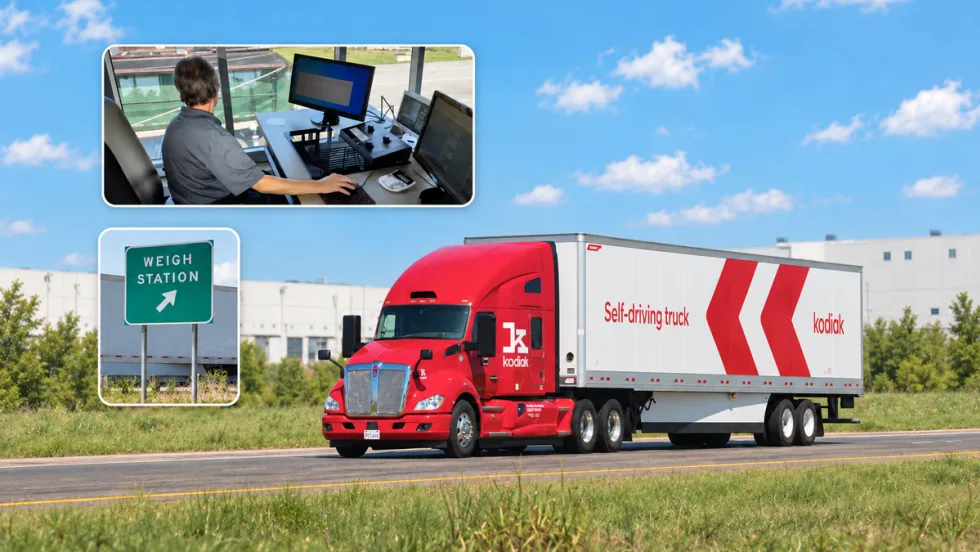
PrePass, Kodiak Connect Driverless Trucks to Roadside Enforcement
The system will allow enforcement agencies to verify Enhanced Inspection information and decide whether Kodiak’s autonomous trucks can bypass roadside screening sites.
Read More →
From One Generation to the Next: How Mentorship Builds Safer Truck Drivers
After three decades in trucking, Harold Perry shares what he's learned about driver safety, mentorship, and helping the next generation build confidence behind the wheel.
Read More →
FMCSA Pauses Biennial-Update Enforcement Amid Motus Transition
Carriers whose updates were due on or after June 1 have more time, while FMCSA works to stabilize its new registration system and warns of phishing sites impersonating its new carrier registration system, Motus.
Read More →
ZF Expands Commercial Vehicle Push in North America
ZF is expanding its North American commercial-vehicle presence with new transmission applications, electrification, trailer technology and autonomous-driving systems.
Read More →
Truck Drivers Need More Than Another Alert
Fleets have more visibility into truck health, safety events, and driver activity than ever. The next challenge is turning all that information into useful guidance for the person who has to decide what to do next.
Read More →
Tesla Wants a Self-Driving Semi. Are Cameras Enough?
Could Tesla’s camera-only autonomous driving technology work on an 80,000-pound Semi? In this commentary, HDT's Deborah Lockridge takes a look at Tesla, Cybercab, and how autonomous trucks see the road.
Read More →
What DOT’s Automated Vehicle Strategy Means for Trucking
The U.S. Department of Transportation issued a new automated-vehicle strategy that outlines plans for driverless-truck regulations, cross-state freight corridors, and federal safety standards.
Read More →
NYC Expands Speed, Pedestrian Safety Tech Across Fleet
New York City is expanding intelligent speed assistance and pedestrian-alert systems across its municipal fleet, moving the technologies from pilot programs into vehicle procurement and retrofit requirements.
Read More →
FMCSA Removes 110 Truck Driver Training Schools from Certified ELDT List
Federal regulators also are targeting more than 160 additional training providers and launching a nationwide audit of third-party CDL skills testers as part of a broader crackdown on trucking fraud.
Read More →
Beyond DOT Compliance: What Makes a Trucking Fleet Truly Safe?
A trucking fleet can follow every rule and still make unsafe decisions. The real test comes when safety conflicts with freight, productivity, or cost.
Read More →