





Related: Nikola Could Roll Electric Trucks Off the Line by Late 2021
Nikola Inks Deal with Republic Services for 2,500 Electric Refuse Trucks
Nikola and Republic Services will partner on a battery-electric refuse recycling-collection truck based on the Nikola Tre chassis, a single platform with integrated bodies, service, and warranty.
August 10, 2020
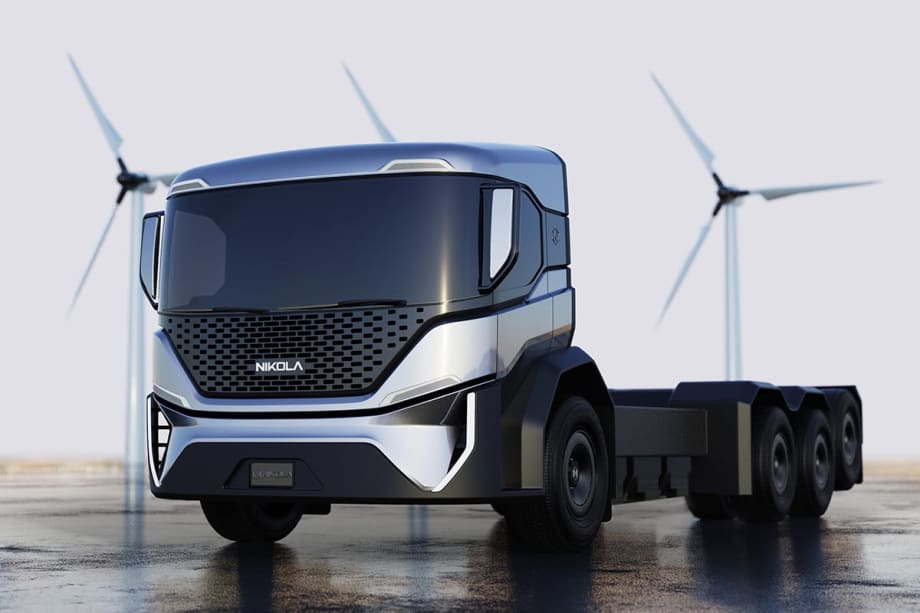
Nikola is working with Republic Service to design a cab optimized for driver safety and productivity and probably will not look quite like this when it rolls off the assembly line.
Photo: Nikola
4 min to read
Nikola Corp. and Republic Services will partner to design and produce a battery-electric refuse recycling-collection truck based on the Nikola Tre chassis. The initial order will see Nikola deliver 2,500 integrated chassis and bodies starting in 2023. Republic retains options on 2,500 additional trucks.
The actual value of the order was not disclosed, but Republic acknowledged the agreement is binding. Trevor Milton, Nikola founder and executive chairman, said in a media call on Aug. 10 that no cash has as yet changed hands.
"We didn't take and we didn't need money from Republic on this one, but I will be clear about this, the terms that we've agreed to, for both Republican and us in delivery, are very industry-standard terms," Milton said. "They'll be putting the deposit down before trucks are delivered or during delivery, just like they normally would with any other order they make. There's no weird stuff going on with this contract."
Republic Services operates 18,000 refuse and recycling collection trucks in the U.S. and is second only to Waste Management in size.
In what both companies are calling an industry first, Nikola will deliver a complete truck to the customer — chassis, powertrain, and body — all assembled at Nikola's Coolidge, Arizona, plant. The bodies will be licensed from existing suppliers and installed by Nikola. Milton believes that by more closely integrating the design and installation of the various components on the Nikola Tre chassis, significant savings in cost and complexity can be achieved.
"By sharing the same platform that's on the Nikola Tre, this will allow us have mass production numbers for the refuse market, which is something that has never been able to be achieved," he said.
"This will be the first zero-emissions refuse vehicle at scale industry, and our customers in all capacities — small businesses, municipalities, residents — have been asking for this," said Republic Services President Jon Vander Ark. "It's also exciting for our employees, who'll get to ride in a state-of-the-art vehicle that is quiet, efficient, and clean. And probably most importantly, I'm excited for my kids and my grandkids and hopefully my great grandkids, because I think, together, we are going to deliver a cleaner future. And this is a big part of our sustainability goals, which we are deeply committed to."
Today's announcement, which could generate up $2 billion in revenue for Nikola, sent stock values up 19% in mid-day trading.
Multipurpose Platform
Nikola said the Tre platform and powertrain will be essentially unchanged across the two most common refuse truck configurations, side-loaders and front-end loaders. It will include a 720 kW/hr battery back (divided into nine 800-volt DC modules for easy up- or downsizing and replacement), a standard direct-drive e-axle in 6x4 configuration, and electrically driven hydraulics for the compactor bodies.
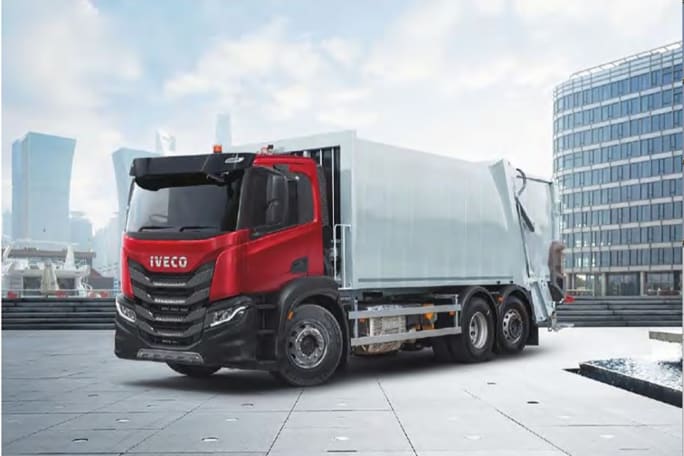
Validation work is already under way in Germany, where Nikola's manufacturing partner, Iveco, already builds a refuse collection chassis.
Photo: Iveco
Nikola has touted the powertrain output at 500 hp from each of the four motors, but it will be limited by software to 1,000 hp overall — still nearly three times that of competitors' diesel and natural gas refuse engines. It can be opened up beyond 1,000 hp automatically when and where demand warrants, such as when climbing hills heavily loaded.
Anticipated range for the truck is stated at 150 miles on a residential refuse collection routes of up to 1,200 stops or commercial collection of 140 stops per day. Milton said the actual range of the truck would be closer to 300 miles, but the compactor operation will use a good portion of the battery capacity, supplemented by regenerative braking and opportunity charging.
"That type of work makes up 75% of our business," said Vander Arc.
There are no plans for a hydrogen fuel cell refuse truck, but Milton said fuel cells would be considered if the chassis were to be developed for a roll-off application where more driving and more miles are involved.
The first of these trucks are slated to hit the streets in early 2022 for on-road testing. Initially they will be placed into service in areas where they will work the best, Vander Arc said.
"We'll begin the rollout in places like California and Arizona where we think about customer need and demand," he said. "We also have to think about the geography, about the climate, and about the regulatory environment. Both of those places will be great places for us to start, and there'll be plenty of learning as we go."
Vander Arc said Republic Services will continue evaluating products from Mack Trucks, and currently has one electric LR model under evaluation.
"That pilot is still very much going on," he said. "And I think if you look at us, you look at any player in the space, they have multiple OEM partners going forward. We are pro-electrification and we want everybody to get there, even providers that we don't buy from, because I think that creates a cleaner future for everybody."
Among the many anticipated benefits of fleet electrification are instant torque, no idling, regenerative braking, up to 90% lower emissions on a per-mile basis and quieter operation in neighborhoods, as well as significantly lower maintenance costs, Republic Services noted in its announcement.
More Fuel Smarts

How Volvo Updated Its D13 for EPA 2027 [Watch]
Volvo’s updated D13 promises lower emissions without sacrificing performance or fuel economy. Take a closer look at what changed inside the engine in this HDT Spotlight video.
Read More →
Diesel Price Spike Shortens Payback for Natural Gas Trucks, Report Says
Energy Vision estimates fleets could recover the higher purchase price of an RNG-fueled Class 8 tractor in 1.3 to 2.8 years under current fuel-price scenarios.
Read More →
Calstart Becomes Catalyst Mobility, Reflecting Broader Focus
Calstart is now Catalyst Mobility, reflecting the nonprofit’s growing national role in clean transportation, including zero-emission trucks, infrastructure and incentive programs.
Read More →

Record Diesel Prices Squeeze Trucking Fleets
Average U.S. diesel prices have climbed to nearly $6 a gallon, surpassing the 2022 record as tight refinery capacity and Middle East disruptions keep fuel costs elevated.
Read More →
Sponsored•September 9, 2026
How Fuel Delivery Shapes Engine Performance
Fuel delivery depends on more than what happens at the injector. For fleet, maintenance and technical professionals, looking at the full path from pump to injector can provide useful context for understanding engine performance.
Read More →
East Coast Port Launches $45M Electric Truck Push
The Port Authority of New York and New Jersey announced millions in incentives for zero-emission drayage trucks, yard tractors, and new charging hubs near the port.
Read More →
California Bill Could Shed Light on Electric Truck Prices
Why do battery-electric Class 8 trucks remain so expensive? A California bill headed to Gov. Gavin Newsom would give fleets and state agencies more visibility into what manufacturers charge.
Read More →
Detroit Opens Orders for EPA 2027 Engines
Detroit isn’t starting from scratch to meet EPA 2027 diesel emissions standards. Its Gen 6 DD13 and DD15 engines keep much of today’s platform while updating the fuel and aftertreatment systems.
Read More →
Zero-Emission Truck Corridor Planned for West Coast
California, Oregon, Washington, British Columbia and Baja California are coordinating plans for truck charging and hydrogen fueling from Canada to Mexico.
Read More →
A Closer Look at Kenworth’s Electric T880E Vocational Truck [Video]
Learn more about Kenworth's T880E battery-electric vocational truck at the Paccar Technical Center, including its range, applications, upfitting considerations, and PTO options, in this HDT Spotlight video.
Read More →