




NHTSA Unveils Proposed Stability Control Mandate
The National Highway Traffic Safety Administration today proposed a first-ever federal motor vehicle safety standard to require electronic stability control (ESC) systems on large commercial trucks and buses
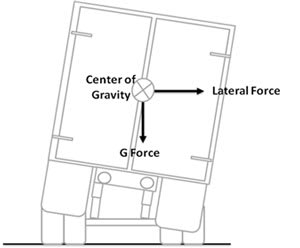
The National Highway Traffic Safety Administration today proposed a first-ever federal motor vehicle safety standard to require electronic stability control (ESC) systems on large commercial trucks and buses.
The rule would affect vehicles with a gross vehicle weight rating of more than 26,000 pounds. As proposed, the rule would take effect between two and four years after the standard is finalized, depending on the type of vehicle. The proposal also includes standards for performance testing of the technology.
Agency research shows the technology could prevent up to 56% of rollover crashes each year and another 14% of loss-of-control crashes.
An extensive NHTSA research program to determine how available stability control technologies affect crashes involving commercial vehicles found ESC systems to be the most effective tool for reducing the propensity for heavy vehicles to rollover or lose control.
NHTSA estimates that a standard requiring ESC on the nation's large trucks and large buses would prevent up to 2,329 crashes, eliminate an estimated 649 to 858 injuries, and prevent between 49 and 60 fatalities a year.
"We've already seen how effective stability control can be at reducing rollovers in passenger vehicles-the ability for this type of technology to save lives is one reason it is required on cars and light-duty trucks beginning with model year 2012," said NHTSA Administrator David Strickland. "Now, we're expanding our efforts to require stability enhancing technology on the many large trucks, motorcoaches, and other large buses on our roadways."
RSC vs. ESC
Today's proposal answers the big question that industry observers have wondered about the proposal: Would the agency proposal call for ESC, or the less-expensive roll stability control (RSC)?
Both systems perform a similar function: if sensors detect the risk of rollover or instability, the control module slows the vehicle by cutting back the throttle and applying the brakes automatically.
The difference is that RSC is triggered only when the system detects roll instability, which might occur when a truck is going too fast into a turn or maneuvers too quickly. ESC reacts to both roll instability and yaw instability, such as a skid that could lead to a jackknife. In addition to slowing the vehicle to prevent a rollover, it applies the brakes on the wheel that needs to be slowed to counteract the skid.
Studies have demonstrated that both systems are effective, but not equally so. In 2009 the University of Michigan Transportation Institute concluded that if all 5-axle tractor-trailers had RSC, there would be 3,489 fewer crashes and 106 fewer deaths each year. If all of these trucks had ESC, there would be 4,659 fewer crashes and 126 fewer deaths.
The other difference is cost. ESC is more expensive. Costs range from $800 to $1,600 for RSC, while ESC might go for $1,800 to $2,300. But discounts are common and prices should go down due to economies of scale after the mandate takes effect.
Already in Use
Many carriers already have adopted stability control systems. Major suppliers Bendix Commercial Vehicle Systems and Meritor Wabco Vehicle Control Systems estimate that as many as 25% of new trucks have these controls. It's especially common in the tank truck industry. The Owner-Operator Independent Drivers Association will likely oppose it because of the cost burden.
While many truck tractors and large buses can currently be ordered with this technology, the proposed standard would require ESC systems as standard equipment on these types of vehicles.
The agency's Notice of Proposed Rulemaking is being published in the Federal Register and members of the public will have the opportunity to comment on the proposal for 90 days. NHTSA will also hold a public hearing on the proposed safety standard to solicit further public comment. The date and location of that hearing will be published in the coming weeks.
You can download the complete proposal here.
More Safety & Compliance
PrePass, Kodiak Connect Driverless Trucks to Roadside Enforcement
The system will allow enforcement agencies to verify Enhanced Inspection information and decide whether Kodiak’s autonomous trucks can bypass roadside screening sites.
Read More →
From One Generation to the Next: How Mentorship Builds Safer Truck Drivers
After three decades in trucking, Harold Perry shares what he's learned about driver safety, mentorship, and helping the next generation build confidence behind the wheel.
Read More →
FMCSA Pauses Biennial-Update Enforcement Amid Motus Transition
Carriers whose updates were due on or after June 1 have more time, while FMCSA works to stabilize its new registration system and warns of phishing sites impersonating its new carrier registration system, Motus.
Read More →
ZF Expands Commercial Vehicle Push in North America
ZF is expanding its North American commercial-vehicle presence with new transmission applications, electrification, trailer technology and autonomous-driving systems.
Read More →
Truck Drivers Need More Than Another Alert
Fleets have more visibility into truck health, safety events, and driver activity than ever. The next challenge is turning all that information into useful guidance for the person who has to decide what to do next.
Read More →
Tesla Wants a Self-Driving Semi. Are Cameras Enough?
Could Tesla’s camera-only autonomous driving technology work on an 80,000-pound Semi? In this commentary, HDT's Deborah Lockridge takes a look at Tesla, Cybercab, and how autonomous trucks see the road.
Read More →
What DOT’s Automated Vehicle Strategy Means for Trucking
The U.S. Department of Transportation issued a new automated-vehicle strategy that outlines plans for driverless-truck regulations, cross-state freight corridors, and federal safety standards.
Read More →
NYC Expands Speed, Pedestrian Safety Tech Across Fleet
New York City is expanding intelligent speed assistance and pedestrian-alert systems across its municipal fleet, moving the technologies from pilot programs into vehicle procurement and retrofit requirements.
Read More →
FMCSA Removes 110 Truck Driver Training Schools from Certified ELDT List
Federal regulators also are targeting more than 160 additional training providers and launching a nationwide audit of third-party CDL skills testers as part of a broader crackdown on trucking fraud.
Read More →
Beyond DOT Compliance: What Makes a Trucking Fleet Truly Safe?
A trucking fleet can follow every rule and still make unsafe decisions. The real test comes when safety conflicts with freight, productivity, or cost.
Read More →