





Related: On the Spot - The Bosch E-Mirror Video Mirror System [Video]
NHTSA Asks Trucking to Comment on Rearview Cameras Replacing Mirrors
The National Highway Traffic Safety Administration is seeking public comment about possibly permitting camera-based rear visibility systems to be used as an alternative to inside and outside rearview mirrors on heavy-duty vehicles.
October 31, 2019
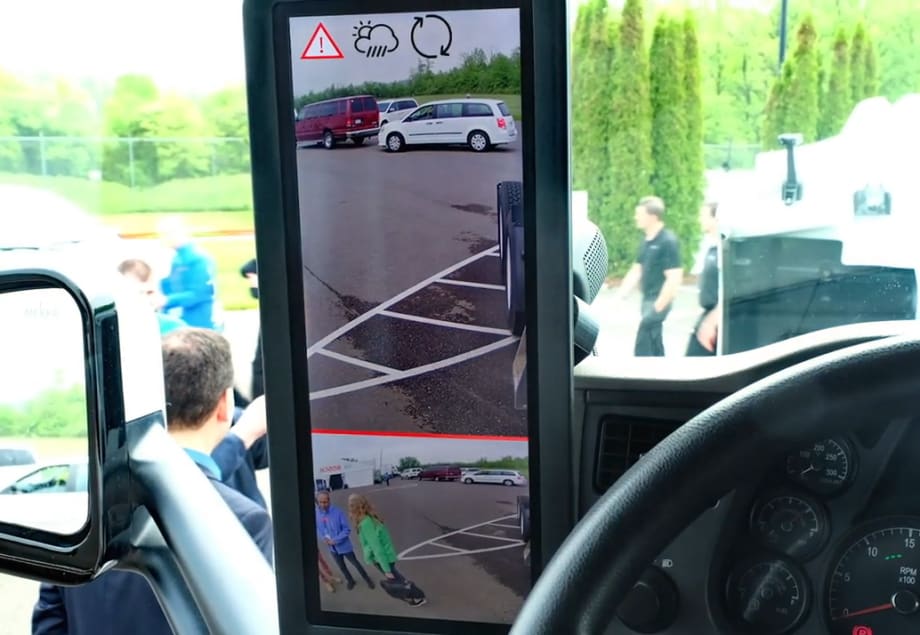
The National Highway Traffic Safety Administration is seeking public comment about possibly permitting camera-based rear visibility systems to be used as an alternative to inside and outside rearview mirrors on heavy-duty vehicles.
Photo: Jim Park
2 min to read
The National Highway Traffic Safety Administration is seeking public comment about possibly permitting camera-based rear visibility systems to be used as an alternative to inside and outside rearview mirrors on heavy-duty vehicles.
Often referred to as camera monitor systems, NHTSA is considering allowing rearview cameras as a potential replacement for review mirrors on heavy duty trucks.
NHTSA issued an advance notice of proposed rulemaking on the subject, responding to two petitions brought by Daimler Trucks North America and the Alliance of Automobile Manufacturers in conjunction with Tesla, seeking permission to install a CMS in future vehicles.
NHTSA and other safety groups have been researching camera-based mirror replacements for several years and stated that it is seeking additional information because of safety-relevant performance issues that has been exhibited in prototype and preproduction CMS systems. For example, some drivers indicated that the glare produced from the system’s electronic displays was too bright and affected their vision, particularly at night.
The agency also would like more information on possible issues related to human factors, such as how well drivers may be able to acclimate to the use of a CMS and potentially different image locations. NHTSA hopes that the comments received in response to the ANPRM will provide the agency with more information to address these concerns.
In its petition, DTNA argued that a CMS can provide an expanded field of view and eliminate blind spots while achieving the same or better level of safety as outside review mirrors.
In order to allow camera-based systems to replace mirrors, NHTSA would have to amend rule FMVSS No. 111 which governs rear visibility in vehicles. The agency will be considering what industry stakeholders have to say before it makes any sort of rule change and the public comment period is open until Dec. 9, 2019.
To submit a formal comment and read all the details of NHTSA’s proposed rule, click here.
More Safety & Compliance

FMCSA Pauses Biennial-Update Enforcement Amid Motus Transition
Carriers whose updates were due on or after June 1 have more time, while FMCSA works to stabilize its new registration system and warns of phishing sites impersonating its new carrier registration system, Motus.
Read More →
ZF Expands Commercial Vehicle Push in North America
ZF is expanding its North American commercial-vehicle presence with new transmission applications, electrification, trailer technology and autonomous-driving systems.
Read More →
Truck Drivers Need More Than Another Alert
Fleets have more visibility into truck health, safety events, and driver activity than ever. The next challenge is turning all that information into useful guidance for the person who has to decide what to do next.
Read More →
Tesla Wants a Self-Driving Semi. Are Cameras Enough?
Could Tesla’s camera-only autonomous driving technology work on an 80,000-pound Semi? In this commentary, HDT's Deborah Lockridge takes a look at Tesla, Cybercab, and how autonomous trucks see the road.
Read More →
What DOT’s Automated Vehicle Strategy Means for Trucking
The U.S. Department of Transportation issued a new automated-vehicle strategy that outlines plans for driverless-truck regulations, cross-state freight corridors, and federal safety standards.
Read More →
NYC Expands Speed, Pedestrian Safety Tech Across Fleet
New York City is expanding intelligent speed assistance and pedestrian-alert systems across its municipal fleet, moving the technologies from pilot programs into vehicle procurement and retrofit requirements.
Read More →
FMCSA Removes 110 Truck Driver Training Schools from Certified ELDT List
Federal regulators also are targeting more than 160 additional training providers and launching a nationwide audit of third-party CDL skills testers as part of a broader crackdown on trucking fraud.
Read More →
Beyond DOT Compliance: What Makes a Trucking Fleet Truly Safe?
A trucking fleet can follow every rule and still make unsafe decisions. The real test comes when safety conflicts with freight, productivity, or cost.
Read More →
Hours of Service Pilot Programs: FMCSA Readies for 2027 Rollout
Two pilot programs could eventually reshape hours-of-service rules, giving truck drivers options to pause their 14-hour clock or use longer split sleeper rest periods.
Read More →
New Guide Offers Pet Safety Tips for Truck Drivers
Hundreds of thousands of pets travel in truck cabs. A new safety guide from Volvo Trucks and the Center for Pet Safety offers practical advice for truck drivers who bring dogs and cats along for the ride.
Read More →