




Newly Awakened Truckers More Groggy Than Sleep Deprived?
If it takes a while to clear the cobwebs after waking up, that's understandable. Sleep inertia leaves some people so groggy they might as well be drunk, researchers claim.
If it takes a while to clear the cobwebs after waking up, that's understandable. Sleep inertia leaves some people so groggy they might as well be drunk, researchers claim.
"For a short period, at least, the effects of sleep inertia may be as bad as or worse than being legally drunk," said researcher Kenneth Wright of the University of Colorado at Boulder.
That befuddled feeling usually lasts for at least a few minutes but may be detectable for up to two hours, Wright wrote in a report published in this week's issue of the Journal of the American Medical Association.
The findings are relevant to emergency workers such as truck drivers, firefighters and resident doctors who must spring into action after awakening from naps. A groggy driver is accident-prone, and a hazy doctor might make a mistake calculating a drug dosage, the report said.
Wright's study of 16 subjects found the most severe impairments were evident on performance tests taken during the first three minutes after awakening from an eight-hour sleep.
"We found the cognitive skills of test subjects were worse upon awakening than after extended sleep deprivation," he said.
There is evidence that the cortical areas of the brain thought to be responsible for problem-solving, complex thought and emotions take longer to wake up than other parts of the brain, Wright wrote.
More Safety & Compliance
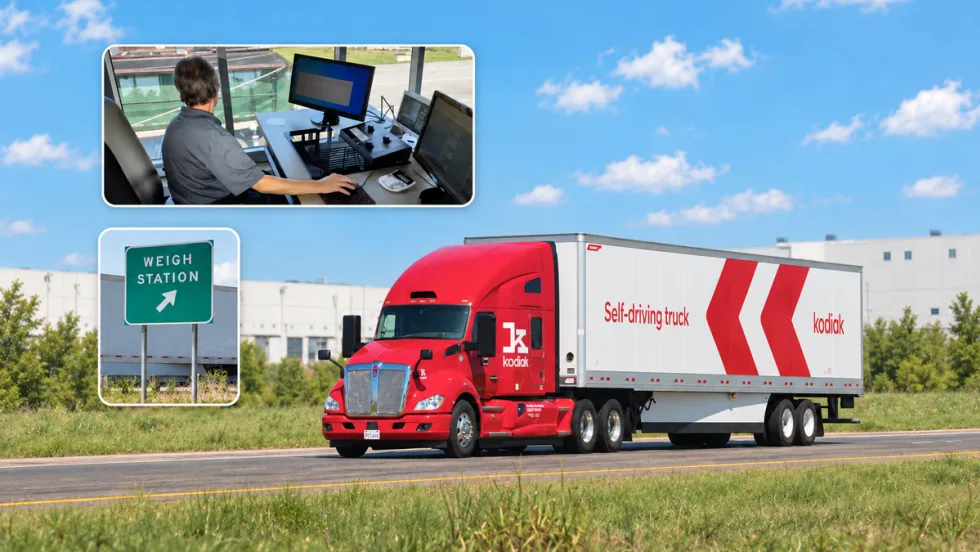
PrePass, Kodiak Connect Driverless Trucks to Roadside Enforcement
The system will allow enforcement agencies to verify Enhanced Inspection information and decide whether Kodiak’s autonomous trucks can bypass roadside screening sites.
Read More →
From One Generation to the Next: How Mentorship Builds Safer Truck Drivers
After three decades in trucking, Harold Perry shares what he's learned about driver safety, mentorship, and helping the next generation build confidence behind the wheel.
Read More →
FMCSA Pauses Biennial-Update Enforcement Amid Motus Transition
Carriers whose updates were due on or after June 1 have more time, while FMCSA works to stabilize its new registration system and warns of phishing sites impersonating its new carrier registration system, Motus.
Read More →
ZF Expands Commercial Vehicle Push in North America
ZF is expanding its North American commercial-vehicle presence with new transmission applications, electrification, trailer technology and autonomous-driving systems.
Read More →
Truck Drivers Need More Than Another Alert
Fleets have more visibility into truck health, safety events, and driver activity than ever. The next challenge is turning all that information into useful guidance for the person who has to decide what to do next.
Read More →
Tesla Wants a Self-Driving Semi. Are Cameras Enough?
Could Tesla’s camera-only autonomous driving technology work on an 80,000-pound Semi? In this commentary, HDT's Deborah Lockridge takes a look at Tesla, Cybercab, and how autonomous trucks see the road.
Read More →
What DOT’s Automated Vehicle Strategy Means for Trucking
The U.S. Department of Transportation issued a new automated-vehicle strategy that outlines plans for driverless-truck regulations, cross-state freight corridors, and federal safety standards.
Read More →
NYC Expands Speed, Pedestrian Safety Tech Across Fleet
New York City is expanding intelligent speed assistance and pedestrian-alert systems across its municipal fleet, moving the technologies from pilot programs into vehicle procurement and retrofit requirements.
Read More →
FMCSA Removes 110 Truck Driver Training Schools from Certified ELDT List
Federal regulators also are targeting more than 160 additional training providers and launching a nationwide audit of third-party CDL skills testers as part of a broader crackdown on trucking fraud.
Read More →
Beyond DOT Compliance: What Makes a Trucking Fleet Truly Safe?
A trucking fleet can follow every rule and still make unsafe decisions. The real test comes when safety conflicts with freight, productivity, or cost.
Read More →