





Related – Safety Schism: Truck Groups Draw Lines over ELD, Speed-Limiter Rules
New FMCSA Deputy Administrator Outlines Agency Priorities
On her third day on the job, the new number-two at the Federal Motor Carrier Safety Administration outlined the priorities of the agency under the Trump administration, including ELD implementation, deregulation, infrastructure investment, autonomous vehicles, and fighting human trafficking.
November 15, 2017

FMCSA new Deputy Administrator Cathy Gatreaux talks about the importance of regulators and enforcement partnering with industry to improve safety. Photo: Deborah Lockridge
5 min to read
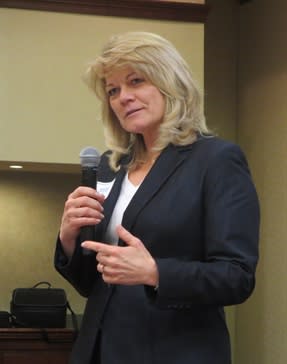
FMCSA new Deputy Administrator Cathy Gatreaux talks about the importance of regulators and enforcement partnering with industry to improve safety.Photo: Deborah Lockridge
On her third day on the job, the new number-two at the Federal Motor Carrier Safety Administration outlined the priorities of the agency under the Trump administration, including ELD implementation, deregulation, infrastructure investment, autonomous vehicles, and fighting human trafficking.
Deputy Administrator Cathy Gautreaux had only a day and a half in her new office before hitting the road for the FMCSA’s Southern Regional Road Show, the fourth such regional event this year, being held in Birmingham, Alabama.
Gautreaux, who has a degree in criminal justice and experience in law enforcement before her 32-year stint at the Louisiana Motor Transport Association, said this is “an exciting time to be in transportation,” citing an expanding economy, new technology, and a “rare bipartisan consensus about infrastructure.”
“Of course, these opportunities also present challenges,” she said, including congestion, highway fatalities, neglected and aging infrastructure, and concerns around the reliability, security and privacy of new technologies.
That’s why the DOT, she said, has three over-arching priorities:
Safe deployment of automated road transportation systems
Revitalization of America’s infrastructure
Regulatory reform
“These priorities will have a major impact on our work at FMCSA over the next few years,” she said, and outlined the following priorities for the agency:
Mandatory ELD Implementation
Gautreaux noted that the agency has had many meetings with stakeholders on the new rule requiring electronic logging devices to track driver hours, from beef and pork industries to the motion picture industry to individual trucking companies and Capitol Hill staffers.
“FMCSA has heard from a wide range of people on this issue,” she said. “The staff heard the concerns presented and we want to work with the groups, but the bottom line is in the end, FMCSA cannot arbitrarily change the compliance date of Dec. 18, 2017. … We must emphasize the fat that the rule and deadline has been published for more than two years. I hope everyone understands that [the ELD rule] does not change the underlying hours of service rule. All ELDs will do is replace paper logs. We’re going to help move the trucking industry into the 21st century. We also want to make sure our state partners are comfortable and prepared to enforce” the rules.
Infrastructure Investment
“The state of our infrastructure is critical to our industry,” Gautreaux said, “and this administration is proposing to invest in it through public-private partnerships. This type of financing for large projects eases the burden on taxpayers.”
However, she said, there are many hurdles in place in the form of regulatory and permitting barriers that can delay projects “for years and in some cases decades without providing any real benefits to safety, the environment, or other concerns.”
Which led into her next topic, deregulation. She noted that in August, an Executive Order issued by President Trump aimed at rebuilding the country’s deteriorating infrastructure would curb or remove unnecessary red tape and a “fragmented, inefficient and unpredictable” system for environmental reviews.
Reducing Regulation
Pointing out that one of President Trump’s his first acts after taking office in January was signing an executive order directing federal agencies to repeal two federal regulations for every new rule they issue, Gautreaux said, “the spirit is quite clear. Without compromising safety or a change in our mission, we at FMCSA look for ways to reduce regulatory burdens on industry whenever and wherever possible. This can be difficult, especially when rules come to us as statutory mandates,” required by congressional legislation. “Nevertheless, there are ways we can work to reduce the regulatory burden.”
For instance, she said, a proposed rulemaking would allow states to issue commercial learner’s permits for up to a year, instead of making drivers and government officials go through the process of renewing a six-month permit. She also cited an example of a change under the previous administration, removing the requirement for drivers to file pre- and post-trip inspection reports where the inspection didn’t find any problems. “The final rule has provided more than a billion dollars in savings for the industry,” she said. FMCSA is in the early stages of looking for more ways to reduce regulation, she said, with the help of its Motor Carrier Safety Advisory Committee.
Autonomous Vehicles
“At FMCSA we’re looking to the future by eliminating obstacles and providing opportunities for industry to develop driver assistance and automated driving systems,” she said, noting that it has sought input from representatives from trucking, law enforcements, safety advocates and technology companies.
“Additionally, FMCSA is an integral part of the DOT’s 3.0 autonomous vehicle program.” Transportation Secretary Elaine Chao recently unveiled a revision of the Obama Administration’s guidelines for developing self-driving cars, which she called Version 2.0, and Version 3.0 is due next year.
Human Trafficking Education
Human trafficking “continues to be a sensitive and painful topic but is something that must be publicly addressed,” Gautreaux said, calling it an “awful blight on humanity.”
“FMCSA will continue to work with other DOT offices and members of congress,” she said, to do things like providing more in depth training for motor carriers and state enforcement officials.
Partnering for Progress
Gautreaux stressed using a “partnership” approach between FMCSA and industry to address these various priorities. Having been involved in both law enforcement and the trucking industry, she said, “I hopefully will bring to the table a reinvigoration of the partnership that helped create the FMCSA,” she said, noting she was involved in the creation of the agency.
She believes the trucking industry is headed into the next phase. The first was as an economically regulated industry, by the old Interstate Commerce Commission and state Public Utilities Commissions, prior to deregulation in 1980. The next phase involved safety being the primary determinant affecting motor carriers.
“And now I think the next phase is going to be technology, and the broad, broad way that technology will impact the industry. So I hope I bring that knowledge and the ability to reach across the table to industry and law enforcement, and we together embrace this as the technology and insight on what technology will mean to the industry. That’s where that partnership is so incredibly important.”
The agency does not yet have its top leadership position, that of administrator, filled. Although White House nominee Raymond Martinez last week got a thumbs-up from the Senate Commerce Committee, FMCSA officials said at the show they did not have any indication on when a full Senate vote on the nomination might occur.
More Safety & Compliance

Kodiak Lines Up Fleets for Driverless Trucking
An agreement for 75 trucks, a new Texas freight lane, and progress on safety validation move Kodiak closer to its planned driverless highway launch.
Read More →
More Trailer Data Through the Same Seven-Way [Video]
Can trucking’s standard seven-way connector handle more cameras and trailer data? Grote’s Adam Slade shows HDT how the company is using new technology with its 4See trailer system, not only to add a new backup camera but also to expand other capabilities — without adding another connection.
Read More →
PrePass Intelligence Mines Fleet Bypass, Toll and Safety Data
PrePass Intelligence helps fleets measure bypass savings, flag potential toll overcharges, and spot suspicious transactions by combining data from separate systems.
Read More →
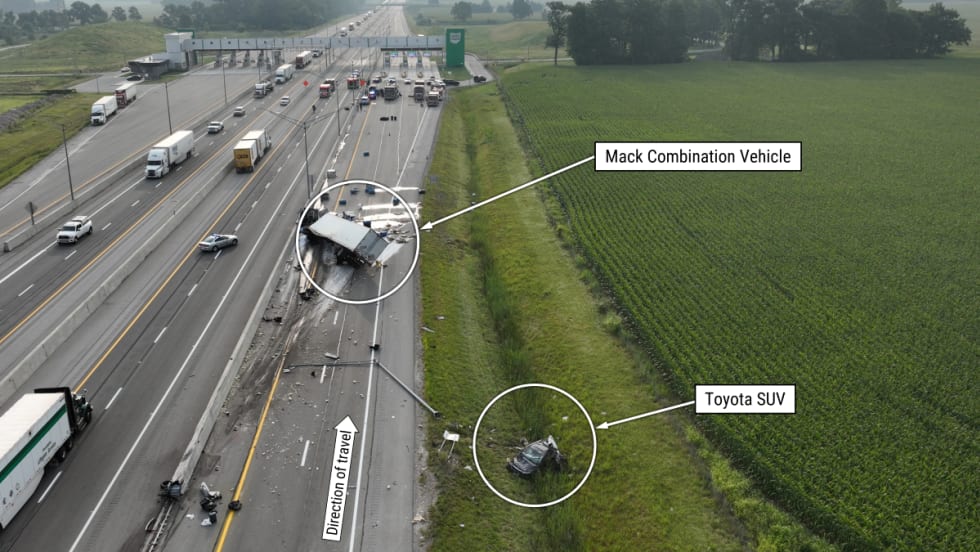
Fatal Crash Exposes Toll Plaza Risks
An NTSB investigation found that last-minute lane changes and large speed differences at an Ohio toll plaza created a hazard the truck driver couldn't avoid in time.
Read More →
When Language Stops the Truck: The Return of ELP Out-of-Service Orders
English language proficiency rules for commercial drivers aren’t new, but renewed out-of-service enforcement has raised the stakes. Here’s what carriers need to know before a driver reaches a roadside inspection.
Read More →
Sponsored•October 6, 2026
A Camera Isn't a Safety Program. Here's What Brokers Are Screening for Now
Footage alone may not be enough to pass broker vetting processes. Here's what counts as a defensible safety program now.
Read More →
Marijuana and Trucking’s Drug-Testing Dilemma
Marijuana is getting stronger, laws are changing, and drug tests still can’t reliably establish impairment. What does that mean for truck drivers and the fleets that employ them?
Read More →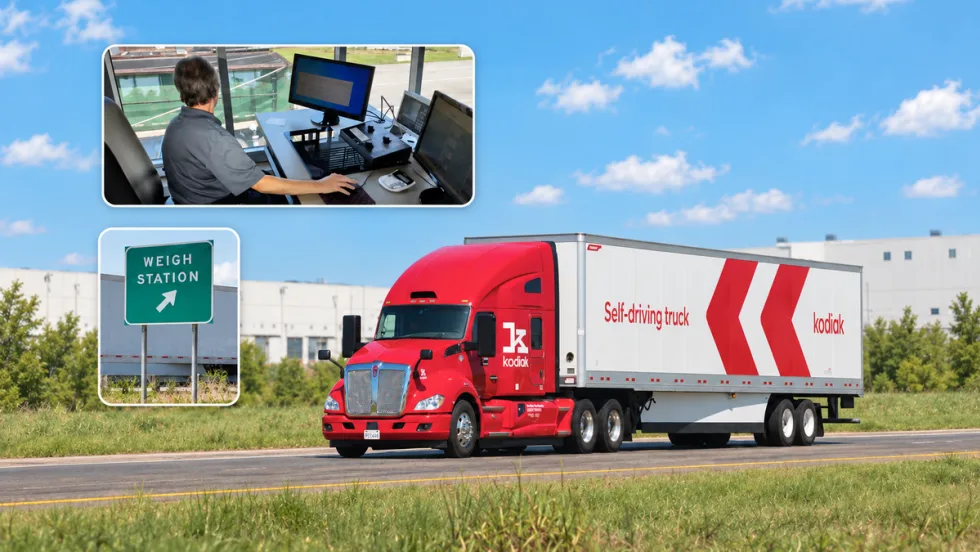
PrePass, Kodiak Connect Driverless Trucks to Roadside Enforcement
The system will allow enforcement agencies to verify Enhanced Inspection information and decide whether Kodiak’s autonomous trucks can bypass roadside screening sites.
Read More →
From One Generation to the Next: How Mentorship Builds Safer Truck Drivers
After three decades in trucking, Harold Perry shares what he's learned about driver safety, mentorship, and helping the next generation build confidence behind the wheel.
Read More →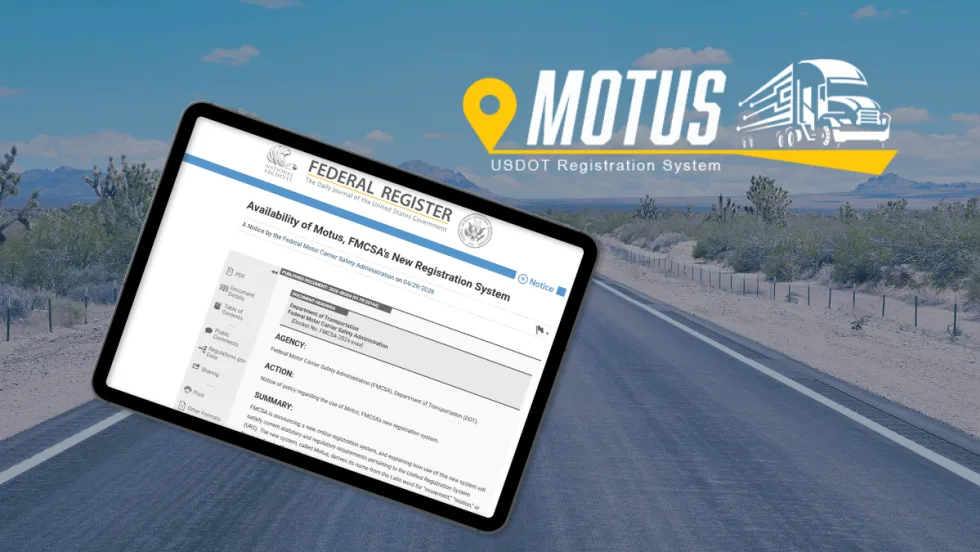
FMCSA Pauses Biennial-Update Enforcement Amid Motus Transition
Carriers whose updates were due on or after June 1 have more time, while FMCSA works to stabilize its new registration system and warns of phishing sites impersonating its new carrier registration system, Motus.
Read More →