





Related: Real-World Fuel-Economy Lessons From NACFE Run on Less
NACFE Announces Run on Less Regional Fleets
The North American Council for Freight Efficiency announced the 10 fleets that will participate in its Run on Less Regional real-world fleet operational comparison study this Fall.
June 14, 2019
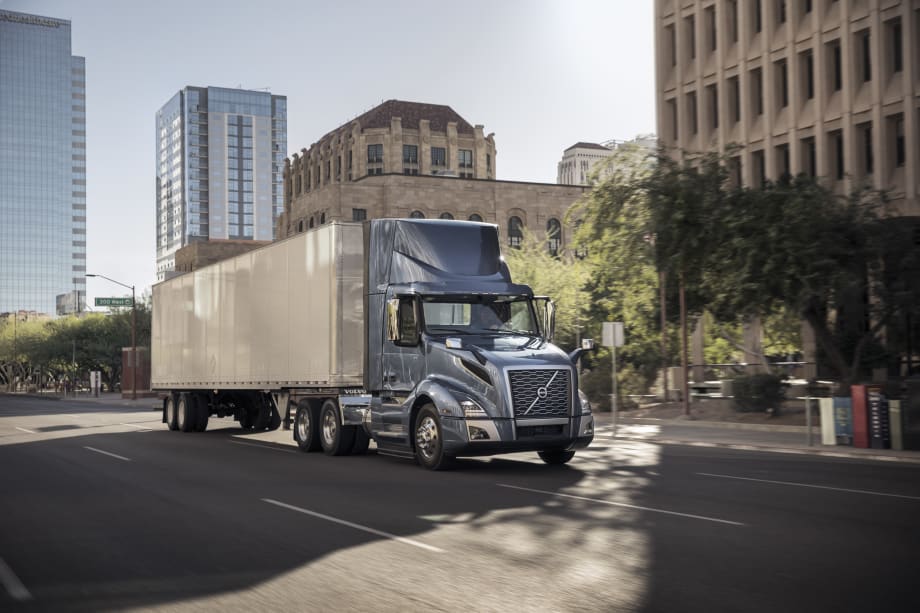
The North American Council for Freight Efficiency has announed the 10 fleets that will participate in its Run on Less Regional study later this year.
Photo: Volvo Trucks North America
4 min to read
A major – and largely unheralded – movement toward regional haul routes is taking place in North American trucking, says Mike Roeth, executive director of the North American Council for Freight Efficiency. To highlight this movement, and underscore the fact that these routes can be operated by tractor-trailers logging MPG numbers on par with long-haul fleets running advanced aerodynamic vehicles, NACFE has been preparing for its Run on Less Regional roadshow. And now we know which fleets will take part.
Beginning on Oct. 8, 10 regional haul fleets from around the country will begin running real-world, regional haul, freight routes to see how their equipment, drivers and operational models stack up against similar fleets – all with an eye toward boosting fuel economy and freight efficiency. Run on Less Regional will wrap up on the doorstep of the 2019 North American Commercial Vehicle Show as it opens its doors in Atlanta Oct. 28.
NACFE has announced the 10 fleets it has selected to participate in Run on Less Regional, as well as the home bases the trucks and driver will be operating from during the event. They are:
C&S Wholesale Grocers — Hammond, Louisiana
Hirschbach — Monterey, Tennessee
Hogan Transportation — St. Louis, Missouri
J.B. Hunt — Corsicana, Texas
Meijer — Lansing, Michigan
PepsiCo's snacks and beverages division — Vancouver, Washington
Ploger Transportation — Norwalk, Ohio
Schneider — Rockford, Illinois
Southeastern Freight Lines — Columbia, South Carolina
UPS — Phoenix, Arizona
“Regional haul as a business model is kind of provocative now,” Roeth told HDT in an interview. “I think there’s a real movement and change going on, and not everybody has noticed it yet. This move is being driven by e-commerce and a lot of new technologies coming together. And we think these 10 fleets that will be in Run on Less Regional really showcase all the different aspects of this application.”
Regional is challenging, Roeth added. “In some ways, it’s tougher than a long-haul route where you drive 300 or 500 miles, sleep, and then do it all over again. There’s a lot of diversity in regional haul. You often have multiple drops and hook-ups. Geography is often a major operational factor. Some drivers go out and come home every night. Others stay out a night, come home for a night, and then repeat. So there’s a lot going on, depending on where a fleet is and what their operations require.”

NACFE Executive Director Mike Roeth says a wide range of factors is driving more fleets toward regional haul operations now.
Photo: NACFE
Roeth said the fleets participating in Run on Less Regional run the gamut of common business models currently seen in regional haul. He pointed to Pepsi and UPS as examples of private retail or manufacturing fleets, while Southeastern Freight Lines, Hogan Transportation, Ploger Transportation and Hirschbach Transportation represent traditional regional haul fleets that have been doing this work for years.
“And then we have two newcomers to this with J.B. Hunt and Schneider,” Roeth said. “Some people look at our list and see those two and wonder what they’re doing on it. They’re on there because this is what we’re talking about – a movement to this new way of hauling freight. And both of these fleet divisions have grown significantly over the past year. So it will be interesting to see how they’re coming into this with fresh ideas.”
Like its predecessor Run on Less 2017, Run on Less Regional will feature real-time monitoring of a number of factors, including miles traveled, fuel consumed, pickups and deliveries, elevation change, and vehicle speed.
“With the growth of e-commerce, we are able to provide drivers with more opportunities to take on regional routes, which ultimately allows them to spend more time with their families,” said Craig Harper, executive vice president and chief operations officer at J.B. Hunt, in a press release. “With this program, we can learn how to make these routes more efficient and beneficial for our drivers, J.B. Hunt, and the customers we support.”
Shell is the title sponsor of the event.
“Shell consistently works to raise awareness about the energy challenge facing society," said Annie Peter, fleet sector marketing manager, Shell Lubricants, in an announcement. "Whether supporting increased fuel efficiency or the adoption of alternative fuels, initiatives such as Run on Less Regional are a great way to showcase the advances in technology that help deliver fuel economy gains.”
PepsiCo, Geotab, EPA SmartWay, LinkeDrive, and the Department of Energy’s National Renewable Energy Laboratory and Oak Ridge National Laboratory also have signed on as event sponsors. NACFE is in need of additional event sponsors for such items as the finale in Atlanta, various technology days, video storytelling during the Run, apparel and other items.
More details, such as introduction of the drivers, their exact routes, freight to be hauled, as well as details surrounding the Run’s technology days, will be announced in coming months.
More Fuel Smarts

How Volvo Updated Its D13 for EPA 2027 [Watch]
Volvo’s updated D13 promises lower emissions without sacrificing performance or fuel economy. Take a closer look at what changed inside the engine in this HDT Spotlight video.
Read More →
Diesel Price Spike Shortens Payback for Natural Gas Trucks, Report Says
Energy Vision estimates fleets could recover the higher purchase price of an RNG-fueled Class 8 tractor in 1.3 to 2.8 years under current fuel-price scenarios.
Read More →
Calstart Becomes Catalyst Mobility, Reflecting Broader Focus
Calstart is now Catalyst Mobility, reflecting the nonprofit’s growing national role in clean transportation, including zero-emission trucks, infrastructure and incentive programs.
Read More →

Record Diesel Prices Squeeze Trucking Fleets
Average U.S. diesel prices have climbed to nearly $6 a gallon, surpassing the 2022 record as tight refinery capacity and Middle East disruptions keep fuel costs elevated.
Read More →
Sponsored•September 9, 2026
How Fuel Delivery Shapes Engine Performance
Fuel delivery depends on more than what happens at the injector. For fleet, maintenance and technical professionals, looking at the full path from pump to injector can provide useful context for understanding engine performance.
Read More →
East Coast Port Launches $45M Electric Truck Push
The Port Authority of New York and New Jersey announced millions in incentives for zero-emission drayage trucks, yard tractors, and new charging hubs near the port.
Read More →
California Bill Could Shed Light on Electric Truck Prices
Why do battery-electric Class 8 trucks remain so expensive? A California bill headed to Gov. Gavin Newsom would give fleets and state agencies more visibility into what manufacturers charge.
Read More →
Detroit Opens Orders for EPA 2027 Engines
Detroit isn’t starting from scratch to meet EPA 2027 diesel emissions standards. Its Gen 6 DD13 and DD15 engines keep much of today’s platform while updating the fuel and aftertreatment systems.
Read More →
Zero-Emission Truck Corridor Planned for West Coast
California, Oregon, Washington, British Columbia and Baja California are coordinating plans for truck charging and hydrogen fueling from Canada to Mexico.
Read More →
A Closer Look at Kenworth’s Electric T880E Vocational Truck [Video]
Learn more about Kenworth's T880E battery-electric vocational truck at the Paccar Technical Center, including its range, applications, upfitting considerations, and PTO options, in this HDT Spotlight video.
Read More →