




Mineta Announces Record Safety Belt Usage in the U.S.
A record 82 percent of Americans wear their safety belts while driving or riding in their vehicles, according to U.S. Secretary of Transportation Norman Y. Mineta
A record 82 percent of Americans wear their safety belts while driving or riding in their vehicles, according to U.S. Secretary of Transportation Norman Y. Mineta.
According to a scientific survey by the DOT’s National Highway Traffic Safety Administration, between 2004 and 2005, 10 percent of non-users adopted the habit of buckling their safety belts, Mineta said.
“The fact that safety belts save lives is starting to click with the American people,” Mineta said. “With safety belt usage at a record high 82 percent, we are on the road to a safer America. And today, we are closer than ever to reaching our final destination.”
In the past five years, safety belt use has increased steadily from 71 percent in 2000 to 82 percent this year, he noted.
At a rate of 82 percent, Mineta said, safety belts are preventing 15,700 fatalities, 350,000 serious injuries, and $67 billion in economic costs associated with traffic injuries and deaths every year. The increase in belt use over the past year alone has prevented 540 fatalities, 8,000 serious injuries, and $1.8 billion in economic costs, he added.
The secretary said the success was due in large part to states that have passed primary safety belt laws. Twenty-one states, the District of Columbia and Puerto Rico have primary safety belt laws that allow police officers to stop a motorist solely for belt violations. South Carolina will become the 22nd state with a primary law that takes effect in December.
Secretary Mineta also noted that a new program developed by the Administration makes incentives available for states that pass primary enforcement laws or achieve an 85 percent safety belt usage rate for two consecutive years. The amount of the incentive will be almost five times of a state’s annual base highway safety funding.
According to the NHTSA survey, primary law states averaged 85 percent belt use in 2005, compared to 75 percent in states with secondary laws.
Significant increases in belt use were documented in two categories targeted by NHTSA’s “Click it or Ticket” campaign – pickup truck occupants and rural communities. Both increased an average of three percentage points from 2004.
More Safety & Compliance
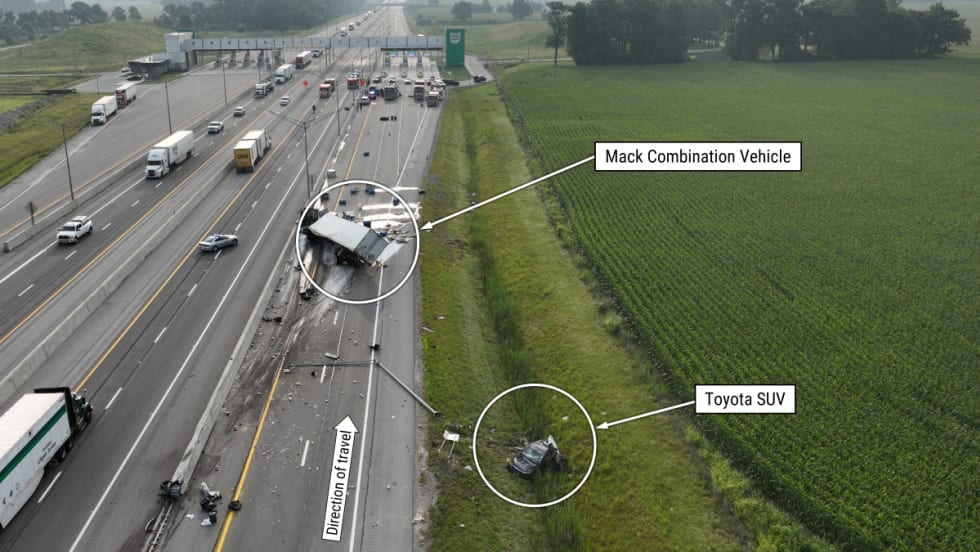
Fatal Crash Exposes Toll Plaza Risks
An NTSB investigation found that last-minute lane changes and large speed differences at an Ohio toll plaza created a hazard the truck driver couldn't avoid in time.
Read More →
When Language Stops the Truck: The Return of ELP Out-of-Service Orders
English language proficiency rules for commercial drivers aren’t new, but renewed out-of-service enforcement has raised the stakes. Here’s what carriers need to know before a driver reaches a roadside inspection.
Read More →
A Camera Isn't a Safety Program. Here's What Brokers Are Screening for Now
Footage alone may not be enough to pass broker vetting processes. Here's what counts as a defensible safety program now.
Read More →

Marijuana and Trucking’s Drug-Testing Dilemma
Marijuana is getting stronger, laws are changing, and drug tests still can’t reliably establish impairment. What does that mean for truck drivers and the fleets that employ them?
Read More →
PrePass, Kodiak Connect Driverless Trucks to Roadside Enforcement
The system will allow enforcement agencies to verify Enhanced Inspection information and decide whether Kodiak’s autonomous trucks can bypass roadside screening sites.
Read More →
From One Generation to the Next: How Mentorship Builds Safer Truck Drivers
After three decades in trucking, Harold Perry shares what he's learned about driver safety, mentorship, and helping the next generation build confidence behind the wheel.
Read More →
FMCSA Pauses Biennial-Update Enforcement Amid Motus Transition
Carriers whose updates were due on or after June 1 have more time, while FMCSA works to stabilize its new registration system and warns of phishing sites impersonating its new carrier registration system, Motus.
Read More →
ZF Expands Commercial Vehicle Push in North America
ZF is expanding its North American commercial-vehicle presence with new transmission applications, electrification, trailer technology and autonomous-driving systems.
Read More →
Truck Drivers Need More Than Another Alert
Fleets have more visibility into truck health, safety events, and driver activity than ever. The next challenge is turning all that information into useful guidance for the person who has to decide what to do next.
Read More →
Tesla Wants a Self-Driving Semi. Are Cameras Enough?
Could Tesla’s camera-only autonomous driving technology work on an 80,000-pound Semi? In this commentary, HDT's Deborah Lockridge takes a look at Tesla, Cybercab, and how autonomous trucks see the road.
Read More →