




MFCA Gets $400,000 Contract To Document Driver Fatigue
The Motor Freight Carriers Assn. (MFCA) announced this week it has been awarded a $400,000 contract from the Department of Transportation to assist DOT in its efforts to address driver fatigue and alertness.
The Motor Freight Carriers Assn. (MFCA) announced this week it has been awarded a $400,000 contract from the Department of Transportation to assist DOT in its efforts to address driver fatigue and alertness.
As part of the contract, MFCA will conduct a nationwide survey of Teamster company drivers who have logged at least one million miles of accident-free driving to identify the various strategies and techniques employed to manage fatigue, particularly during nighttime operations.
"MFCA was awarded this contract because of its demonstrated ability to bring together industry safety experts, leading university researchers, and safety experts from the Teamsters union to gain important insights into how we can improve driver alertness and reduce driver fatigue," said Timothy P. Lynch, president and CEO of MFCA. "By surveying our drivers with excellent safety records, we are in essence using the knowledge and experience of the best to teach the rest," said Lynch.
FMCSA, along with the National Transportation Safety Board, Federal Highway Administration and the National Highway Traffic Safety Administration, have all identified driver fatigue as a major problem.
"Nighttime operations are certainly no secret to the unionized LTL industry," Lynch said. "Ensuring that consumer goods are available to the public when the stores open requires that a significant proportion of our highway operations occur at night. Our companies and their drivers have a demonstrated record of compliance with the hours of service regulations and for operating in a manner that encourages driver alertness. We have more than 10,000 drivers who have logged more than one million accident-free miles," added Lynch.
The research team will survey Teamster drivers who regularly operate on overnight runs to collect detailed information on such items as the nature of their job, the challenges, what helps them cope, how much and how long they sleep, their physical condition, the use of naps and the impact of other road users on their alertness. The results will be a compendium of recommended practices for managing truck driver fatigue -- based on real world experience -- that will be applicable to other motor vehicle operators who must drive at night.
"This Teamster workforce offers a tremendous untapped source of knowledge about techniques and lifestyle practices that are used to manage fatigue during night operations," Lynch said.
MFCA is the national trade association representing the unionized general freight carriers. Formed in 1997, MFCA has as its mission to promote the economic interests of unionized motor freight carriers. The MFCA consists of six carriers: ABF Freight System Inc., Airborne Express, New Penn Motor Express Inc., Roadway Express Inc., USF Holland and Yellow Transportation.
Employing some 80% of the Teamsters covered by the National Master Freight Agreement, these carriers serve 2.5 million customers in all 50 states and transport 26.3 million tons of freight over 2.2 billion miles each year.
More Safety & Compliance

Wabash Trailers Recalled for Improperly Installed Underride Guards
More than 900 Wabash dry van trailers may not comply with the Federal Motor Vehicle Safety Standard for rear impact guards.
Read More →
Why K&B Trucking Is Embracing AI and Driver Safety Technology
Crunching data and embracing artificial intelligence are key in K&B Trucking's safety efforts, says the company's safety director.
Read More →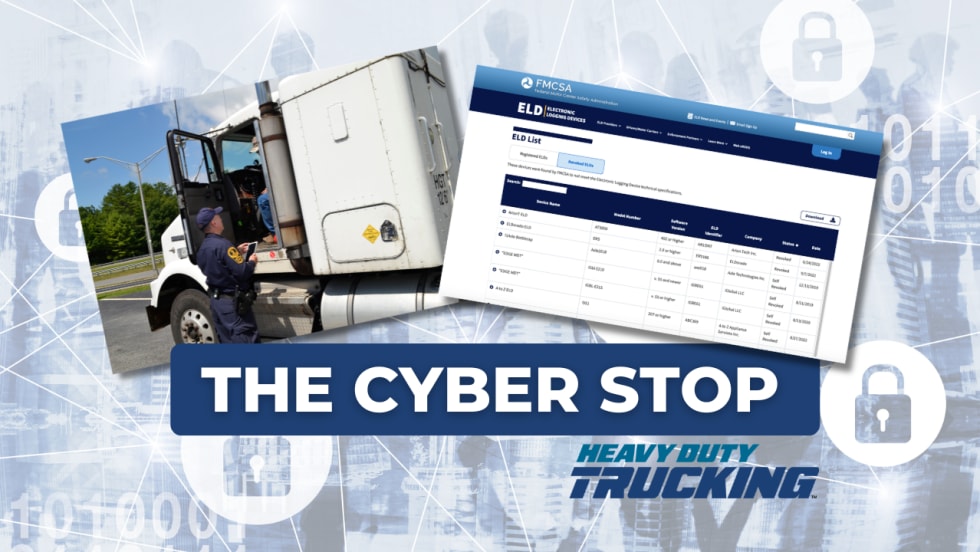
The Hidden Problem Behind FMCSA's ELD Revocations
NMFTA researchers say dozens of registered ELDs may be built on the same software platforms, allowing compliance and security concerns to persist even after individual devices are removed from the market.
Read More →
ATRI Wants Motor Carriers for Driver-Facing Camera Study
In this new study, the American Transportation Research Institute will explore how driver-facing cameras can impact safety and operational metrics in trucking fleets.
Read More →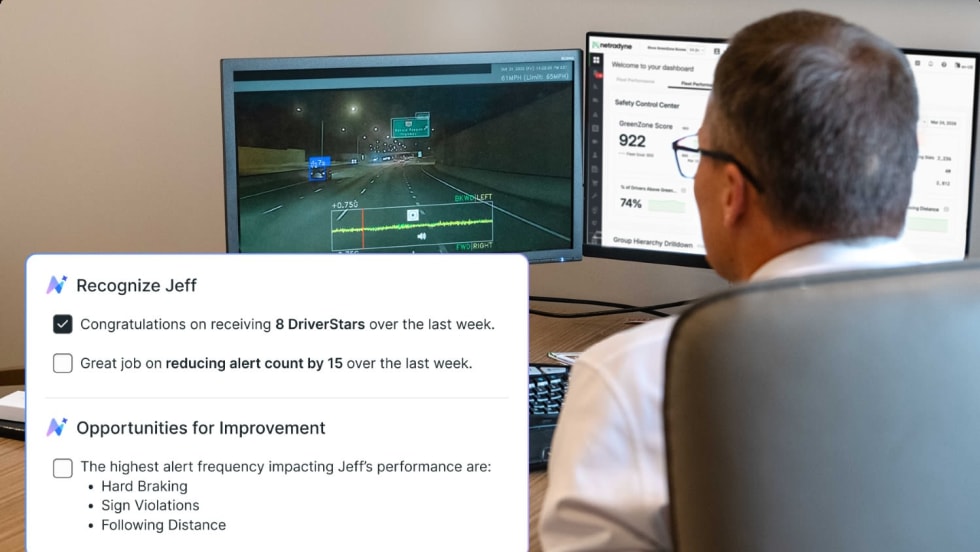
Netradyne Intelligence Uses New AI Agents to Automate Response to In-Cab Camera Data
The company called the next-generation in-cab camera safety platform "a fundamental shift from systems that report on what happened to systems that actively drive what should happen next."
Read More →Mack, Volvo Issue ‘Do Not Drive’ Recall on Possible Wheel-Offs
Owners will be sent advance notice not to operate their affected vehicles until the remedy is performed.
Read More →
Fleetworthy Integrates Lytx Video Snapshots into Safety+ Platform
A new Fleetworthy-Lytx integration gives fleet managers access to video context alongside safety event data, streamlining driver coaching and incident review.
Read More →
How Waste Connections is Using Data, Telematics, and AI
How do you manage and maintain more than 18,000 connected trucks? Data. Lots of it.
Read More →
Fleet Advantage: Top Logistics Fleets Outperform National Safety Benchmarks
Fleet Advantage's latest TRUST Safety Index found leading logistics fleets maintained significantly lower out-of-service rates and stronger safety scores than national averages, while highlighting persistent challenges related to tires, brakes, and unsafe driving behaviors.
Read More →
Why Fleet Data Matters More Than Ever at Waste Connections [Watch]
Waste Connections' Chuck Palmer explains how telematics, predictive maintenance, safety analytics, and AI help keep vehicles on the road and drivers safe in this episode of HDT Talks Trucking.
Read More →