





Related: Over 12,000 Trucks Put Out of Service During Operation Roadcheck
Almost 47,000 Citations Issued During Operation Safe Driver Week
Failure to wear a seat belt was the second most commonly cited safety violation for both commercial vehicles and passenger cars during CVSA’s Operation Safe Driver Week last July.
September 18, 2019
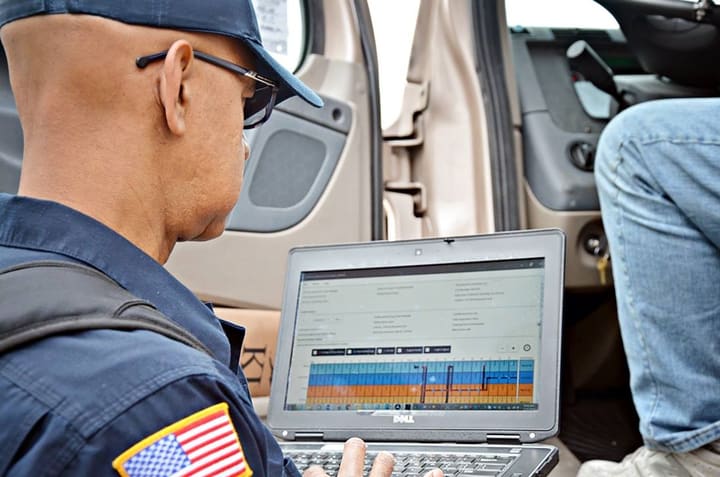
Failure to wear a seat belt was the second most commonly cited safety violation for both commercial vehicles and passenger cars during CVSA’s Operation Safe Driver Week last July.
Photo via FMCSA
5 min to read
With a focus on speeding, law enforcement officers issued almost 47,000 citations to both passenger-car and commercial-vehicle drivers for a wide array of violations during the Commercial Vehicle Safety Alliance’s Operation Safe Driver Week, July 14-20.
Officers issued 46,752 citations and 87,624 warnings to drivers for traffic enforcement violations – not only for speeding, but also for other violations such as failure to wear a seatbelt.
CVSA said drivers’ actions contribute to 94% of all traffic crashes. The Operation Safe Driver Week enforcement initiative is the commercial motor vehicle law enforcement community’s response to this transportation safety issue. Through initiatives such as this one, law enforcement personnel aim to deter negative driver behaviors and reduce the number of crashes involving large trucks, motor coaches and passenger vehicles by identifying and citing drivers exhibiting risky driving behaviors and tendencies.
According to the Insurance Institute for Highway Safety Highway Loss Data Institute, speeding has been a factor in more than a quarter of crash deaths since 2008. In response to this alarming trend, CVSA selected speeding as the emphasis area for this year’s Operation Safe Driver Week. Speeding/violations of the basic speed law/driving too fast for conditions was the most cited violation this year, with 17,556 total citations. Passenger vehicle drivers were issued 16,102 citations and 21,001 warnings, and CMV drivers received 1,454 citations and 2,126 warnings.
The top 10 driver-behavior citations (and warnings) given to CMV drivers were as follows:
CMV Drivers | Description | Citations | Warnings |
1 | Speeding/violation of basic speed law/driving too fast for the conditions | 1,454 | 2,126 |
2 | Failure to wear a seatbelt | 954 | 586 |
3 | Failure to obey a traffic control device | 426 | 871 |
4 | Using a handheld phone/texting | 249 | 170 |
5 | Improper lane change | 92 | 194 |
6 | Following too closely | 57 | 143 |
7 | Possession/use/under influence of alcohol and/or drugs | 55 | 18 |
8 | Improper passing | 41 | 30 |
9 | Inattentive, careless and/or reckless driving | 32 | 55 |
10 | Operating CMV while ill or fatigued | 25 | 45 |
The top 10 driver-behavior citations (and warnings) given to passenger vehicle drivers were as follows:
Passenger Vehicle Drivers | Description | Citations | Warnings |
1 | Speeding/violation of basic speed law/driving too fast for the conditions | 16,102 | 21,001 |
2 | Failure to wear a seatbelt | 1,794 | 773 |
3 | Failure to obey traffic control device | 540 | 1,063 |
4 | Inattentive, careless and/or reckless driving | 517 | 484 |
5 | Possession/use/under influence of alcohol and/or drugs | 503 | 2 |
6 | Using a handheld phone/texting | 416 | 400 |
7 | Improper lane change | 352 | 1,226 |
8 | Failure to yield right of way | 297 | 198 |
9 | Improper passing | 280 | 723 |
10 | Following too closely | 188 | 853 |
Failure to wear a seatbelt was the second highest violation for both types of drivers – CMV and passenger vehicle. 954 CMV drivers and 1,794 passenger vehicle drivers received citations for not wearing a seatbelt. Buckling up is the single most effective thing vehicle drivers and passengers can do to protect themselves in the event of a crash. The U.S. Federal Motor Carrier Safety Administration’s (FMCSA) 2016 Safety Belt Usage by Commercial Motor Vehicle Drivers Survey found that seatbelt usage among CMV drivers was 86.1%. Among passenger vehicle drivers, the national seatbelt use rate was 89.6% in 2018. In Canada, 95% of vehicle occupants wear seatbelts.
According to the Centers for Disease Control and Prevention, short-term, high-visibility enforcement, such as CVSA’s Operation Safe Driver Week, combined with media coverage, is particularly effective for reaching people who typically don’t use seat belts regularly.
Drunk driving crashes claim nearly 11,000 lives per year and NHTSA’s National Roadside Survey found that 20% of surveyed drivers tested positive for potentially impairing drugs. During all roadside interactions with the public, law enforcement personnel are trained to look for evidence of driver impairment by alcohol or drugs – legal or illegal. During this year’s Operation Safe Driver Week, 33 CMV drivers were cited for possession/use/under influence of drugs; 22 received citations for possession/use/under influence of alcohol. 159 passenger vehicle drivers were cited for possession/use/under influence of drugs and 344 were cited for possession/use/under influence of alcohol. Possession/use/under influence of alcohol and/or drugs was the fifth most cited violation for passenger vehicle drivers (503). It was the seventh most cited violation for CMV drivers (55).
In 2017, there were 3,166 distraction-related fatal crashes in the U.S. and distracted driving contributed to an estimated 21% of fatal collisions in Canada in 2016. Distractions include anything that takes the driver’s attention off the road, such as talking or texting on a cellphone, eating, talking with passengers, adjusting vehicle or navigations controls, etc. During Operation Safe Driver Week, 249 citations and 170 warnings were given to CMV drivers for using a handheld phone/texting while operating the vehicle; 416 citations and 400 warnings were given to passenger vehicle drivers.
“Although CVSA is an organization focused on commercial motor vehicle safety, we know that if we want to prevent crashes involving commercial motor vehicles and passenger vehicles, it’s important that we focus on both types of vehicles and drivers,” said CVSA President Chief Jay Thompson with the Arkansas Highway Police. “Operation Safe Driver Week is our effort to focus on driver behaviors, the leading cause of crashes. We hope that contact with law enforcement during this traffic safety initiative helps to combat dangerous driver behaviors in the future, ultimately making our roadways safer.”
While Operation Safe Driver Week is an enforcement operation focused on driver behaviors, during a traffic stop, an officer may notice and issue citations or warnings for vehicle-related issues. Such violations are noted as state/local driver violations on law enforcement’s reporting documentation. During this year’s Operation Safe Driver Week, passenger vehicle drivers received 16,050 state/local driver citations and 29,145 warnings, and CMV drivers received state/local driver 6,170 citations and 27,163 warnings. Examples of state/local driver violations include vehicle-related observations, such as mirror equipment violations, expired license plate tags, non-working lamps, etc.
Operation Safe Driver Week is sponsored by CVSA, in partnership with FMCSA and with support from industry and transportation safety organizations. The initiative aims to help improve the behavior of all drivers operating in an unsafe manner – either in or around commercial motor vehicles – through educational and traffic enforcement strategies to address individuals exhibiting high-risk driving behaviors.
More Safety & Compliance

FMCSA Pauses Biennial-Update Enforcement Amid Motus Transition
Carriers whose updates were due on or after June 1 have more time, while FMCSA works to stabilize its new registration system and warns of phishing sites impersonating its new carrier registration system, Motus.
Read More →
ZF Expands Commercial Vehicle Push in North America
ZF is expanding its North American commercial-vehicle presence with new transmission applications, electrification, trailer technology and autonomous-driving systems.
Read More →
Truck Drivers Need More Than Another Alert
Fleets have more visibility into truck health, safety events, and driver activity than ever. The next challenge is turning all that information into useful guidance for the person who has to decide what to do next.
Read More →
Tesla Wants a Self-Driving Semi. Are Cameras Enough?
Could Tesla’s camera-only autonomous driving technology work on an 80,000-pound Semi? In this commentary, HDT's Deborah Lockridge takes a look at Tesla, Cybercab, and how autonomous trucks see the road.
Read More →
What DOT’s Automated Vehicle Strategy Means for Trucking
The U.S. Department of Transportation issued a new automated-vehicle strategy that outlines plans for driverless-truck regulations, cross-state freight corridors, and federal safety standards.
Read More →
NYC Expands Speed, Pedestrian Safety Tech Across Fleet
New York City is expanding intelligent speed assistance and pedestrian-alert systems across its municipal fleet, moving the technologies from pilot programs into vehicle procurement and retrofit requirements.
Read More →
FMCSA Removes 110 Truck Driver Training Schools from Certified ELDT List
Federal regulators also are targeting more than 160 additional training providers and launching a nationwide audit of third-party CDL skills testers as part of a broader crackdown on trucking fraud.
Read More →
Beyond DOT Compliance: What Makes a Trucking Fleet Truly Safe?
A trucking fleet can follow every rule and still make unsafe decisions. The real test comes when safety conflicts with freight, productivity, or cost.
Read More →
Hours of Service Pilot Programs: FMCSA Readies for 2027 Rollout
Two pilot programs could eventually reshape hours-of-service rules, giving truck drivers options to pause their 14-hour clock or use longer split sleeper rest periods.
Read More →
New Guide Offers Pet Safety Tips for Truck Drivers
Hundreds of thousands of pets travel in truck cabs. A new safety guide from Volvo Trucks and the Center for Pet Safety offers practical advice for truck drivers who bring dogs and cats along for the ride.
Read More →