




JB Hunt: Driver Assistance Systems Deliver Immediate ROI
JB Hunt has seen a direct return on its investments into advanced driver assistance systems (ADAS), says senior vice-president – safety, security and driver personnel Greer Woodruff.
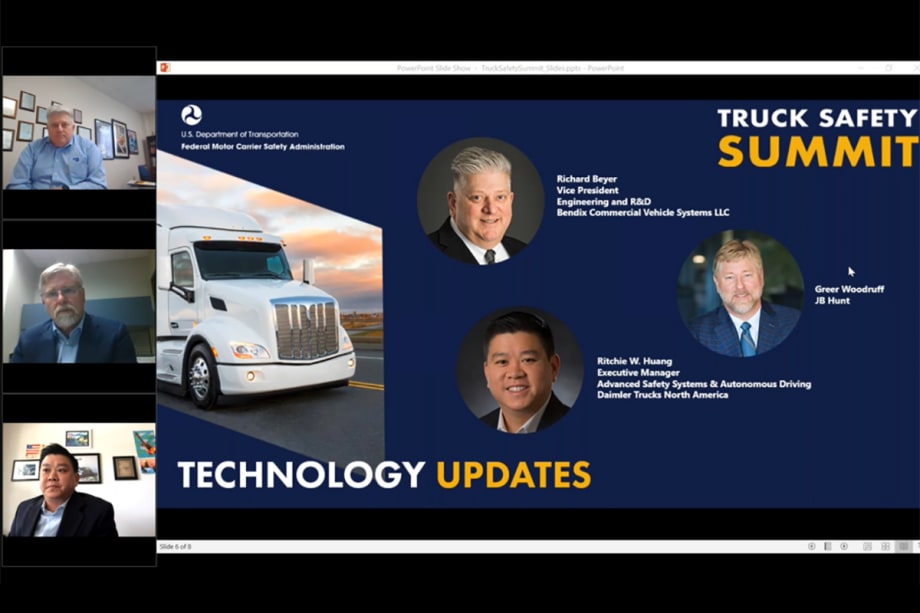
Image: Screenshot via FMCSA
JB Hunt has seen a direct return on its investments into advanced driver assistance systems (ADAS), says senior vice-president – safety, security and driver personnel Greer Woodruff.
Building on the widespread adoption of tools like automatic emergency braking (AEB) and forward-facing cameras, the fleet plans to begin spec’ing blind spot detection systems by the end of this year. Another pilot project is testing cameras mounted on A-pillars.
While Woodruff is excited about technologies to come, he also stresses the need for used truck buyers to prepare for the equipment they will inherit.
“They have to maintain it. They have to make sure they know how it works,” he said during the Federal Motor Carrier Safety Administration’s (FMCSA) Truck Safety Summit, referring to the future vehicle owners. Drivers will need to learn how it works as well.
The fleet has been deploying forward collision warning systems since 2011, and seen the technologies evolve to incorporate feature such as adaptive cruise control, braking on stationary objects, and in some cases pedestrian protection.
Forward collision warning systems can now be found on 98% of the JB Hunt trucks, and the technology has been credited for helping slash the number of rear-end crashes in half, while also reducing the severity of collisions that do occur.
“I’ve seen experienced drivers who have had years of safe driving have a momentary lapse or a circumstance that unfolds, and this has saved them,” he added, referring to AEB. Forward-facing cameras have also helped to exonerate drivers and fleets alike after incidents that did occur.
Still, he reinforced the need for trained drivers at the wheels of these trucks.
“I understand the value of having a skilled driver applying defensive driving practices behind the wheel,” he said.
In the case of forward-facing cameras, now installed in 84% of the fleet’s Class 8 trucks, JB Hunt drivers have responded well to the benefits of instant replay, he said, likening the technology to an athlete reviewing game film. “Our drivers are similar in that they can refine their skills if they can go back and see what was going on.”
‘Drivers Are Key’
“Drivers are key. Driver training, driver capability is very key to these systems,” agreed Richard Beyer, Bendix vice-president – engineering, research and development.
While advanced driver assistance systems such as lane-keeping assistance are steps in the journey to autonomous vehicles, they still require drivers to remain engaged, he explained.
Like Woodruff, Beyer also described advances in the underlying technologies. Fused camera and radar, for example, have helped to minimize the number of false detections and interventions, he said. “The sensors themselves are getting better from generation to generation … even the existing sensors that are there will improve with software and confidence.”
Developing such systems has been no small task, however.
“The real world is actually a very random place. It’s difficult to design for,” said Ritchie Huang, Daimler Trucks North America’s executive manager – advanced safety systems and autonomous driving.
One of the ongoing challenges in developing AEB systems is the diverse nature of trucks, Huang said as an example. Plows and buckets are also added to vehicles after they roll off the assembly line. Smaller vehicle classes of trucks face barriers like the lack of electronic stability controls.
“It’s very challenging to really develop a system that operates in all conditions,” he said.
There are regulatory barriers to the evolution of these systems as well, Huang added, citing windshield glazing rules that restrict the location of cameras near windshield wipers.
“This technology is still evolving,” he said. “We also know it’s not perfect.”
But Huang said the OEM believes in it.
If JB Hunt’s experience is any indication, it’s not alone in that belief.
John G. Smith is the editorial director of Today's Trucking, where this article originally appeared, and was used with permission from Newcom Media as part of a cooperative editorial agreement.
More Safety & Compliance

FMCSA Pauses Biennial-Update Enforcement Amid Motus Transition
Carriers whose updates were due on or after June 1 have more time, while FMCSA works to stabilize its new registration system and warns of phishing sites impersonating its new carrier registration system, Motus.
Read More →
ZF Expands Commercial Vehicle Push in North America
ZF is expanding its North American commercial-vehicle presence with new transmission applications, electrification, trailer technology and autonomous-driving systems.
Read More →
Truck Drivers Need More Than Another Alert
Fleets have more visibility into truck health, safety events, and driver activity than ever. The next challenge is turning all that information into useful guidance for the person who has to decide what to do next.
Read More →
Tesla Wants a Self-Driving Semi. Are Cameras Enough?
Could Tesla’s camera-only autonomous driving technology work on an 80,000-pound Semi? In this commentary, HDT's Deborah Lockridge takes a look at Tesla, Cybercab, and how autonomous trucks see the road.
Read More →
What DOT’s Automated Vehicle Strategy Means for Trucking
The U.S. Department of Transportation issued a new automated-vehicle strategy that outlines plans for driverless-truck regulations, cross-state freight corridors, and federal safety standards.
Read More →
NYC Expands Speed, Pedestrian Safety Tech Across Fleet
New York City is expanding intelligent speed assistance and pedestrian-alert systems across its municipal fleet, moving the technologies from pilot programs into vehicle procurement and retrofit requirements.
Read More →
FMCSA Removes 110 Truck Driver Training Schools from Certified ELDT List
Federal regulators also are targeting more than 160 additional training providers and launching a nationwide audit of third-party CDL skills testers as part of a broader crackdown on trucking fraud.
Read More →
Beyond DOT Compliance: What Makes a Trucking Fleet Truly Safe?
A trucking fleet can follow every rule and still make unsafe decisions. The real test comes when safety conflicts with freight, productivity, or cost.
Read More →
Hours of Service Pilot Programs: FMCSA Readies for 2027 Rollout
Two pilot programs could eventually reshape hours-of-service rules, giving truck drivers options to pause their 14-hour clock or use longer split sleeper rest periods.
Read More →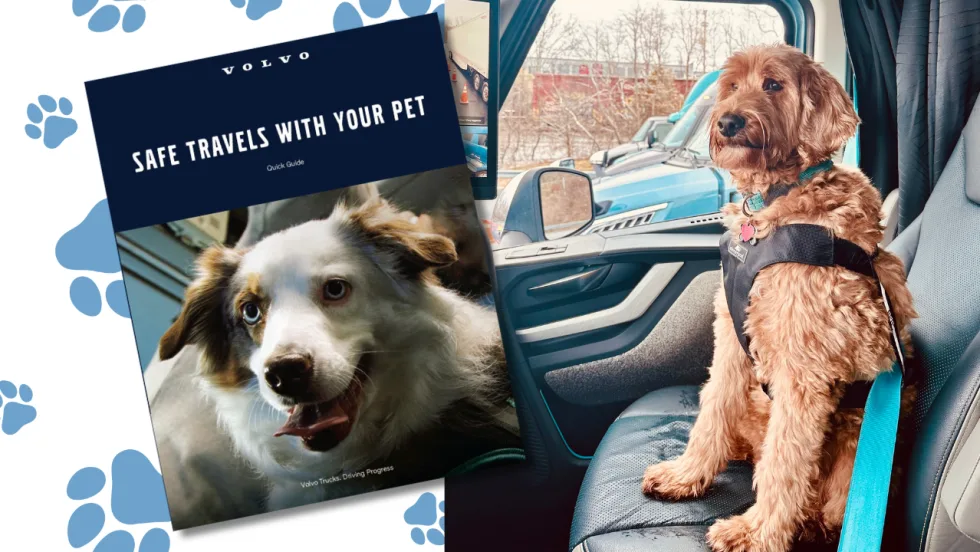
New Guide Offers Pet Safety Tips for Truck Drivers
Hundreds of thousands of pets travel in truck cabs. A new safety guide from Volvo Trucks and the Center for Pet Safety offers practical advice for truck drivers who bring dogs and cats along for the ride.
Read More →