




It's a Squeeze in Virginia
The Virginian-Pilot in Norfolk, VA reports that overheight trucks are being stopped with increasing frequency. In 1999, more than 13,000 were turned away before they could get into three area tunnels - a jump of 47%
The Virginian-Pilot in Norfolk, VA reports that overheight trucks are being stopped with increasing frequency. In 1999, more than 13,000 were turned away before they could get into three area tunnels - a jump of 47% from just a year earlier, when 8,875 were safely diverted from the Hampton Roads, Downtown and Midtown tunnels, according to the Virginia Department of Transportation.
''It's a real problem . . . and it has been for quite a while,'' said Erin Gregg, a VDOT spokeswoman.
State law sets the legal height for trucks at 13 1/2 feet, and sensors in advance of all area tunnels are set to that height or higher. Thus, when a truck sets off an alarm, ''they are almost always over the legal limit,'' Gregg said.
Sometimes - despite alarms, warning signs, flashing lights and the efforts of flag-waving safety officers - some over-height trucks make it into the tunnels. A few don't come out on the other side.
December 1998, Midtown Tunnel: A tractor-trailer damaged two overhead steel beams, destroyed 80 ceiling tiles and 15 lights. Cost to repair: $250,000.
January 1998, Midtown Tunnel: Ceiling damage caused by a truck required immediate repair, resulting in amassive rush-hour traffic jam.
May 1997, Chesapeake Bay Bridge-Tunnel: A tractor-trailer wedged in a tube. Traffic had to be alternated in a single lane for eight hours.
No major accidents occurred in 1999.
The costliest local incident came on Jan. 14, 1998, when anover-height rig tore through the full quarter-mile westbound tube of the Hampton Roads Bridge-Tunnel - just as acontractor was completing the installation of a new ceiling.
''Workers were up above the ceiling and they said they just heard this noise coming at them,'' said Jim Harrison, the tunnel's facility manager. ''Then they saw the panels rippling like a snake under the sand and they just jumped out of the way.''
More than 200 panels were destroyed and another 2,000 had to be repaired, at a cost of $728,063.95.
The truck that caused the damage never stopped, and tunnel crews were unable to identify it.
The twin tubes of the Hampton Roads Bridge-Tunnel are of differing heights because they were built at different times. The older, westbound tunnel has a clearance of only 13 feet, 10 1/2 inches at its lowest point. Eastbound, the lowest height is 16 feet.
To prevent tunnel damage, sensors along the approaches to the westbound tunnel are set to sound an alarm for any truck taller than 13 feet, 7 inches.
''We're giving them 1 inch,'' Harrison said. It's not generosity, however. It's practicality. ''If we came down to 13-6, we'd probably stop every truck on the road,'' he said.
Eastbound, there is more room to spare, and the sensors are set at 14 feet, 6 inches - a foot above the legal limit. In order to help truckers avoid confusion, signs on the eastbound sign warn inbound traffic of the lower height on the west side for their return trip.
Drivers ''are supposed to know the height of their vehicles,'' Gregg said, ''and there are signs at all the tunnels and on most bridges telling them what the clearance is.''
There are three ways to stop the oversize trucks:
The driver sees the flashing lights set off by sensors and pulls off at an inspection station.
Personnel armed with flags by day, beacons at night, can signal the truck off the road at the inspection station.
Operators in the control room, monitoring size trucks on cameras, can turn traffic signals to red and stop all traffic - and hopefully the offending truck.
Not every truck that sets off the alarms is necessarily overheight, however. Sometimes they are close enough that just a minor bounce on the road will raise them up long enough to trip the sensors.
At the Chesapeake Bay Bridge-Tunnel, for instance, 11,004 trucks had to stop for inspection in 1999 after setting off alarms, said Clement M. Pruitt, the director of operations. Of those, ''only 443 were refused passage,'' he said. That's out of total commercial truck traffic of 352,554.
There is little room for error in the the Bay Bridge-Tunnel. The twin tunnels, built in the
early 1960s, are 13 1/2 feet at their lowest clearances - exactly the state's legal limit.
''We cannot fudge on that, not even a quarter of an inch,'' Pruitt said. ''They don't even want to be bouncing as they go through.''
A large reason for that - as well as for the small number of turnarounds - may be that most commercial drivers are aware of the height limits at the tunnels there, Pruitt said. Many drivers also know that the 17.6-mile complex has its own, 45-member police force that can write tickets.
More often, however, ''We try to help them out,'' Pruitt said. ''If they can make an adjustment to their load and get within height, we are tickled to death.'' His goal is to move traffic, not write tickets.
''The biggest problem is the air bags the truckers adjust their loads with,'' Harrison said. "Those bags can raise the trailer as much as 6 inches.''
Every day, tunnel crews watch as truckers, whose loads have set off alarms, lower the air bags by releasing air. ''You can see them doing it as they are coming into the inspection station, hitting the switch (in the cab) and dropping that air bag.''
Trouble is, as soon as some truckers clear the inspection station, ''you can see them reinflating that air bag again'' before they head into the tunnel, Harrison said.
As a result, several times a day, those trucks set off a final backup alarm at the tunnel entrance.
''All we can do then is stop all the traffic and turn them around,'' Harrison said. That not only halts all traffic headed in one direction, it requires stopping traffic headed the opposite way as well to get the truck off the tunnel island.
When truckers are stopped and ticketed for being over height, the legal bite is more like a nibble. ''It's a $ 75 fine and court costs. So the truckers are not risking that much,'' Harrison said.
More Safety & Compliance

FDA Eases Path for Oral-Fluid Testing
Federal actions could advance oral-fluid drug testing for truck drivers, but lab certification delays and marijuana rescheduling questions remain.
Read More →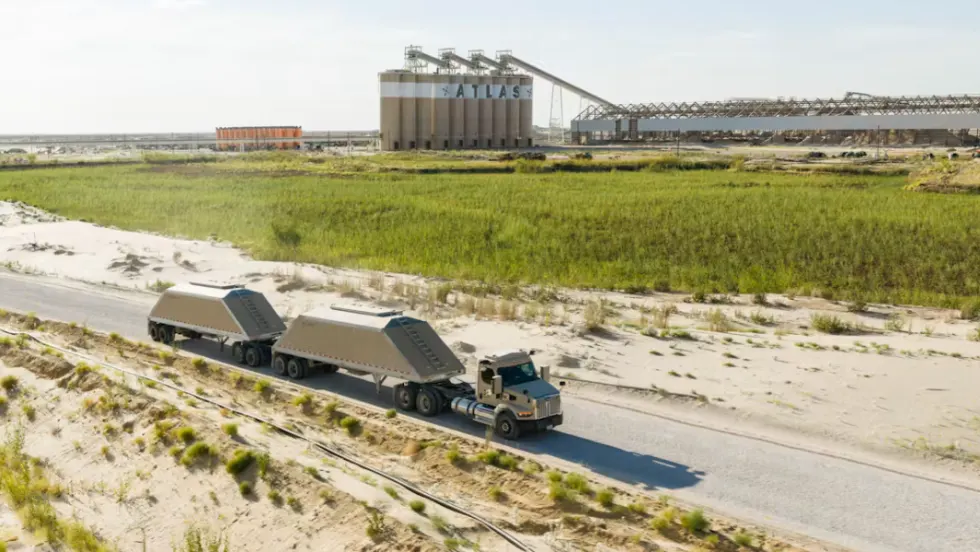
Kodiak Lines Up Fleets for Driverless Trucking
An agreement for 75 trucks, a new Texas freight lane, and progress on safety validation move Kodiak closer to its planned driverless highway launch.
Read More →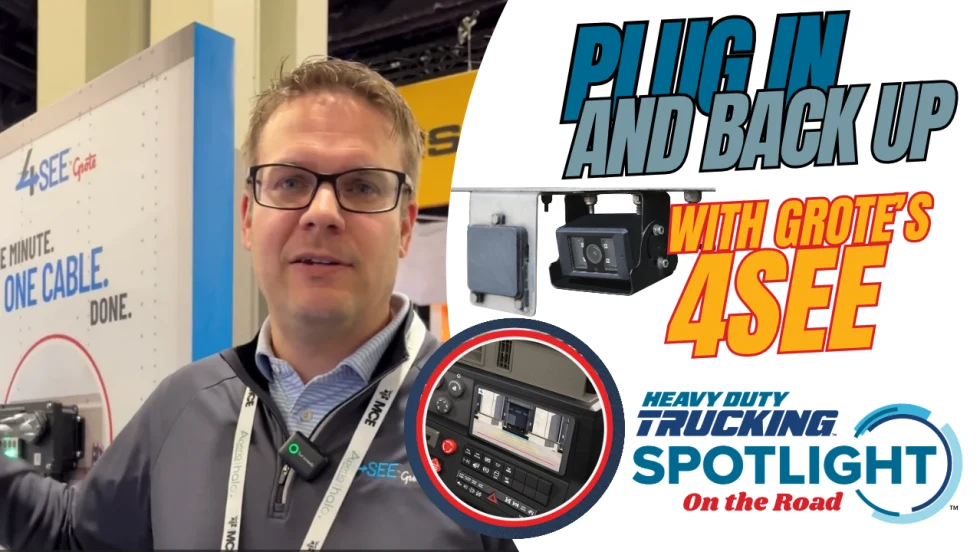
More Trailer Data Through the Same Seven-Way [Video]
Can trucking’s standard seven-way connector handle more cameras and trailer data? Grote’s Adam Slade shows HDT how the company is using new technology with its 4See trailer system, not only to add a new backup camera but also to expand other capabilities — without adding another connection.
Read More →
PrePass Intelligence Mines Fleet Bypass, Toll and Safety Data
PrePass Intelligence helps fleets measure bypass savings, flag potential toll overcharges, and spot suspicious transactions by combining data from separate systems.
Read More →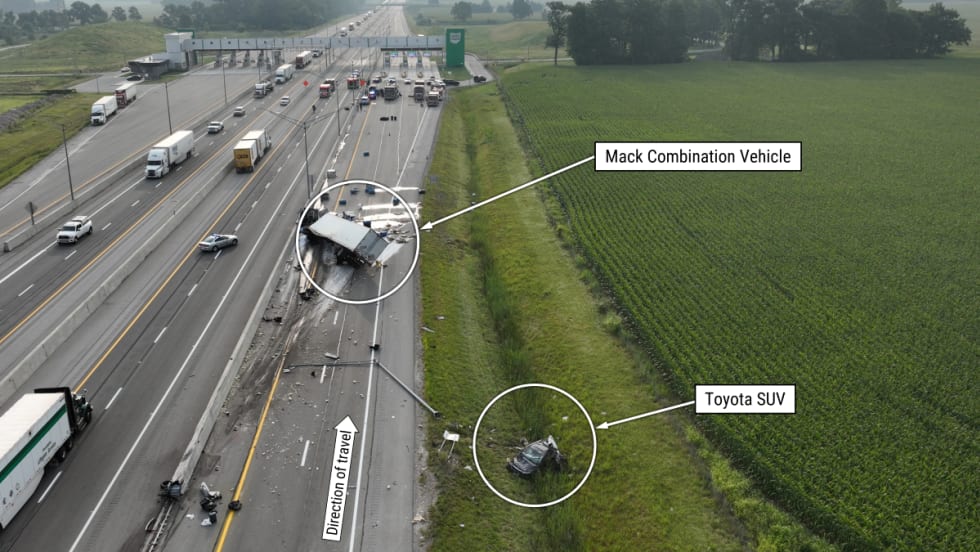
Fatal Crash Exposes Toll Plaza Risks
An NTSB investigation found that last-minute lane changes and large speed differences at an Ohio toll plaza created a hazard the truck driver couldn't avoid in time.
Read More →
When Language Stops the Truck: The Return of ELP Out-of-Service Orders
English language proficiency rules for commercial drivers aren’t new, but renewed out-of-service enforcement has raised the stakes. Here’s what carriers need to know before a driver reaches a roadside inspection.
Read More →
A Camera Isn't a Safety Program. Here's What Brokers Are Screening for Now
Footage alone may not be enough to pass broker vetting processes. Here's what counts as a defensible safety program now.
Read More →
Marijuana and Trucking’s Drug-Testing Dilemma
Marijuana is getting stronger, laws are changing, and drug tests still can’t reliably establish impairment. What does that mean for truck drivers and the fleets that employ them?
Read More →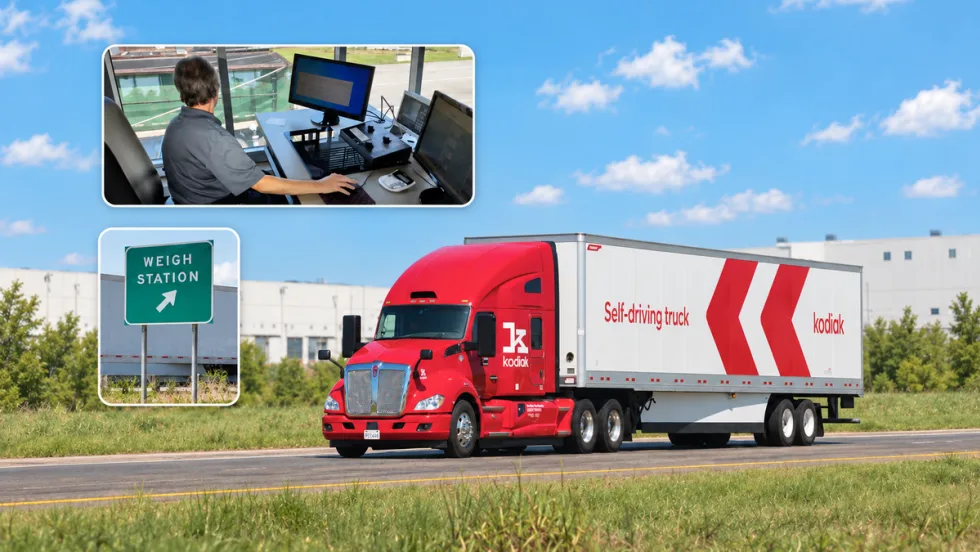
PrePass, Kodiak Connect Driverless Trucks to Roadside Enforcement
The system will allow enforcement agencies to verify Enhanced Inspection information and decide whether Kodiak’s autonomous trucks can bypass roadside screening sites.
Read More →
From One Generation to the Next: How Mentorship Builds Safer Truck Drivers
After three decades in trucking, Harold Perry shares what he's learned about driver safety, mentorship, and helping the next generation build confidence behind the wheel.
Read More →