





Related: HDT's Coronavirus/COVID-19 Resource Page for Trucking
Illinois Authorizes 88,000-pound Trucks Assisting with Emergency Response/Relief
In an effort to support emergency relief efforts in response to the coronavirus outbreak, Illinois is allowing 88,000 pounds (or an additional 10% above legal loads on fewer axles) for trucks assisting with emergency relief.
March 17, 2020

Photo: Ben Jacobson via Wikimedia Commons
3 min to read
In an effort to support emergency relief efforts in response to the coronavirus outbreak, Illinois is allowing 88,000 pounds (or an additional 10% above legal loads on fewer axles) for trucks assisting with emergency relief.
The emergency declaration applies to loads not exceeding 14 feet in width and 100 feet in length, and movements are authorized 24 hours a day, seven days per week, until April 12.
Truck drivers must ensure that they are carrying a copy of the IDOT Declaration, the Presidential Declaration, and a bill of lading. There is no fee associated with the authorization, and trucking companies must review Obstructions and Restrictions at www.gettingaroundillinois.com and obey all structure postings and any size or weight restrictions.
Fleets can also view a copy of the governor's order here. For a full list of all emergency declarations for Illinois and across the country, go to www.iltrucking.org and click on the red banner at the top of the website.
Other State Actions for Trucking Relief:
Illinois is not the only state providing additional regulatory exemptions for trucks transporting coronavirus relief supplies. Among others are:
Michigan: Will exempt motor carriers and drivers providing direct assistance in support of relief efforts related to the COVID-19 outbreaks from seasonal weight restrictions. Direct assistance according to MDOT means transportation and other relief services provided by a motor carrier or its driver to the immediate restoration of essential services, such as medical care, or essential supplies such as food, related to COVID-19 outbreaks during the emergency.
Missouri: On March 15 announced an allowance for heavier-than-normal truckloads of supplies and equipment to travel on Missouri highways in the direct effort to prevent, contain, mitigate and treat the effects of the COVID-19 virus. The waiver allows private and for-hire motor carriers to haul up to 10% more than their licensed weight on Missouri highways and remains in effect through April 30.
Ohio: Hours of service rules have been suspended for motor carriers providing intrastate transportation of relief supplies — including consumer goods and medical supplies — as part of the Coronavirus/COVID-19 response. “Unless otherwise directed, drivers must keep a written or electronic copy of this notice in each vehicle affected by this grant of regulatory relief. This regulatory relief will not apply to vehicles that do not have a copy of this notice.”
Texas: Suspended three sets of statutes, subject to federal law and DMV safety limitations:
The oversize and overweight permitting requirements under Transportation Code, Chapters 621 through 623, as well as Title 43, Chapter 219 of the Texas Administrative Code, for all divisible and non-divisible vehicles and loads;
The International Registration Plan (IRP) vehicle registration under Transportation Code § 502.091 and 43 Tex. Admin. Code § 217.56, as long as the vehicle is registered in one of the 48 contiguous states of the United States; and
The 72-hour and 144-hour temporary registration permits under Transportation Code § 502.094 and 43 Tex. Admin. Code § 217.40(b)(3), as long as the vehicle is registered in one of the states of the United States.
More Safety & Compliance

FMCSA Pauses Biennial-Update Enforcement Amid Motus Transition
Carriers whose updates were due on or after June 1 have more time, while FMCSA works to stabilize its new registration system and warns of phishing sites impersonating its new carrier registration system, Motus.
Read More →
ZF Expands Commercial Vehicle Push in North America
ZF is expanding its North American commercial-vehicle presence with new transmission applications, electrification, trailer technology and autonomous-driving systems.
Read More →
Truck Drivers Need More Than Another Alert
Fleets have more visibility into truck health, safety events, and driver activity than ever. The next challenge is turning all that information into useful guidance for the person who has to decide what to do next.
Read More →
Tesla Wants a Self-Driving Semi. Are Cameras Enough?
Could Tesla’s camera-only autonomous driving technology work on an 80,000-pound Semi? In this commentary, HDT's Deborah Lockridge takes a look at Tesla, Cybercab, and how autonomous trucks see the road.
Read More →
What DOT’s Automated Vehicle Strategy Means for Trucking
The U.S. Department of Transportation issued a new automated-vehicle strategy that outlines plans for driverless-truck regulations, cross-state freight corridors, and federal safety standards.
Read More →
NYC Expands Speed, Pedestrian Safety Tech Across Fleet
New York City is expanding intelligent speed assistance and pedestrian-alert systems across its municipal fleet, moving the technologies from pilot programs into vehicle procurement and retrofit requirements.
Read More →
FMCSA Removes 110 Truck Driver Training Schools from Certified ELDT List
Federal regulators also are targeting more than 160 additional training providers and launching a nationwide audit of third-party CDL skills testers as part of a broader crackdown on trucking fraud.
Read More →
Beyond DOT Compliance: What Makes a Trucking Fleet Truly Safe?
A trucking fleet can follow every rule and still make unsafe decisions. The real test comes when safety conflicts with freight, productivity, or cost.
Read More →
Hours of Service Pilot Programs: FMCSA Readies for 2027 Rollout
Two pilot programs could eventually reshape hours-of-service rules, giving truck drivers options to pause their 14-hour clock or use longer split sleeper rest periods.
Read More →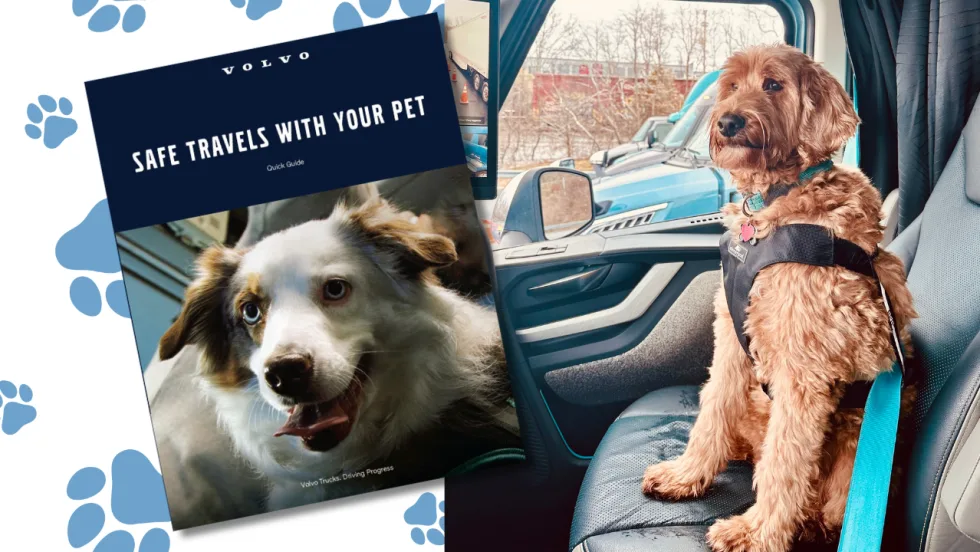
New Guide Offers Pet Safety Tips for Truck Drivers
Hundreds of thousands of pets travel in truck cabs. A new safety guide from Volvo Trucks and the Center for Pet Safety offers practical advice for truck drivers who bring dogs and cats along for the ride.
Read More →