





Related: Trailer Floors From the Bottom Up
Hyundai Translead Launches More Efficient Refrigerated Trailer
The redesigned HT ThermoTech refrigerated trailer was designed for greater durability, increased thermal efficiency and lighter weight.
April 3, 2019
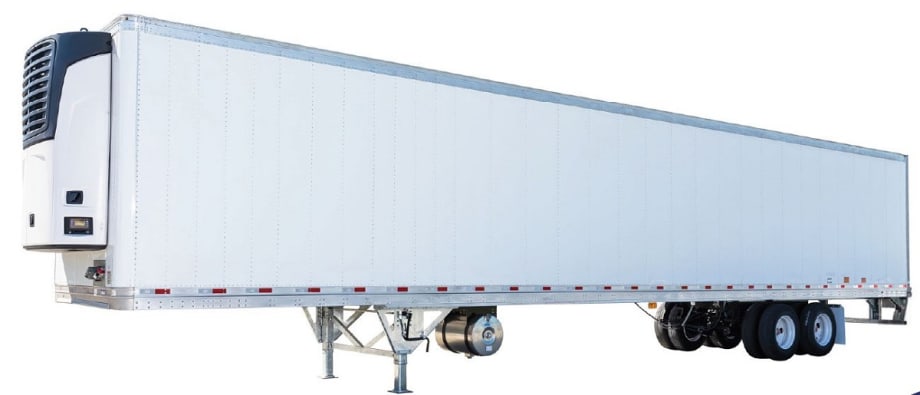
The redesigned HT ThermoTech refrigerated trailer was designed for greater durability, increased thermal efficiency and lighter weight.
Photos courtesy Hyundai Translead
3 min to read
Hyundai Translead has launched a new HT ThermoTech refrigerated trailer designed for greater durability, increased thermal efficiency and lighter weight.
The refrigerated trailer was designed to comply with new regulations about maintaining temperature in an efficient manner.
According to Hyundai, structural components that give refrigerated products their load carrying capacity can work against thermal efficiency because they transfer heat through the insulation. Hyundai Translead has used a new structural design that minimizes the effects of heat transmission. In some cases the structure mass has been designed so the insulated panels can include more insulating material.
To reduce efficiency loss from moisture saturation, the trailers joints and closures were eliminated or improved to be less dependent on caulking and sealings, preventing moisture intrusion and maintain efficiency longer.
Primers and bonding techniques are incorporated in the manufacturing process to assure the integrity of laminations between sheet materials. Preventing bonding separation between the outer skins and the insulation will discourage water gain due to condensation, according to Hyundai Translead.
The company also took steps to address longevity by redesigning the components most susceptible to damage.
The deck now uses taller, stiffer structures to support the floor surface. Heavy duty aluminum floor extrusions fit together with a mechanical lock to take stress off the welded joints, and the new fully automated welding fixture lays down a weld-bead of greater mass for additional strength.
All wood structures within the deck were removed and replaced with sustainable recycled materials that will not absorb moisture and increases fastener retention. The combination of material choice and design ingenuity allowed 13% greater floor ratings with no weight addition, according to the company.
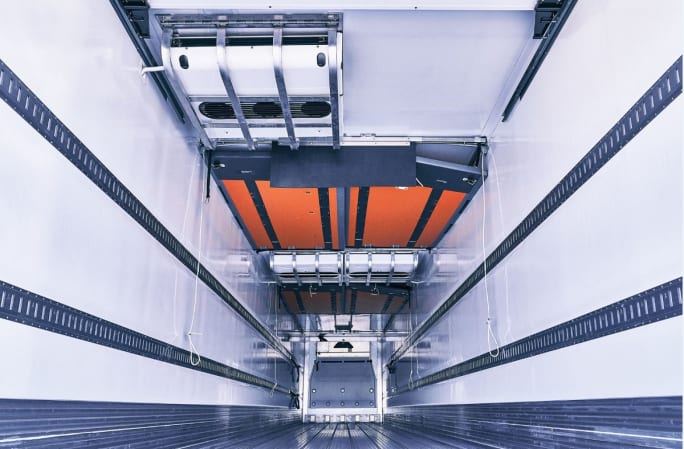
To reduce efficiency loss from moisture saturation, the trailers joints and closures were eliminated or improved to be less dependent on caulking and sealings, preventing moisture intrusion and maintain efficiency longer.
Structural floor sills have been redesigned with rigid PVC, a more durable and recycled material. In addition to material changes, the floors also feature a new “mechanical lock” design, so floor pieces are secured together even prior to welding.
“The improvement is to put a mechanical lock in the design so that when you connect the two pieces together we actually have a big advantage in the mechanical fit of these two pieces together even before we weld it,” said Adam Hill, vice president and a lead chief engineer for Hyundai Translead.
While increasing thermal efficiency and service life of the HT ThermoTech reefer, all insulated panels were optimized to reduce weight. Sidewalls, roof, deck and front assemblies are lighter by converting to lighter weight raw materials or applying design techniques that require fewer components or leaner assemblies. The redesigned HT ThermoTech trailer is 600 pounds lighter for base line-haul models.
“We have invested significant capital expenditures and made improvements to refrigerated trailers to be competitive and we will continue to invest and be innovative,” said Bonjae Lee, CEO of Hyundai Translead.
More Equipment

How Volvo Updated Its D13 for EPA 2027 [Watch]
Volvo’s updated D13 promises lower emissions without sacrificing performance or fuel economy. Take a closer look at what changed inside the engine in this HDT Spotlight video.
Read More →
Michelin Tire Improves Efficiency and Durability for Regional Fleets
The Michelin X Multi Energy D2 is a regional haul drive tire engineered to help fleets improve fuel efficiency, durability and traction in demanding stop-and-go operations.
Read More →
ZF Expands Commercial Vehicle Push in North America
ZF is expanding its North American commercial-vehicle presence with new transmission applications, electrification, trailer technology and autonomous-driving systems.
Read More →
Tesla Wants a Self-Driving Semi. Are Cameras Enough?
Could Tesla’s camera-only autonomous driving technology work on an 80,000-pound Semi? In this commentary, HDT's Deborah Lockridge takes a look at Tesla, Cybercab, and how autonomous trucks see the road.
Read More →
Kodiak: Driverless Long-Haul Truck Launch on Track for 2026
Kodiak AI says its driverless long-haul safety case is 93% complete and it remains on track to begin commercial operations by year-end 2026.
Read More →
What DOT’s Automated Vehicle Strategy Means for Trucking
The U.S. Department of Transportation issued a new automated-vehicle strategy that outlines plans for driverless-truck regulations, cross-state freight corridors, and federal safety standards.
Read More →
East Coast Port Launches $45M Electric Truck Push
The Port Authority of New York and New Jersey announced millions in incentives for zero-emission drayage trucks, yard tractors, and new charging hubs near the port.
Read More →
PlusAI Going Public to Fund Autonomous Truck Launch
A SPAC deal could provide PlusAI with up to $300 million as it works toward a 2027 commercial launch of factory-built autonomous trucks.
Read More →
NHTSA Moves to Rewrite Truck Fuel-Economy Rules
The National Highway Traffic Safety Administration says it lacks authority to regulate medium- and heavy-duty truck engines separately from complete vehicles, but the existing standards have not yet been eliminated.
Read More →
Detroit Opens Orders for EPA 2027 Engines
Detroit isn’t starting from scratch to meet EPA 2027 diesel emissions standards. Its Gen 6 DD13 and DD15 engines keep much of today’s platform while updating the fuel and aftertreatment systems.
Read More →