




How the Amazon-Whole Foods Deal Could Change Trucking
Opportunities are on the horizon for fleets willing to embrace new market trends and rethink some aspects of their operations, according to logistics experts Tom Finkbiner and Ted Prince, founders of Tiger Cool Express.

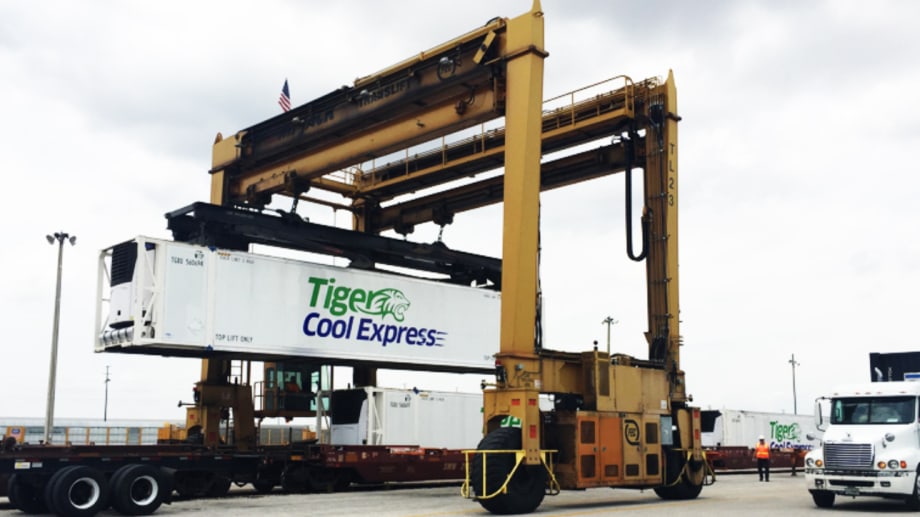
New market trends, including the recent Amazon acquistion of Whole Foods, are creating opportunites for fleets willing to rethink pickup and last-mile delivery. Photo: Tiger Cool Express
New market trends, including the recent Amazon acquistion of Whole Foods, are creating opportunites for fleets willing to rethink pickup and last-mile delivery. Photo: Tiger Cool Express
More than two thousand years ago, merchants in the market square in Pompeii felt an ominous rumbling under their feet and glanced nervously at the smoking volcano off in the distance wondering what, if anything, was going to happen.
Metaphorically speaking, U.S. retailers nationwide felt a similar ominous rumbling last month. While the cause of those shudders is not an active volcano, the acquisition of Whole Foods by Amazon is likely to prove as disruptive an economic force in the coming months as Mt. Vesuvius proved to be for those Roman merchants so long ago.
And the shockwaves from this deal will not stop with brick-and-mortar retailers. They could potentially transform almost every aspect of our economy and long-held models of consumer behavior. And certainly, no market segment will be hit harder, or sooner, than logistics and transportation.
With questions swirling about how the Amazon-Whole Foods acquisition will affect trucking and when, transportation and logistics equity research firm Stifel recently tapped Tom Finkbiner and Ted Prince, founders of Kansas City-based Tiger Cool Express, a large-scale, stand-alone, refrigerated intermodal carrier to discuss in an analyst call the timing and degree of changes this move will have on trucking and logistics in the near future.
The bulk of the discussion, which you can read here, focused on the perishable foods market and how this acquisition, technology, regulations, and competitive pressure will affect fleets and intermodal operators today.
“This is a $40 billion market but it’s a very sophisticated market and a very complicated market with respect to transportation,” Finkbiner noted. “There is the fresh portion [the produce] and the processed portion [where processed foods are made]. An example of a processed food might be frozen pizza. There’s a fresh element of that market because you have to take tomatoes and mushrooms and everything else that’s used in a frozen pizza into the plant before it’s processed and rolled together.
"One of the reasons there aren’t more publicly held or large companies in the market is the seasonality of the business," he added. "Produce season, peak season for each of the individual fruits and vegetables is only a 6- or 8-week season in each location, and we’ll talk about how they move and how that’s difficult for people with hard assets to handle.”
According to Prince, this market today is all about the truckload. He said there is an opportunity for intermodal growth, which is currently handling about 1% of the perishable foods freight being moved. “This is really the last long-haul intermodal market waiting to be addressed,” he explained. “The boxcar business is focused on the long shelf life, durable commodities such as potatoes and onions. We talk about the challenges of pickup and delivery because intermodal requires pickup and delivery surrounding a long-haul rail move.
"When you compare intermodal to truckload several things jump out, in the dry intermodal business drop and hook leaving containers at a facility waiting to be loaded or unloaded has become the standard," he continued. "Intermodal containers are not an expensive asset and frequently have retail consumer goods that have surges that the equipment is used to store. In the produce business, it’s mostly a live move. Tom mentioned the issue of the Food Safety Act; that not only applies to the brokers-- it applies to anyone with an asset, they’re considered a carrier and that means that the drayman who picks up could be considered as a carrier, and there are a lot of other regulatory issues just beyond food safety that impact that.
"Unlike distribution centers for dry, which are located near urban populations, produce comes from agricultural land, which is often hundreds of miles from the nearest rail ramp, extending the requirement of pickup and delivery which also impacts the economics of substituting intermodal for truckload," Prince added. "General rule of thumb is if more than 15-20% of the mileage is consumed by pickup and delivery, it’s a challenge. Things are changing and there are opportunities there.”
Other chief takeaways from the Stifel conference call included:
The market has historically been dominated by truckload brokers, small fleets, and owner-operators. Large publicly traded and privately owned truckload carriers have shied away from the produce markets because of its unpredictability, volume volatility, and geographic rotation.
Heavy density, long shelf life produce may gravitate towards refrigerated boxcars, while lighter density, shorter shelf life produce will remain the domain of team-expedited refrigerated truckload carriers. Medium density, medium shelf life freight will likely become the domain of rail intermodal and whatever remains of legal solo-driver truckload capacity.
Texas (including produce coming across the border from Mexico) now generates more loads per year than the state of California. The long running drought (now over) and the onerous regulations regarding nearly all businesses in California have driven this shift.
The Food Safety Modernization Act (FSMA) complicates the movement of fresh produce. This new rule makes all players in the supply chain, including brokers and drayman, liable for any violations of the federally mandated rules that went into effect this April.
The increasing popularity of organic and ethnic produce further complicates the matter. Most organic produce and most ethnic produce are grown on farms too small to generate a truckload of freight. As a result, multi-stop truckloads are necessary, which require more time to load and more expertise to execute properly.
Pickup and delivery challenges are significant. Given the high relative price of an insulated trailer equipped with a temperature controlled unit, most loads are handled with driver assistance or are live loaded/unloaded. Because of the nuances around loading fresh produce at a shed in the field, driver delays of many hours are common.
Local sourcing is not helping despite how politically correct it may sound. Typically, sourcing regions have been Florida, Texas/Mexico, and California, all of which are a good distance from very sizable, growing season challenged markets.
Walmart seems to have a strong sourcing advantage in the produce arena presently. Small grocery stores and small, regional grocery chains mostly rely on brokers for their delivered fresh produce. C. H. Robinson, Allen Lund, and TQL are the leaders in providing these services.
Looking at the state of the perishable food logistics today, both Finkbiner and Prince said it looks like it did in 1990 before containers really took over.
“Trailers and intermodal became viable and if you look at some of the practices, it probably hasn’t changed only with containers replacing boxcars,” Prince said. "The containers that we’re seeing are in their first generation or second generation and continuing to look more like trucks in terms of internal clearance and weight carrying capacity. The railroads are continuing to look at niche opportunities to support this market. We’re very optimistic and bullish about the future.”
More Fleet Management

Color Match Smarter: Tools That Restore & Perform
For fleet managers and collision repair professionals keeping heavy-duty trucks on the road, getting the color right the first time isn't just about appearance — it's about efficiency, turnaround time, and bottom-line results. Discover how today's digital color tools are transforming the repair process from guesswork to precision.
Read More →
FMCSA Pauses Biennial-Update Enforcement Amid Motus Transition
Carriers whose updates were due on or after June 1 have more time, while FMCSA works to stabilize its new registration system and warns of phishing sites impersonating its new carrier registration system, Motus.
Read More →
2026 Blueprint for Countering Smarter Supply Chain Theft
Cargo theft is no longer just the cost of doing business. It's a multi-billion-dollar criminal enterprise exploiting vulnerabilities across your fleet, drivers, and supply chain.
Read More →


How Telematics Improves Visibility, Control, and Performance in Refrigerated Fleets
Explore how telematics help refrigerated fleets improve visibility, uptime, efficiency, compliance, and cargo protection across connected cold chain operations.
Read More →
What the U.S.-Canada Trade War Means for Trucking
Escalating U.S.-Canada tariffs could disrupt cross-border freight, reduce truck volumes, raise costs, and create new uncertainty for carriers on both sides of the border.
Read More →
What Are Trucking’s Top Concerns for 2026?
The American Transportation Research Institute wants to know what's worrying trucking fleet managers, drivers, and other stakeholders in its annual Industry Issues survey.
Read More →
American Trucking Associations Looks for a New Leader
ATA President and CEO Chris Spear abruptly left his job at the association on August 21, at a pivotal time for the trucking industry.
Read More →
Public Wi-Fi Cybersecurity Risks: How Truck Drivers and Fleets Can Protect Their Data
Public Wi-Fi can expose truck drivers and fleets to credential theft, malware, and other cyber threats. Here’s how to reduce the risk on the road.
Read More →
For Nicky Cupp, Fleet Innovation Starts With Frustration
HDT Truck Fleet Innovator Nicky Cupp turns everyday pain points at Fraley & Schilling into opportunities for better technology and smarter processes.
Read More →
Adam Buttgenbach’s Approach to Electric Trucks: Start With Where They Fit
HDT Truck Fleet Innovator Adam Buttgenbach helped PepsiCo build one of North America’s largest EV fleets by focusing on where electric trucks make operational sense.
Read More →