




House Panel Unveils Highway Proposal
The starting point for reauthorization of the federal highway law in the House is a six-year vision - not a bill yet - of a dramatically smaller program that seeks to leverage federal funds by giving states more flexibility. At a briefing on Capitol Hill, Rep. John Mica, R-Fla., unveiled the outlines of a $230 billion measure that relies solely on the money that's available through the Highway Trust Fund
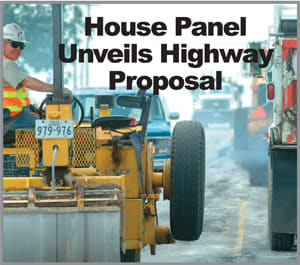
The starting point for reauthorization of the federal highway law in the House is a six-year vision - not a bill yet - of a dramatically smaller program that seeks to leverage federal funds by giving states more flexibility.
At a briefing on Capitol Hill, Rep. John Mica, R-Fla., unveiled the outlines of a $230 billion measure that relies solely on the money that's available through the Highway Trust Fund.
This would amount to a 20% cut from the $287 billion bill now in effect.
The measure would consolidate or eliminate many Department of Transportation programs and includes reforms intended to speed up the delivery of infrastructure projects. It would keep the truck and bus safety program basically as is, and Mica said he wants a guarantee from the Ways and Means Committee that funding for the program will be preserved.
The T&I Committee has a long tradition of bipartisanship, but this was a partisan presentation. There were no Democratic representatives in the hearing room. They gathered afterward, in another room, to castigate the majority for excluding them from the drafting of the bill so far and describe the measure as "the Republican road to ruin" because of the funding cuts it proposes.
Mica said he expects to hold a hearing July 12 on the measure but does not know when the legislative language will be ready or when the bill will be introduced.
In the Senate
Meanwhile, messages from the Senate are mixed. After initially considering a six-year bill at $339 billion, Sen. Barbara Boxer, D-Calif., chairwoman of the Environment & Public Works Committee, is now talking about a 2-year, $109 billion bill. And Sen. John Rockefeller, D-W.Va., chairman of the Senate Commerce Committee, issued a statement criticizing the House proposal for cutting too much.
"At a time when our national transportation system is heading toward a crisis, short-sighted Republican proposals that would recklessly underfund important infrastructure projects just don't make sense," Rockefeller said. "I'm fully prepared to discuss spending cuts, but we can't do it without additional revenues, too, and we shouldn't pretend otherwise."
Mica said that when it comes to funding his hands are tied, citing a House rule instituted by the Republican leadership that limits highway money to what is available from the trust fund. His argument is that since a fuel tax increase is off the table - neither the House nor the White House supports an increase - the program must survive on the revenues that are coming in. To do otherwise would run the trust fund into the red, he said.
His alternative is to make adjustments in existing programs to leverage the money that's available, and to attract private sector investment. The proposal would, for example, expand the Transportation Infrastructure Finance and Innovation loan program. It also would let states toll new Interstate roads and give them more flexibility to toll non-Interstate roads, but it would not permit tolling on existing Interstates.
No National Infrastructure Bank
In a significant departure from what has been discussed at length by the transportation community and the Obama administration, the proposal calls for giving states incentives to start their own infrastructure banks, rather than create a national infrastructure bank.
The proposal lays out a restructured project delivery process designed to speed up approvals so projects can be done more quickly.
"I maintain that this has an incredible amount of value," Mica said.
His calculation is that the combination of loan leveraging, state infrastructure banks, encouragement of private investment and streamlining of the construction process will boost the value of the bill from about $35 billion a year to $75 billion a year.
The proposal so far contains no specific language on freight policy, an issue that the freight community has been pushing for some time. Mica did say that he intends to ask the Ways & Means Committee, which has jurisdiction over funding, for tax credits and other incentives for freight but he did not spell out details.
He also said he still is considering whether or not to include any changes in truck size and weight restrictions in the bill. Legislation that would mandate electronic onboard recorders also is under consideration, he said.
Transportation Reactions
Reaction from the transportation community varied.
"I am stunned," said Leslie Blakey of the Coalition for America's Gateways and Trade Corridors, which represents more than 60 public and private organizations that want improvements in freight transportation. "There is no special program here for freight. It says nothing about multi-state, multimodal cooperation."
John Horsley, executive director of the American Association of State Highway and Transportation Officials focused on the positives. The proposal, he said, is the first step in process to get a long-term bill, and it includes many reforms that state departments of transportation support, such as consolidation of federal transportation programs, accelerated project delivery and tools to leverage transportation funds.
"We continue to have concerns about the proposed funding levels included in the bill, but we also realize that this is the start of a process that will include not only the House, but also the Senate and the Administration," Horsley said in a statement.
American Trucking Associations President Bill Graves applauded the committee's effort and the six-year term of the bill.
"Like other highway interests, ATA would like to see a more robust bill, but we believe the current funding constraints are forcing an important re-focusing of the surface transportation program on core programs in the national interest," Graves said in a statement.
ATA supports the proposal's ban on tolling existing Interstates and is pleased by Mica's intent to preserve funding for safety, Graves added. The association also likes the committee's policy of no earmarks, eliminating requirements on states to fund non-highway activities and the move to consolidate DOT programs.
More Drivers
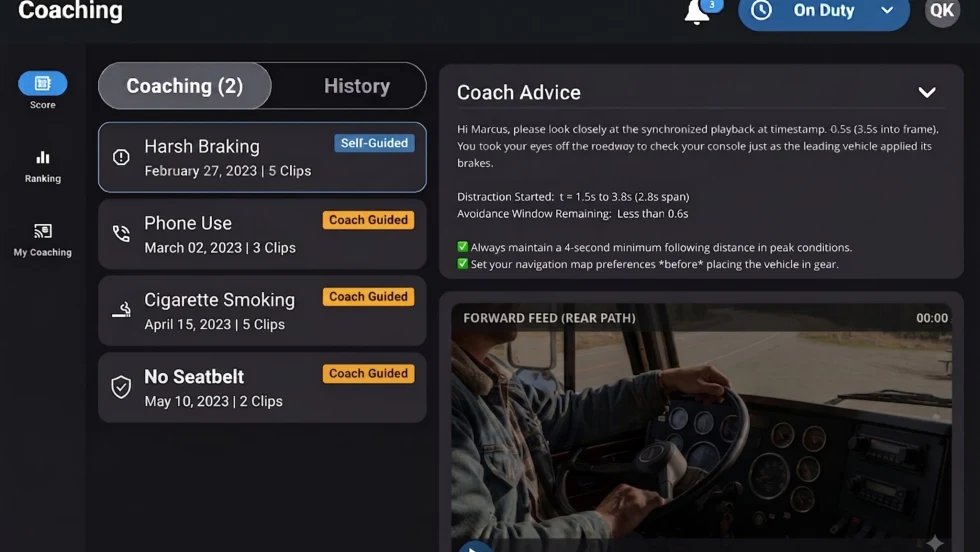
Platform Science Adds Dispatch and Safety Tools
Four additions to PS Fleet help fleets monitor loads, manage driver coaching, share truck locations and adjust video system settings.
Read More →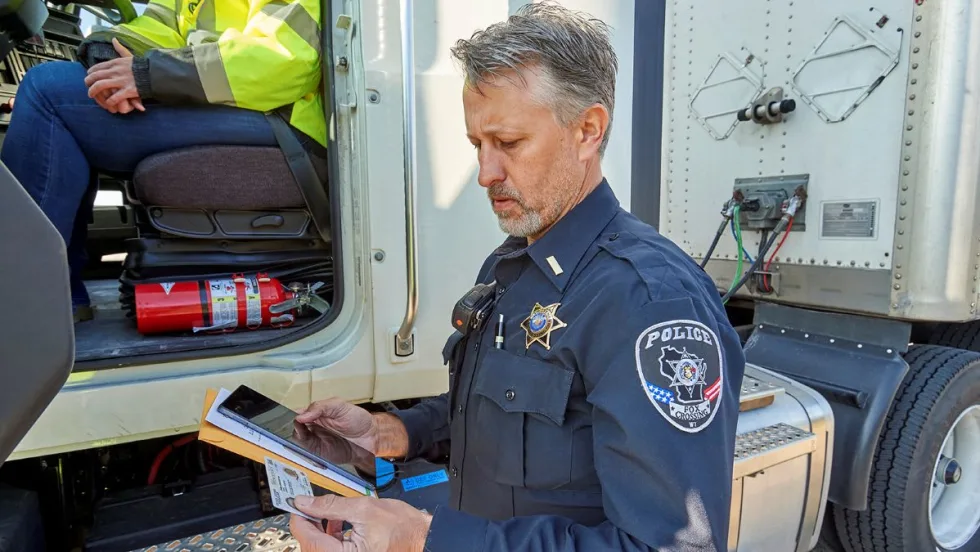
When Language Stops the Truck: The Return of ELP Out-of-Service Orders
English language proficiency rules for commercial drivers aren’t new, but renewed out-of-service enforcement has raised the stakes. Here’s what carriers need to know before a driver reaches a roadside inspection.
Read More →
Samsara Launches Custom AI Agent Builder
Agent Studio lets fleets create AI tools for hours-of-service monitoring, reporting and driver support, including agents that communicate by phone.
Read More →
Trucker Path Expands Reserved Parking Network
Trucker Path has added close to 6,000 more truck parking spaces to its Trucker Path Reserved Parking Network with the addition of Safe Truck Parking.
Read More →
EEOC Sues Texas Trucking Company Over Driver Age Limits
The agency says Trancasa USA rejected applicants over 65 and applied tougher driving-record standards to those over 60.
Read More →
Nussbaum, Roehl Announce Second Driver Pay Increase This Year
This year has seen a swath of major truck driver pay increases as freight capacity has tightened.
Read More →
From One Generation to the Next: How Mentorship Builds Safer Truck Drivers
After three decades in trucking, Harold Perry shares what he's learned about driver safety, mentorship, and helping the next generation build confidence behind the wheel.
Read More →
Truck Drivers Need More Than Another Alert
Fleets have more visibility into truck health, safety events, and driver activity than ever. The next challenge is turning all that information into useful guidance for the person who has to decide what to do next.
Read More →
FMCSA Removes 110 Truck Driver Training Schools from Certified ELDT List
Federal regulators also are targeting more than 160 additional training providers and launching a nationwide audit of third-party CDL skills testers as part of a broader crackdown on trucking fraud.
Read More →
Hours of Service Pilot Programs: FMCSA Readies for 2027 Rollout
Two pilot programs could eventually reshape hours-of-service rules, giving truck drivers options to pause their 14-hour clock or use longer split sleeper rest periods.
Read More →