




House Approves Rider to Thwart State Preemption of Trucker HOS Rules
An amendment written to resolve the issue of preemption by individual states of federal hours-of-service rules for truck drivers was passed on April 26 by a solidly bipartisan vote of 222-193 as part of the FAA Reauthorization Act currently being debated by the House of Representatives.

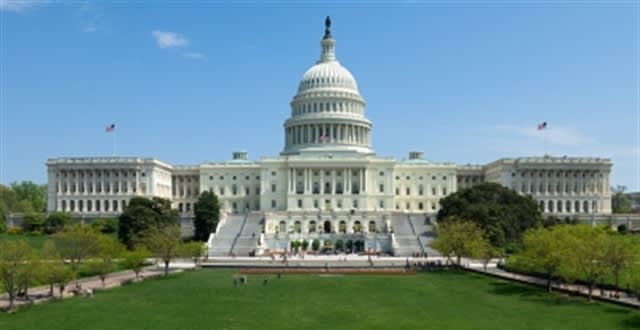
The Denham amendment would preclude efforts such as California's meal break and rest rules from preempthing federal regulations. Photo: Architect of the Capitol
An amendment written to resolve the issue of preemption by individual states of federal hours-of-service rules for truck drivers was passed on April 26 by a solidly bipartisan vote of 222-193 as part of the FAA Reauthorization Act currently being debated by the House of Representatives.
The rider, co-sponsored in bipartisan fashion by Reps. Jeff Denham (R-CA), Jim Costa (D-CA) and Henry Cuellar (D-TX), had been strongly lobbied for by the American Trucking Associations, and not for the first time.
In a statement shortly after the vote, ATA said it was thankful for the “yes” vote, as the amendment would “prevent states from creating a patchwork of meal and rest rules for interstate truck drivers.”
“Since our republic was founded, the federal government – not individual states like California – has had the power to regulate interstate commerce. Congress reaffirmed this for the trucking industry first in 1994 and again today by approving the Denham-Cuellar-Costa Amendment,” said ATA President and CEO Chris Spear. “Thanks to the leadership of Congressmen Denham, Cuellar and Costa for raising this critical issue, and to the bipartisan majority for affirming that the federal government has the last word on interstate safety rules.”
The preemption issue was thought to have been legislatively decided back in 1994 through passage of the Federal Aviation Authority Authorization Act. As pointed out in an April 25 letter to House members by ATA’s Spear, a provision of that earlier bill “provided motor carriers with a uniform set of rules and regulations across all states. This was because Congress, in an overwhelmingly bipartisan effort, recognized that a patchwork of state laws and regulations disrupts the free flow of interstate commerce and threatens the safety of our nation’s roads and bridges.”
That measure apparently has been insufficient to get states to back off from preemption. Rather, contends Spear’s letter, there has been “an erosion of this [1994] provision with the imposition of state meal and rest breaks that run counter to national uniformity.”
The Denham preemption-fix amendment, now attached to the latest FAA Reauthorization Act (H.R. 4), would require interstate CDL holders to adhere to federal rules ahead of any state-mandated regulations.
ATA noted that it is now urging the House and Senate “to quickly pass a bill – which includes this provision – on to the president for his signature.”
Both the Owner Operator Independent Drivers Association and the Teamsters Union have come out against the preemption amendment. The groups take issue with the broad language of the proposed change, believing that it could result in negative consequences outside of rest and meal breaks.
“We’re concerned Congressman Denham’s amendment goes far beyond his stated intent,” said Todd Spencer, OOIDA acting president. “If he is sincerely interested in solely addressing a patchwork of state meal and rest break laws, he should consider a more concise amendment. The amendment being debated now is overly broad and has no business being considered in an aviation bill.”
“This proposed language is a loser for hardworking truckers all across the country,” said Jim Hoffa, Teamsters general president. “It represents an enormous overreach by the federal government and would overrule decades of court precedents confirming that truck drivers are entitled to basic workplace protections, paid sick days, and to be properly classified as employees.”
Related: The Long Ride Up Capitol Hill for Trucking's Preemption Rider
More Fleet Management

Why Private Fleets Are Taking More Freight
Private fleets are putting their own trucks on demanding customers and high-cost lanes as companies seek greater control over service, costs, and capacity.
Read More →
Color Match Smarter: Tools That Restore & Perform
For fleet managers and collision repair professionals keeping heavy-duty trucks on the road, getting the color right the first time isn't just about appearance — it's about efficiency, turnaround time, and bottom-line results. Discover how today's digital color tools are transforming the repair process from guesswork to precision.
Read More →
FMCSA Pauses Biennial-Update Enforcement Amid Motus Transition
Carriers whose updates were due on or after June 1 have more time, while FMCSA works to stabilize its new registration system and warns of phishing sites impersonating its new carrier registration system, Motus.
Read More →


2026 Blueprint for Countering Smarter Supply Chain Theft
Cargo theft is no longer just the cost of doing business. It's a multi-billion-dollar criminal enterprise exploiting vulnerabilities across your fleet, drivers, and supply chain.
Read More →
How Telematics Improves Visibility, Control, and Performance in Refrigerated Fleets
Explore how telematics help refrigerated fleets improve visibility, uptime, efficiency, compliance, and cargo protection across connected cold chain operations.
Read More →
What the U.S.-Canada Trade War Means for Trucking
Escalating U.S.-Canada tariffs could disrupt cross-border freight, reduce truck volumes, raise costs, and create new uncertainty for carriers on both sides of the border.
Read More →
What Are Trucking’s Top Concerns for 2026?
The American Transportation Research Institute wants to know what's worrying trucking fleet managers, drivers, and other stakeholders in its annual Industry Issues survey.
Read More →
American Trucking Associations Looks for a New Leader
ATA President and CEO Chris Spear abruptly left his job at the association on August 21, at a pivotal time for the trucking industry.
Read More →
Public Wi-Fi Cybersecurity Risks: How Truck Drivers and Fleets Can Protect Their Data
Public Wi-Fi can expose truck drivers and fleets to credential theft, malware, and other cyber threats. Here’s how to reduce the risk on the road.
Read More →
For Nicky Cupp, Fleet Innovation Starts With Frustration
HDT Truck Fleet Innovator Nicky Cupp turns everyday pain points at Fraley & Schilling into opportunities for better technology and smarter processes.
Read More →