




Holiday Season Cargo Theft Trends and Security Tips
Cargo theft remains high, both through pilferage and strategic theft, but there are steps drivers and fleets can take to better protect shipments. CargoNet shares holiday-season cargo theft trends and corresponding theft-prevention tips.

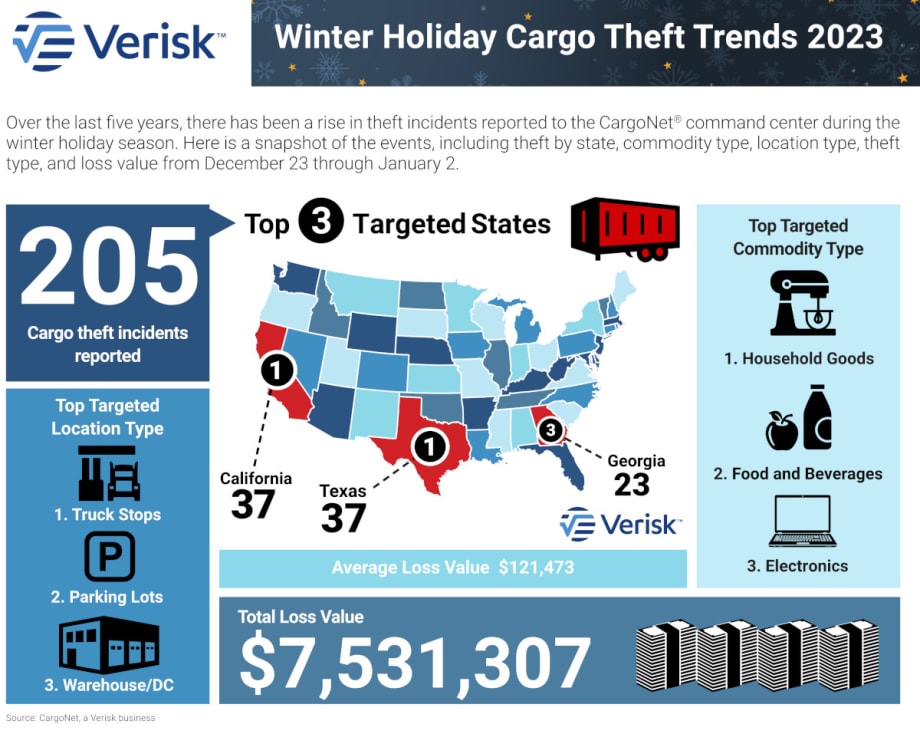
CargoNet said cargo theft remains high and it expects that trend will continue through the holiday season.
Source: CargoNet, a Verisk business
Supply chain theft activity remains extremely high, and CargoNet believes it will continue into the holiday season as experienced cargo thieves will seek to exploit a target-rich environment of unattended trucks and closed warehouses.
CargoNet, a Verisk business, has reviewed theft data from a 10-day analysis period spanning Dec. 23 to Jan. 2 for the past five years. In this analysis, there were 205 incidents reported to CargoNet, and the average cargo theft was valued at $121,473. The number of incidents increased progressively each year. Last holiday season, there were 56 incidents reported between Dec. 23 and Jan. 2.
Theft, not just in the holiday season, has seen a drastic increase in recent years. CargoNet reported an estimated $31 million in stolen shipments in the third quarter.
Highest-Theft States
Like previous years, incidents were most common in Texas and California, tied at 18% of incidents in each state. Incidents in other major cargo theft hotspots remain common. Incidents in Florida tripled from 2021 to 2022.
Pennsylvania also saw an increase, from none reported in 2021 to five reported incidents in 2022. In Georgia, Illinois, and Tennessee, cargo theft incidents remained consistent year-over-year.
What is Stolen?
Household commodities such as appliances, furniture, and cleaning supplies are the most targeted commodities by cargo thieves’ type, according to CargoNet.
Electronics commodities like televisions and computers were the second most targeted commodity type, but CargoNet noticed that commodity preferences closely mimic consumer demand.
Where Theft Happens
Thieves most often stole unattended vehicles and shipments parked at major retail parking lots and truck stops.
However, fictitious pickups have become a favored form of theft over the last year, and CargoNet expects fictitious pickups will be a favored form of theft over the holiday period.
Incidents at warehouse/distribution centers were a close third to these two categories. This is a common theft location for fictitious pickup incidents, CargoNet said.
Current Theft Trends
Since November 2022, CargoNet has recorded over 600 strategic cargo thefts in the United States. In comparison, during previous years CargoNet recorded an average of 58 strategic cargo thefts per year.
Most thefts have occurred in the state of California. Aside from a slight increase on Friday, thefts were evenly distributed throughout the workweek. Cargo thieves still prefer shipments of energy drinks, sodas, liquor, hard seltzers, motor oils, tires, and solar panels.
In recent months, CargoNet has noticed a wider range of commodities have been targeted, including shipments of footwear, clothing, beauty products, ATVs, and construction equipment.
Cargo Net said it expects that both strategic cargo thefts and theft of unattended, loaded conveyances will remain at elevated levels throughout the holiday period.
“Please report any suspicious activity to law enforcement immediately and contact CargoNet only after law enforcement has been notified and there are no immediate threats to life or property,” the company instructed.
Supply Chain Fraud Security Tips
Cargo thieves enjoy the holidays because shipping volume of desirable goods increases, as does demand. Freight brokers should be extra diligent during the holiday season as fictitious pickups increase.
End-of-day transactions should have strict vetting processes; a second look by a supervisor prior to tendering a load to a carrier may prevent a theft.
A trucker that is willing to take an undesirable load for a lower rate than the industry standard may be setting you up for a theft.
Fuel advance, hostage load, and line haul scams also increase a few days before a holiday. Prior to issuing the fuel advance, call the shipper to confirm that the load was picked up. Do not accept incoming calls from a shipper trying to tell you the driver is there — it could be the scammers spoofing the phone number of the shipper.
Warehouse / Distribution Center Security Tips
Check to make sure the entire facility is in good working order. This should include lighting, backup generators, alarm system(s), surveillance equipment, perimeter fencing, and any other type of barrier.
Remove keys from all facility equipment and place them in a secure location, especially motorized pallet jacks and forklifts.
Never treat any alarm signal as a false alarm. When targeting warehouse locations, cargo thieves tend to trip facility alarm systems multiple times before a break-in to give law enforcement and facility managers the impression that the alarm system is broken.
Encourage documentation and reporting of all suspicious activity that occurs in and around a facility to security personnel and the CargoNet command center. This information can be critical to law enforcement in the event of a cargo theft incident.
Ask local police agencies to make routine checks of facilities during holiday downtime.
In-Transit Cargo Security Tips
Make sure that both security managers and drivers have accurate license plate, VIN, and descriptive information for tractors, trailers, containers, and container chassis. Police agencies will need this information to open an investigation in the event of an incident. Drivers should keep this information on them so they can quickly reference it if their truck is stolen.
Secure all trailers (loaded and unloaded) with high-security ISO 17712- compliant barrier seals in combination with hardened padlocks. Use king pin locks for unattached trailers.
Secure all tractors with high-security locking devices, such as air-cuff and steering column locks.
Remind drivers to arrive at point of pickup well-rested, showered, and fed and with a full tank of fuel.
Avoid having loaded trailers sit unattended when employees are not present.
More Fleet Management

Nomination Deadline Extended for HDT Emerging Leaders
Just a few more days to nominate accomplished trucking fleet professionals under 40 who are making an impact and helping lead the industry forward for the HDT Emerging Leaders award. Deadline extended to October 20!
Read More →
What Will ATA’s New Leader Bring to Trucking's Table?
Incoming President and CEO Mark Colson’s record in Alabama offers clues about his priorities and approach following Chris Spear’s abrupt departure as the head of the American Trucking Associations.
Read More →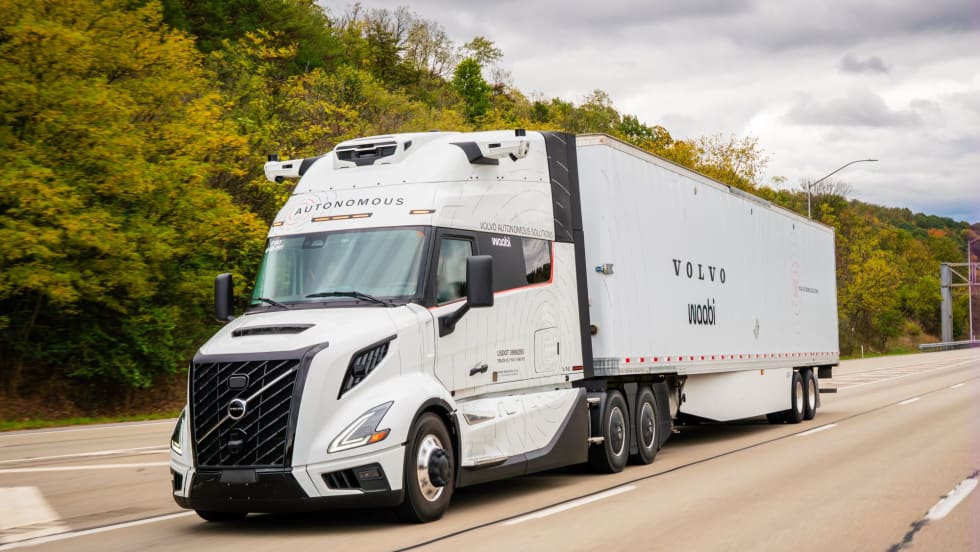
Volvo, Waabi Start Commercial Autonomous Operations in Texas
Volvo VNL Autonomous trucks, powered by the Waabi Driver, are hauling freight directly to third-party facilities for a customer in Texas.
Read More →
Samsara Launches Custom AI Agent Builder
Agent Studio lets fleets create AI tools for hours-of-service monitoring, reporting and driver support, including agents that communicate by phone.
Read More →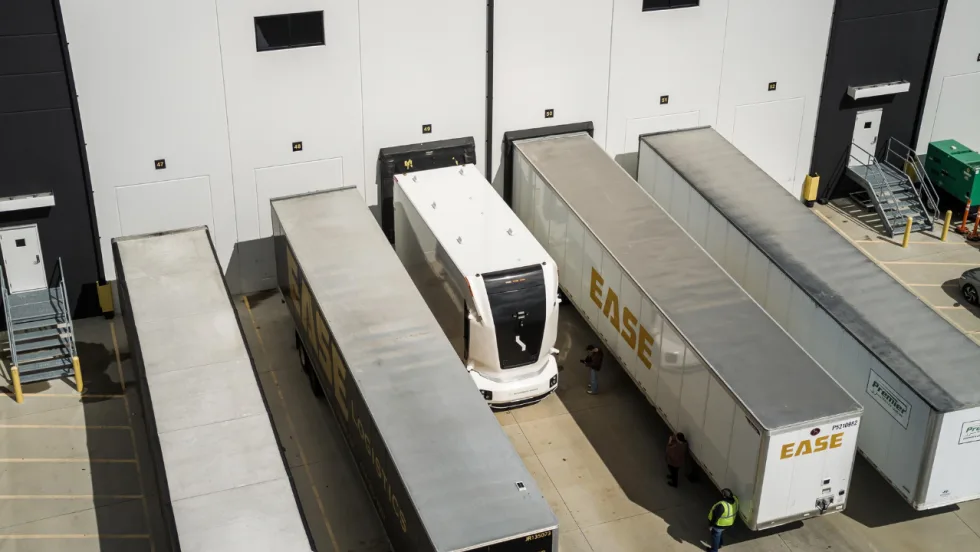
Einride Driverless Electric Trucks Begin Daily Freight Operations in Ohio
Two cabless electric trucks are hauling freight between EASE Logistics facilities in Marysville, Ohio, as part of a multi-state truck automation project.
Read More →
Geotab Links Fleet Card to Vehicle Data
The new card combines fuel discounts with telematics-based purchase controls. Geotab’s analysis also points to potential savings from choosing lower-priced fuel stops.
Read More →
How MFA Helps Protect Trucking Fleets
Multi-factor authentication adds protection when passwords are stolen. Here’s how it works and where fleets should start.
Read More →
How Better Freight Data Helps Trucking Teams Get Ahead of Disruption
Trucking and logistics teams have plenty of data. The problem is getting the right information in front of the right people soon enough to act. Better-connected data can help teams spot trouble earlier and make smarter decisions before small problems become big ones.
Read More →
Trimble: Taking Artificial Intelligence in Trucking Beyond Faster Tasks
At Insight 2026, Trimble executives argued that fleets may need to redesign workflows to get more from AI as it introduced new products and enhancements. AI’s value will depend on how fleets combine automation with their people's knowledge.
Read More →
Build a bulletproof fleet: Uniting ELDs and dash cams for total compliance
An ELD can prove compliance, but it cannot always prove what happened on the road. Discover how uniting accurate ELD data with AI-powered dash cam video can help your fleet strengthen compliance, defend against liability, protect drivers and reduce operational costs.
Read More →