




Guest Commentary: Freight Efficiency - Lofty Goals with Little Action
In too many cases we have seen government state laudable goals in its laws while at the same time doing little or in some cases working against those goals from being achieved. This unfortunately appears to be the case with the federal transportation reauthorization act, known as MAP-21, when it comes to freight policy.


In too many cases we have seen government state laudable goals in its laws while at the same time doing little or in some cases working against those goals from being achieved. This unfortunately appears to be the case with the federal transportation reauthorization act, known as MAP-21, when it comes to freight policy.
In the freight section of MAP-21, Congress incorporated language stating that the bill, "Establishes a policy to improve the condition and performance of the national freight network to provide the foundation for the United States to compete in the global economy and achieve goals related to economic competitiveness and efficiency."
Grand words and a worthy goal. Yet in many ways these words ring hollow when one really looks at actual federal policy and laws in regard to trucking, particularly in the area of productivity.
One of the reasons that U.S. has been so competitive over time has been that we have one of the most efficient freight systems in the world. Realizing that over two-thirds of the freight tonnage in the country moves by truck, much of the credit for this record can be attributed to the motor carrier industry.
Unfortunately, other countries that compete with us are rapidly catching up. Countries such as Australia, Canada, and most European countries already allow for significantly more productive trucks on their highways than the U.S. Those countries have recognized the value and benefits of these vehicles and are not held back by arcane and out of date laws relating to truck productivity that preclude the U.S. and its businesses from operating more efficiently.
More productive vehicles are being operated in those countries without compromising safety or the country's infrastructure. Business leaders in those countries continue to be amazed that the U.S., which has been a leader for change in many areas, appears to be the last one coming to the dance on truck productivity.
Congress froze truck size and weights on the Interstate Highway System in 1991.
To put this in perspective, the Soviet Union was still intact (soon to fall), the World Wide Web had just became publicly available, most computers had storage of 20 MB, and only a limited number of people had a cell phone.
While there has been substantial and rapid change in the rest of society and the world, our nation's laws on truck productivity are stuck in a time warp and assume that nothing has changed in the area of trucking and that the same conditions exist as they did 22 years ago.
As we know, this is ludicrous. Truck equipment has dramatically improved with advanced safety systems, a slew of new regulations and laws have been enacted for ensuring that existing trucks are in good condition, and drivers and fleets are held to much higher safety standards and face serious penalties if they fail to do so. The result has been a drop in the fatal accident rate of greater than 70% over that period. Yet, despite these facts, there have been no real changes in this law.
The continued freeze and lack of ability to acknowledge that any change is needed, represents a failure of leadership on the part of the federal government. To a large extent this "brain freeze" in policy and leadership has been due to an ongoing and determined effort by special interest groups, based on their own self-interests, rather than that of the nation.
Some feel that the losers from not moving forward on truck productivity will be motor carriers. This could not be further from the truth. Motor carriers will somehow meet the increasing demand – but it will be at a higher price. With demand ramping up and supply being limited, many carriers may actually do better under this scenario.
The real losers will be our country's manufacturers and businesses, who will be less competitive in the world due to higher freight costs; the nation's consumers, who will bear higher prices; motorists on our highways, who will see more trucks on our already congested highways; and our environment, as we add more trucks which will generate more emissions.
If Congress wishes to continue down the same path in the next transportation reauthorization act, in the interests of transparency they should include a line at the end of the freight policy statement noting "and only if such freight efficiencies have been approved by other entrenched special interests."
In the interim let me suggest that the feds and Congress continue to listen to their cassette cartridges of the Red Hot Chili Peppers and watch reruns of the Cosby Show on their VCR.
More Safety & Compliance
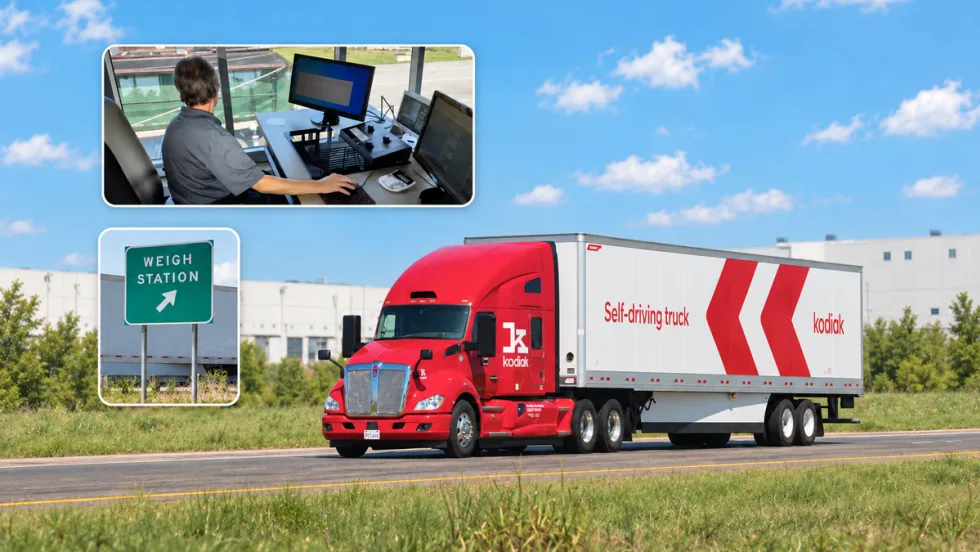
PrePass, Kodiak Connect Driverless Trucks to Roadside Enforcement
The system will allow enforcement agencies to verify Enhanced Inspection information and decide whether Kodiak’s autonomous trucks can bypass roadside screening sites.
Read More →
From One Generation to the Next: How Mentorship Builds Safer Truck Drivers
After three decades in trucking, Harold Perry shares what he's learned about driver safety, mentorship, and helping the next generation build confidence behind the wheel.
Read More →
FMCSA Pauses Biennial-Update Enforcement Amid Motus Transition
Carriers whose updates were due on or after June 1 have more time, while FMCSA works to stabilize its new registration system and warns of phishing sites impersonating its new carrier registration system, Motus.
Read More →
ZF Expands Commercial Vehicle Push in North America
ZF is expanding its North American commercial-vehicle presence with new transmission applications, electrification, trailer technology and autonomous-driving systems.
Read More →
Truck Drivers Need More Than Another Alert
Fleets have more visibility into truck health, safety events, and driver activity than ever. The next challenge is turning all that information into useful guidance for the person who has to decide what to do next.
Read More →
Tesla Wants a Self-Driving Semi. Are Cameras Enough?
Could Tesla’s camera-only autonomous driving technology work on an 80,000-pound Semi? In this commentary, HDT's Deborah Lockridge takes a look at Tesla, Cybercab, and how autonomous trucks see the road.
Read More →
What DOT’s Automated Vehicle Strategy Means for Trucking
The U.S. Department of Transportation issued a new automated-vehicle strategy that outlines plans for driverless-truck regulations, cross-state freight corridors, and federal safety standards.
Read More →
NYC Expands Speed, Pedestrian Safety Tech Across Fleet
New York City is expanding intelligent speed assistance and pedestrian-alert systems across its municipal fleet, moving the technologies from pilot programs into vehicle procurement and retrofit requirements.
Read More →
FMCSA Removes 110 Truck Driver Training Schools from Certified ELDT List
Federal regulators also are targeting more than 160 additional training providers and launching a nationwide audit of third-party CDL skills testers as part of a broader crackdown on trucking fraud.
Read More →
Beyond DOT Compliance: What Makes a Trucking Fleet Truly Safe?
A trucking fleet can follow every rule and still make unsafe decisions. The real test comes when safety conflicts with freight, productivity, or cost.
Read More →