




Fuel Availability, New Service Demands Increasing Pressures On Trucking
A harsh winter and fuel-availability problems would spell shortages for the trucking industry, and the government's release of oil from the nation's strategic reserves likely won't help: Oil-capacity utilization is nearing the maximum, meaning there will be problems getting the fuel to the end user. That was among predictions from Martin Labbe of Martin Labbe Associates, a transportation information consulting firm
A harsh winter and fuel-availability problems would spell shortages for the trucking industry, and the government's release of oil from the nation's strategic reserves likely won't help: Oil-capacity utilization is nearing the maximum, meaning there will be problems getting the fuel to the end user.
That was among predictions from Martin Labbe of Martin Labbe Associates, a transportation information consulting firm.
Labbe addressed the annual meeting of NationaLease (National Truck Leasing System), held in Chicago, Sept. 24-26, under the theme: "Accepting the Challenges of Change."
"The real danger over the next six months is fuel availability, not fuel price," he warned. "Fleets will figure out how to pay for fuel, but if we have a tough winter there won't be enough fuel."
He explained: "Currently we're 20% below last year's levels of home heating oil in inventories nationwide. Last year, 15 states came within three days of calling for emergency rationing measures to get home heating oil into the hands of consumer. That would have meant a shutdown of the availability of diesel fuel to trucking and agricultural industries and moving the fuel into home heating oil. We're in a much worse situation now."
There is still a problem with truck capacity utilization, Labbe said. There was about a 3% greater supply of Class 8 trucks going into the marketplace than there was demand for transportation equipment at the end of 1998, and that overcapacity has continued to grow.
Although many truck builders have been making production adjustments, truck capacity utilization will be flat this year because there is still a lot of excess capacity, he said. His assessment was that the backlog of Class 8 trucks is down to about 80,000 from about 200,000 a year ago. As for trailers, "demand will weaken significantly next year because of a glut of equipment."
Like most others, Labbe doesn't anticipate the used truck problem ending in the short term. "There will be significant downward pressure on used truck prices through 2003," he predicted. For the years 1999, 2000 and 2001, there will be at least a $1 billion write-off on Class 8 residual values, he said.
However, Labbe foresees used trucks gaining favor, as more and more fleets come to realize the economic advantages to acquiring newer model equipment available at good prices with good warranties.
"The used truck situation occurred because truck manufacturers were too accommodating to their large fleet customers," Labbe explained. "The OEMs reduced the fleets' risk of ownership by giving them guaranteed residuals, guaranteed cost per mile, second owner warranty and making equipment that was made much more efficient to operate."
The end result is that the big carrier buying new equipment has a greater reliance on the OEM, which gives them more control, he said. In the meantime, there's been "a major disconnect" by the OEMs with the smaller carriers.
Logistics has created a situation that demands greater transportation flexibility because there is shorter order-to-delivery cycle, lower inventories with greater geographic coverage, and a reduction in distribution centers with faster transit times. Consequently, he told attendees, "trucking must improve its utilization."
There are other structural changes taking place within the trucking industry, observed Labbe, with a particular need for greater service. As a result:
- Carriers are now performing shipping services, staging freight, offering warehousing and inter-lining.
- OEMs are becoming more involved in fleets' operations, passing on software to help them manage their businesses and tying them into their parts inventory.
- Shippers are continuing to move to core carriers.
- Private fleets are starting to take their linehaul business back from for-hire carriers.
Business-to-business electronic commerce will have remarkable growth, and that will require distribution flexibility, predicted Labbe -- and that favors trucking, especially local delivery. Significant investment will be required in technology and training, however, to be able to efficiently handle this distribution flexibility through such things as mapping, routing, driver scheduling and communications systems.
Factoring in the growing business-to-consumer e-commerce, he said more trucks, especially local distribution equipment, will be required, and he predicted the growth of local cartage services to help and possibly handle local warehousing and staging. Furthermore, he anticipates that "second-shift delivery will be required because consumers want to be home when a product is delivered. They don't want things, particularly expensive items, left on the porch."
More Fleet Management
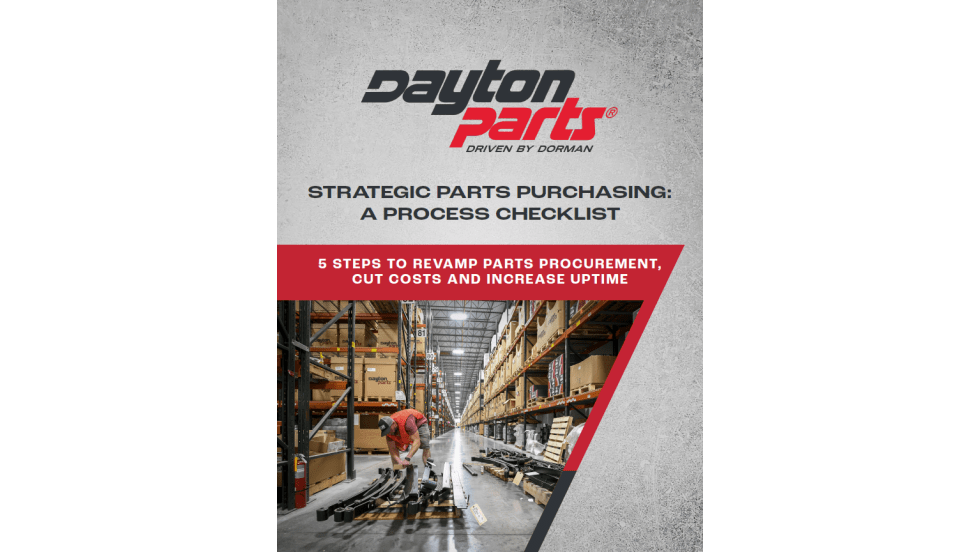
Is Your Parts Procurement Process Reactive or Proactive?
Ready to revamp your parts procurement process? Learn how now with “Strategic Parts Purchasing: A Process Checklist”
Read More →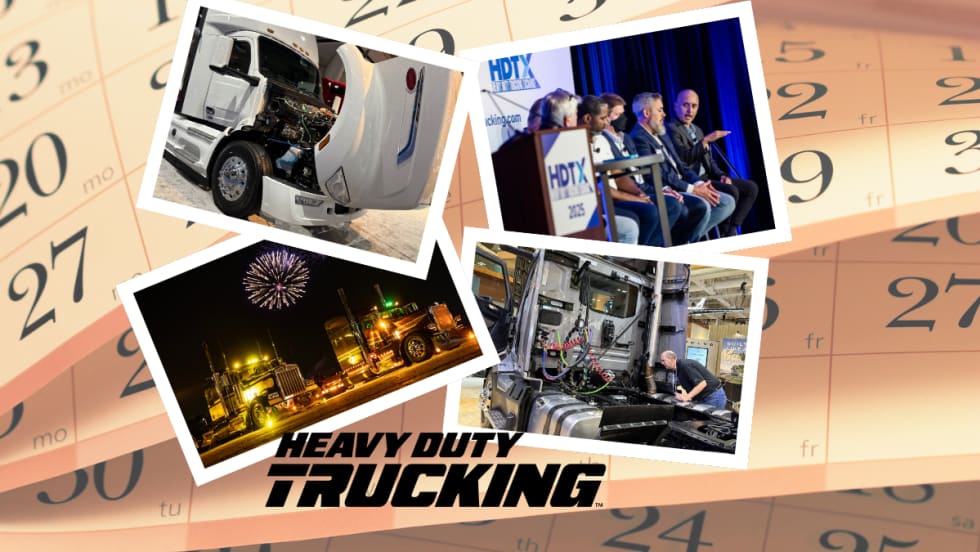
What Trucking Events are Happening in 2026?
Looking for trucking-related conventions, expos, and other events? Heavy Duty Trucking has developed this list of national and larger regional trucking shows and events.
Read More →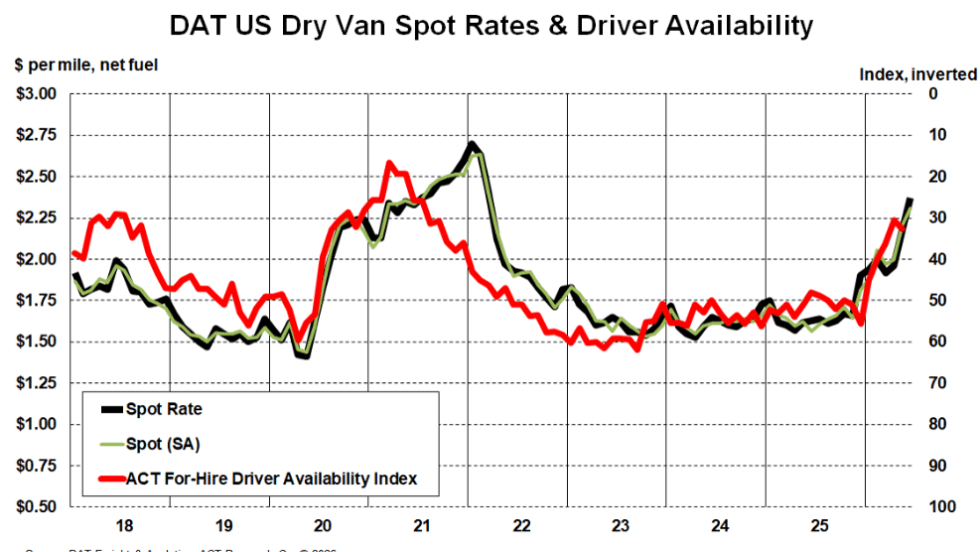
Truckload Rates Keep Rising as Tight Capacity Fuels Freight Market Recovery
Spot and contract rates continued climbing in May and June, not because freight demand is surging, but because fewer trucks and drivers are available.
Read More →
What Geotab's New AI Connector Means for Fleets
Fleets can now ask their usual AI assistants questions about maintenance, safety, fuel use, and vehicle performance, using their live Geotab data, and take action on the answers without leaving their preferred AI tool.
Read More →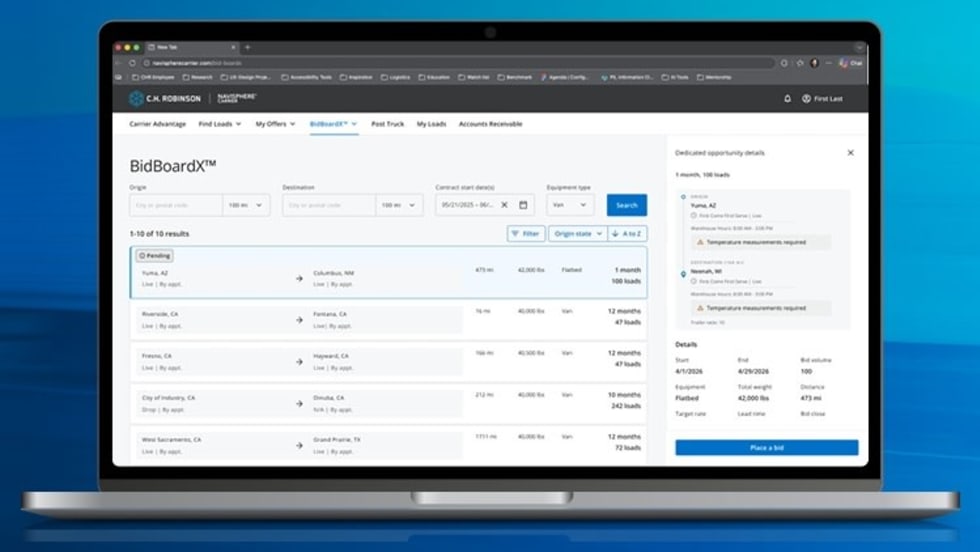
New C.H. Robinson Tool Opens Door to More Predictable Freight
BidBoardX lets carriers search, bid on, and secure committed freight opportunities through a single digital marketplace.
Read More →
New York City's Microhub Project is Delivering Results
Trucking, last-mile delivery companies, and environmental advocates like what they are seeing so far with New York's microhub program.
Read More →
Why Truck Detention Keeps Costing Fleets Time and Money
A 2024 ATRI study found detention affects nearly 40% of truckload stops and costs the industry more than $15 billion annually. Despite the toll on drivers, fleets, and supply chains, the problem remains stubbornly persistent.
Read More →
Time is Running Out to Apply for Exclusive HDT Event
Heavy Duty Trucking Exchange brings fleet managers and suppliers together for the deeper conversations that lead to ideas, partnerships, and solutions. Time is running out to apply for the September event.
Read More →
Amazon Launches Less-Than-Truckload Freight Offering for All Businesses
This launch is the latest addition to Amazon Supply Chain Services, a portfolio of supply chain capabilities from Amazon, including freight, distribution, fulfillment, and parcel shipping.
Read More →
Import Cargo Volume to See Year-Over-Year Gain Again in June, Then Remain Below 2025 Levels Into Fall
After July, the report predicts a weakening in import volume as consumer uncertainty remains high and the impact of increasing inflation takes its toll.
Read More →