




FTR's New Index Shows Somewhat Positive Intermodal Conditions
FTR's new Intermodal Competitive Index indicated that intermodal conditions were generally positive but not stellar.
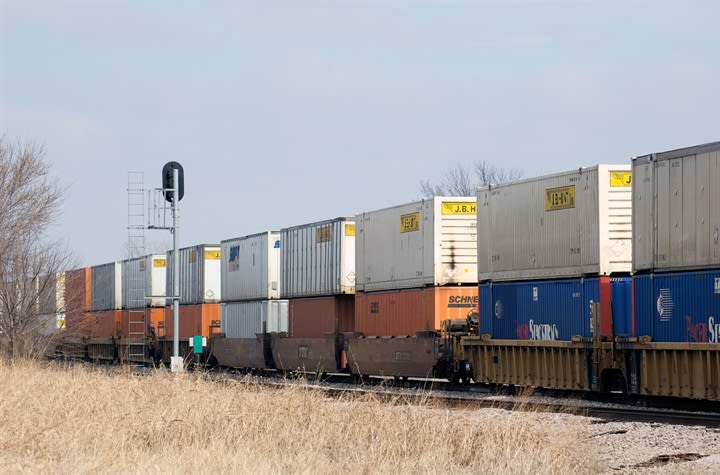
Industry analysis provider FTR Transportation Intelligence has developed a new metric for assessing the competitiveness of intermodal transport versus over-the-road truck transport called the Intermodal Competitive Index.
In its inaugural assessment, the ICI stood at a level of 4.8, indicating generally positive but not stellar intermodal conditions. Improved service and rising fuel prices are seen as positives by FTR, but slack demand and higher truck capacity factored into the equation as negatives.
The ICI was designed to build on FTR’s Trucking Conditions Index and Shippers Condition Indexm which take the temperature of other important aspects of the trucking industry. The ICI combines different factors, including relative rates versus truck, industry capacity versus demand, fuel prices and intermodal service levels.
Figures above 0 indicate favorable conditions for intermodal to compete with truck. Figures above 10 show extremely favorable conditions that result in substantial truck and intermodal conversion. Negative numbers indicate less aggressive modal share gains for intermodal and potentially reduced share.
“The Intermodal Competitive Index will allow readers to assess the trend of where intermodal stands versus truck transport at a glance,” said Larry Goss, FTR partner and intermodal analyst. “This is the latest in a series of enhancements that we have added to the Intermodal Update publication in recent months.”
FTR will host a free webinar to review the latest intermodal trends on May 11 at 11 a.m. EDT. To register click here.
More Fleet Management

Why Private Fleets Are Taking More Freight
Private fleets are putting their own trucks on demanding customers and high-cost lanes as companies seek greater control over service, costs, and capacity.
Read More →
Color Match Smarter: Tools That Restore & Perform
For fleet managers and collision repair professionals keeping heavy-duty trucks on the road, getting the color right the first time isn't just about appearance — it's about efficiency, turnaround time, and bottom-line results. Discover how today's digital color tools are transforming the repair process from guesswork to precision.
Read More →
FMCSA Pauses Biennial-Update Enforcement Amid Motus Transition
Carriers whose updates were due on or after June 1 have more time, while FMCSA works to stabilize its new registration system and warns of phishing sites impersonating its new carrier registration system, Motus.
Read More →


2026 Blueprint for Countering Smarter Supply Chain Theft
Cargo theft is no longer just the cost of doing business. It's a multi-billion-dollar criminal enterprise exploiting vulnerabilities across your fleet, drivers, and supply chain.
Read More →
How Telematics Improves Visibility, Control, and Performance in Refrigerated Fleets
Explore how telematics help refrigerated fleets improve visibility, uptime, efficiency, compliance, and cargo protection across connected cold chain operations.
Read More →
What the U.S.-Canada Trade War Means for Trucking
Escalating U.S.-Canada tariffs could disrupt cross-border freight, reduce truck volumes, raise costs, and create new uncertainty for carriers on both sides of the border.
Read More →
What Are Trucking’s Top Concerns for 2026?
The American Transportation Research Institute wants to know what's worrying trucking fleet managers, drivers, and other stakeholders in its annual Industry Issues survey.
Read More →
American Trucking Associations Looks for a New Leader
ATA President and CEO Chris Spear abruptly left his job at the association on August 21, at a pivotal time for the trucking industry.
Read More →
Public Wi-Fi Cybersecurity Risks: How Truck Drivers and Fleets Can Protect Their Data
Public Wi-Fi can expose truck drivers and fleets to credential theft, malware, and other cyber threats. Here’s how to reduce the risk on the road.
Read More →
For Nicky Cupp, Fleet Innovation Starts With Frustration
HDT Truck Fleet Innovator Nicky Cupp turns everyday pain points at Fraley & Schilling into opportunities for better technology and smarter processes.
Read More →