




FTC Greenlights Knight-Swift Merger
The mega-merger of Knight Transportation and Swift Transportation has moved a step closer to completion with the Federal Trade Commission granting its approval.

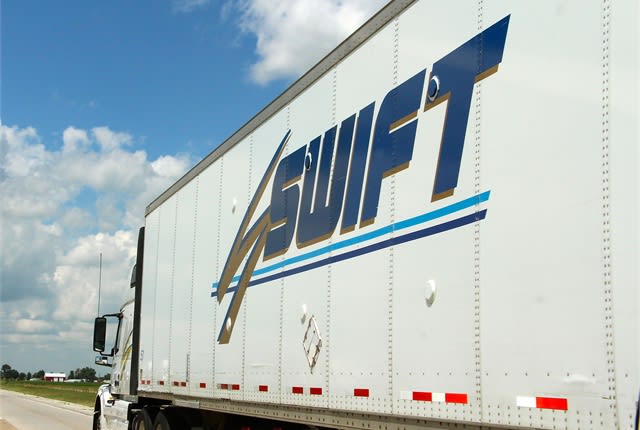
Photo: Evan Lockridge
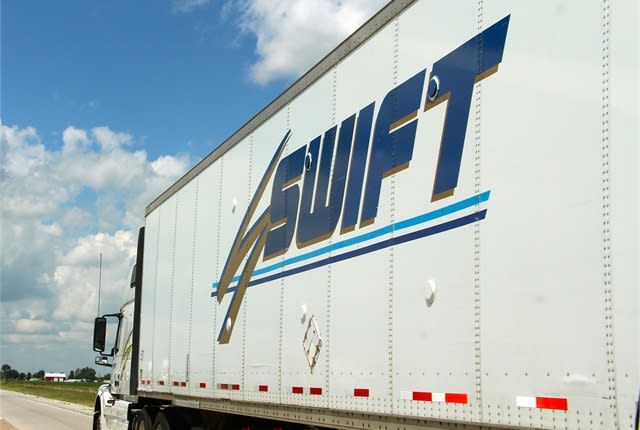
Photo: Evan Lockridge
The mega-merger of Knight Transportation and Swift Transportation has moved a step closer to completion with the Federal Trade Commission granting its approval.
The antitrust approval came quickly, in the form of an early termination notice posted by FTC on May 1. That action allows shareholders to vote on the deal, which is expected to close this summer. However, the merger must still be approved by the Securities and Exchange Commission and meet other requirements before the deal can legally close.
Once they are merged to form Knight-Swift Transportation Holdings, the two carriers will together field the largest truckload operation in the U.S. The new company is projected to generate annual revenues over $5 billion and boas a market capitalization of about $6 billion.
The Phoenix-based companies announced on April 10 that their respective boards of directors unanimously approved the merger of Knight and Swift in an all-stock transaction that they said will create the industry's largest full truckload company.
“This transaction combines under common ownership two long-standing industry leaders creating North America's premier truckload transportation company with $5 billion in annual revenue and a ‘Top 5’ truckload presence in dry van, refrigerated, dedicated, cross-border Mexico and Canada, and a significant presence in brokerage and intermodal,” the companies said in a joint statement.
The new holding company will remain headquartered in Phoenix and will operate with some 23,000 tractors, 77,000 trailers, and 28,000 employees.
The companies noted that, post-merger, the distinct Swift and Knight brands and operations will be maintained.
More Fleet Management

Color Match Smarter: Tools That Restore & Perform
For fleet managers and collision repair professionals keeping heavy-duty trucks on the road, getting the color right the first time isn't just about appearance — it's about efficiency, turnaround time, and bottom-line results. Discover how today's digital color tools are transforming the repair process from guesswork to precision.
Read More →
FMCSA Pauses Biennial-Update Enforcement Amid Motus Transition
Carriers whose updates were due on or after June 1 have more time, while FMCSA works to stabilize its new registration system and warns of phishing sites impersonating its new carrier registration system, Motus.
Read More →
2026 Blueprint for Countering Smarter Supply Chain Theft
Cargo theft is no longer just the cost of doing business. It's a multi-billion-dollar criminal enterprise exploiting vulnerabilities across your fleet, drivers, and supply chain.
Read More →


How Telematics Improves Visibility, Control, and Performance in Refrigerated Fleets
Explore how telematics help refrigerated fleets improve visibility, uptime, efficiency, compliance, and cargo protection across connected cold chain operations.
Read More →
What the U.S.-Canada Trade War Means for Trucking
Escalating U.S.-Canada tariffs could disrupt cross-border freight, reduce truck volumes, raise costs, and create new uncertainty for carriers on both sides of the border.
Read More →
What Are Trucking’s Top Concerns for 2026?
The American Transportation Research Institute wants to know what's worrying trucking fleet managers, drivers, and other stakeholders in its annual Industry Issues survey.
Read More →
American Trucking Associations Looks for a New Leader
ATA President and CEO Chris Spear abruptly left his job at the association on August 21, at a pivotal time for the trucking industry.
Read More →
Public Wi-Fi Cybersecurity Risks: How Truck Drivers and Fleets Can Protect Their Data
Public Wi-Fi can expose truck drivers and fleets to credential theft, malware, and other cyber threats. Here’s how to reduce the risk on the road.
Read More →
For Nicky Cupp, Fleet Innovation Starts With Frustration
HDT Truck Fleet Innovator Nicky Cupp turns everyday pain points at Fraley & Schilling into opportunities for better technology and smarter processes.
Read More →
Adam Buttgenbach’s Approach to Electric Trucks: Start With Where They Fit
HDT Truck Fleet Innovator Adam Buttgenbach helped PepsiCo build one of North America’s largest EV fleets by focusing on where electric trucks make operational sense.
Read More →