




Freightliner Delivers First eCascadia Electric Trucks
Daimler Trucks North America presented the keys to its first two production eCascadia battery-electric tractors to Penske and NFI on Aug. 21 in Napa Valley, California.


Richard Howard, vice president of sales and marketing for Daimler Trucks North America, spoke at the delivery event for the electric Freightliner eCascadia.
Photo: Jack Roberts
The first two production-model Freightliner eCascadia battery-electric tractors are in the hands of their new owners and about to begin an evaluation process intended to help pave the way for the integration of electric trucks in large-scale fleet operations.
A hand-off ceremony on Aug. 21 at Cliff Lede Vineyards in Yountville, California, was the highlight of Daimler’s annual press briefing in Napa Valley, which also included reports on the launch of the company’s new CX Customer Experience Group and an update on the status of the North American commercial vehicle market as another record-setting production year starts to wind down.
‘Undisputed Market Share Leader’
The day began with Richard Howard, vice president, sales and marketing for DTNA, noting that Freightliner has now built more than 170,000 new Cascadia tractors, a figure he said makes the company the “undisputed market share leader” in Class 8 trucks in North America.
Howard added that international sales of the new Cascadia will soon begin in earnest, with a right-hand steer model slated for launch in Australia in November.
Here at home, Howard said, the latest edition of the new Cascadia with full, Level 2 autonomous driving capability will be in production by year’s end.
Building on Howard’s remarks, Stefan Kirschner, vice president, aftermarket sales for DTNA, noted that the OEM now has 636 dealer locations in North America, in addition to its service-provider partnership with TA/Petro Trucks Stops.
To support these service locations, Kirschner said DTNA has streamlined its aftermarket parts shipping processes to the point that now 90% of parts ordered in the U.S. are delivered within 24 hours. He added that DTNA is working to achieve the same levels of parts availability in Canada.
Laser-Like Focus on the Customer
DTNA is also working hard to ensure that it maintains its position as the Class 8 market share leader. A critical part of that effort, Howard said, will be a new Customer Experience group within DTNA that will practice daily outreach to customers with the goal of understanding their wants, needs, and concerns, to act as a fast-response team to solve critical issues, and to help provide the best possible degree of uptime for DTNA trucks in fleet operations.
Heading up the new group will be 34-year industry veteran Paul Romanaggi, who has been named chief customer experience officer. The founding of the new CX group, Romanaggi said, is a “visible commitment to customers that we are taking their experiences with our brands seriously.”
It is important to make that committee to support customers, Romanaggi added, because at any given time, DTNA has $1 billion invested in new products/technology impacting such areas as safety, uptime, total cost of ownership, fuel economy, and driver satisfaction. If a major powertrain or engine upgrade is in the system, the investment number is closer to $3 billion.
At the same time, he added, the company’s dealer network is making significant investments in facilities, people, and training as well to help ensure that intense focus on the customer is consistent throughout the life of a DTNA truck.
According to Romanaggi, the CX group goals will be to:
Deliver faster speed and effectiveness when solving a customer’s immediate needs
Develop and maintain a holistic approach to customer support by bringing all assets available to bear when a vehicle is down
Obtain insights from customers to constantly improve service
Develop a proactive understanding of future customer to anticipate those concerns and be prepared to deal with them as they arise in fleet operations
The CX group is already making its presence known, Romanaggi added, by implementing a new streamlined warranty plan that has DTNA paying fleets upfront for warranty repairs, with the time-consuming documentation process handled later, internally, by DTNA warranty experts.
He called this a “huge” innovation that will help fleets get trucks back on the road faster while allowing fleet executives to stay focused on their own customers instead of doing paperwork.
Trailblazing a Path to Sustainability
Day’s end found two, shining new white and blue eCascadia tractors gleaming in the California sunset as Richard Howard formally presented the keys to their new owners.
Speaking during the ceremony, DTNA Chief Emobility Engineer Andreas Juertzka said that the entire process to get the new eCascadia to market took only 18 months. He said this was due to his engineering group being given everything they needed to perfect the technology needed to introduce electric trucks to large-scale fleet operations.
“Co-creation is the cornerstone of DTNA’s strategy to rapidly develop and deploy battery electric trucks. DTNA’s partnerships with customers like Penske and NFI provide valuable feedback for the final design of our trucks, as well as the design of the surrounding e-mobility ecosystem,” said Roger Nielsen, president and CEO of DTNA. “DTNA’s holistic approach is vital to advancing viable transportation solutions from which society as a whole will benefit.”
The Freightliner Innovation Fleet is supported by a partnership between DTNA and the State of California’s South Coast Air Quality Management District (South Coast AQMD) which focuses on improving air quality in the South Coast Basin.
South Coast AQMD partially funded the Innovation Fleet with a nearly $16M grant. Freightliner eCascadias and medium-duty electric Freightliner eM2s from the Innovation Fleet are operated within the South Coast AQMD jurisdiction.
“We are excited to be a part of this groundbreaking project that will directly impact local Southern California communities, especially those disproportionately impacted by air pollution,” said Wayne Nastri, South Coast AQMD’s executive officer. “We hope to see large scale deployments of similar zero-emission trucks that will have significant environmental and health benefits across the entire state.”
Penske and NFI are the first to deploy battery-electric commercial vehicles from Freightliner to their operations. Penske Truck Leasing will run eCascadias in daily delivery operations within California’s Inland Empire while NFI will employ eCascadias in drayage operations at both the Ports of Los Angeles and Long Beach. In total, Penske and NFI will receive 30 battery-electric trucks.
“We’re pleased to continue our collaboration with Freightliner and be among the first companies putting the eCascadia to work,” said Brian Hard, president and CEO of Penske Truck Leasing. “Our first eCascadia will be used by our subsidiary Penske Logistics to make multiple, daily store deliveries on a dedicated route. Our in-house maintenance technicians are trained and well prepared, and our recent investments in charging infrastructure in the South Coast Air Basin will play an important role as we operate these cutting-edge vehicles on their delivery routes.”
“NFI’s partnership with Daimler is a testament to our commitment to social responsibility, supporting the California ports, and driving innovation within our industry,” said Sid Brown, CEO of NFI, which was founded by his grandfather in 1932. “As the premier drayage provider in Southern California, we are excited to be one of first to deploy the eCascadia into our operations, accompanied by the installation of electric charging stations. We look forward to continuing to invest in new technology and equipment to operate more efficiently, and to do our part in creating cleaner communities.”
The Freightliner eCascadia is built on the foundation of the Cascadia, the best-selling Class 8 on the market, and was first revealed in June 2018 along with the medium-duty eM2. The planned start of series production for both models is late 2021.
In preparation for their introduction, Freightliner said it has established multiple avenues for co-creating with customers. Freightliner’s Electric Vehicle Council, a group of 38 customer companies, works to address the total e-mobility ecosystem while Freightliner’s Innovation Fleet provides customers with the opportunity to test the eM2 and the eCascadia in real-world use.
More Fuel Smarts

FlowBelow Redesigns Trailer AeroSlider to Cut Fuel Use
The lighter trailer aerodynamic system installs in less than 45 minutes, according to the company, with potential payback in under a year depending on fuel prices and trailer mileage.
Read More →
Why Diesel Price Relief Efforts May Fall Short
Diesel prices have eased from September’s record high, but doubts about additional Russian supply and limits on dyed-diesel tax relief mean trucking fleets still face expensive fuel. And prices could go higher.
Read More →
Why Small Fuel Savings Matter in Trucking
Can better fuel economy help pay for driver raises? In this podcast, GP Transco explains how small efficiency gains create room to reinvest in its people.
Read More →
How GP Transco Cuts Trucking Fuel Costs, a Tenth of a Gallon at a Time
What’s another tenth of a mile per gallon worth? GP Transco shares how equipment upgrades and driver coaching turn small gains into meaningful fuel savings.
Read More →
Electric Yard Tractors Move Beyond Pilots
Operating-cost savings have overtaken sustainability goals as the leading reason surveyed fleets are adopting battery-electric terminal tractors, according to new NACFE research.
Read More →
Geotab Links Fleet Card to Vehicle Data
The new card combines fuel discounts with telematics-based purchase controls. Geotab’s analysis also points to potential savings from choosing lower-priced fuel stops.
Read More →
Fleet Economics Shape Electric Truck Outlook
ACT Research expects costs, charging infrastructure, and technology improvements to drive zero-emission commercial vehicle adoption as federal regulations and incentives retreat.
Read More →
Wex Adds Cardless Fuel Payments for Over-the-Road Customers
A new fuel card feature for Wex customers offers convenience and security.
Read More →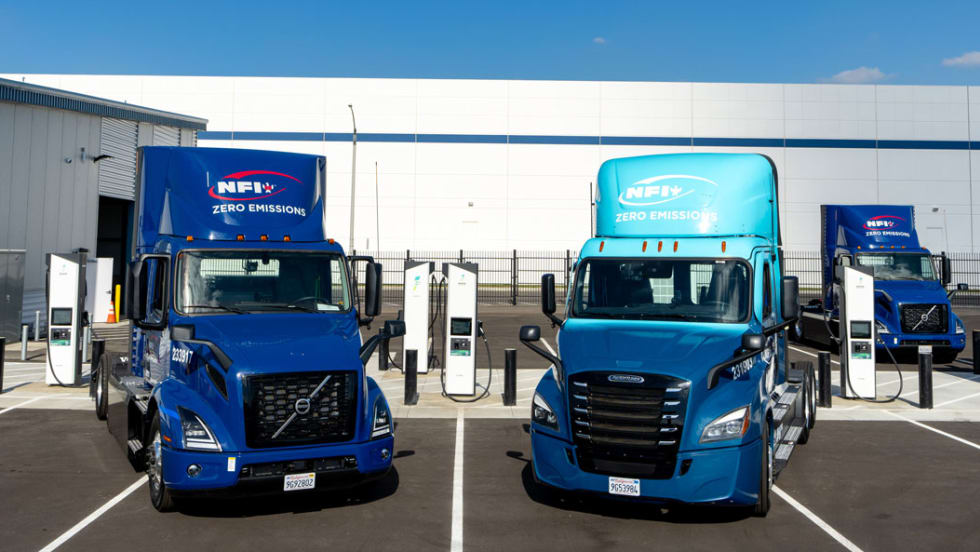
New California Law Could Shed Light on Electric Truck Prices
Why do battery-electric Class 8 trucks remain so expensive? A California bill signed by Gov. Gavin Newsom would give fleets and state agencies more visibility into what manufacturers charge.
Read More →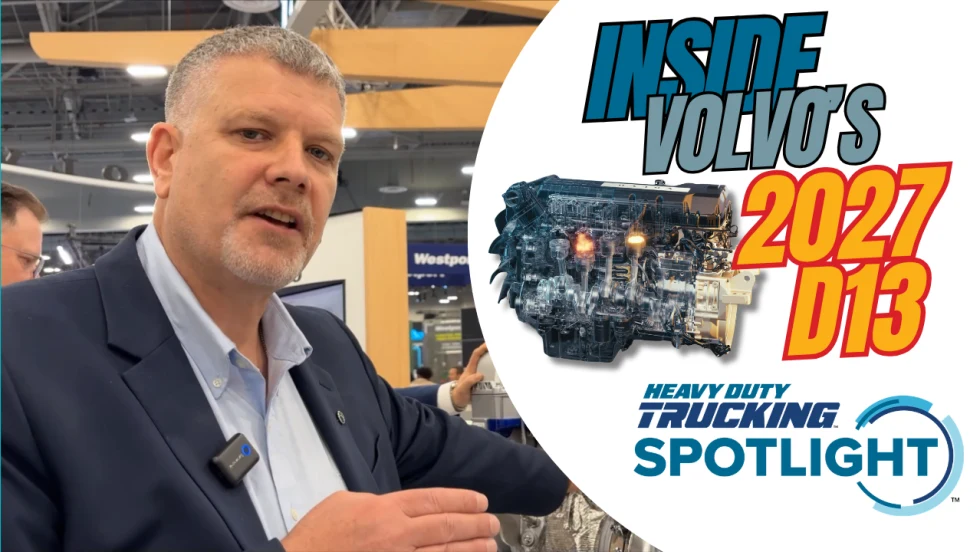
How Volvo Updated Its D13 for EPA 2027 [Watch]
Volvo’s updated D13 promises lower emissions without sacrificing performance or fuel economy. Take a closer look at what changed inside the engine in this HDT Spotlight video.
Read More →