




FMCSA Stops Plan to Determine Accountability in CSA Crash Data
The Federal Motor Carrier Safety Administration last week reversed course on a long-planned correction in its CSA safety enforcement system. The agency was close to proposing a way for carriers to get an assessment of fault in the crashes used to determine their safety rating, but on Thursday Anne Ferro told industry representatives that the agency will not go ahead after all
The Federal Motor Carrier Safety Administration last week reversed course on a long-planned correction in its CSA safety enforcement system.
The agency was close to proposing a way for carriers to get an assessment of fault in the crashes used to determine their safety rating, but on Thursday Anne Ferro told industry representatives that the agency will not go ahead after all.
Ferro explained in an interview that safety advocacy groups raised questions about the proposal that caused her to reconsider the agency's approach.
The questions had to do with using just the Police Accident Report and a carrier's statement to determine crash accountability, Ferro said.
She said that approach is too limited because it does not allow for comment from others impacted by the crash. These presumably could include victims, insurance companies, shippers and witnesses.
Also, the process did not allow other parties to even know that a carrier was filing a request for an accountability examination, Ferro said. And, if the agency created a window for others to participate, it would have to create a new process to manage the exchange.
"It was just too early out of the box in this proposal, quite frankly, so I pulled it back," Ferro said.
The agency has been working on this proposal since CSA began being tested in 2009.
Early on, carriers raised concerns about the way the system records crashes as part of its CSA crash indicator score whether or not the crash was the carrier's fault. When that happens the carrier's score goes up and can possibly trigger enforcement action, even if there was nothing the carrier could have done to prevent the crash.
The FMCSA's response has come in two parts. First, the agency has said it is legitimate to include non-preventable crashes because statistics clearly show that past crashes are a predictor of future crashes, no matter who is at fault.
But the agency also has recognized that non-preventable crashes should get different weight than preventable crashes.
To create a proper weighting system, the agency has been working on an appeal process in which carriers would use the CSA data correction system, DataQs, to submit a Police Accident Report and get an assessment of accountability on their crashes. That plan was supposed to be published in the Federal Register last month, or early this month.
The initiative started to go off the rails when the agency aired its planned proposal at a meeting of the Motor Carrier Safety Advisory Committee last month. Safety advocacy members of the committee objected, saying that they were not aware of the proposal.
Ferro said she heard about the concerns (she was not at the MCSAC meeting) and asked the safety advocates to meet with her.
The timing of that meeting last Monday has led to speculation among trucking interests that the safety groups were bringing political pressure to bear against the agency, because safety groups met with Transportation Secretary Ray LaHood the same day.
That speculation "is baloney," Ferro said. "The meeting with Secretary LaHood was not on this topic. It was on issues relating to reauthorization (and) insurance research."
A spokesman for Secretary LaHood confirmed that CSA was not on the agenda at the meeting.
"There's nothing about this particular series of actions that was influenced by anybody other than me," Ferro said.
She said she was reacting to the questions that were raised at the MCSAC meeting, "the recognition that some very good questions were raised that we do not have answers to today."
Trucking interests are dismayed by the move.
"The biggest casualty in this is the agency's credibility," said John Conley, president of the National Tank Truck Carriers, who was at the Thursday meeting.
Conley said the turnaround is frustrating because he has defended FMCSA, urging patience as the agency readied a response for carriers who say the system punishes them for crashes they did not cause.
"Now I have egg on my face and my carrier (members) have every right to say you told us all along that we should be working with them," Conley said.
Rob Abbott, vice president of safety at American Trucking Associations, underscored the industry's continuing concern about the fairness of the current system.
"With respect to all of the crashes that clearly are not the driver's fault, its an error to include every one of those in the database," he said. "What ATA wants is to make the crash indicator a better indicator of carrier performance."
Steve Owings is co-founder and president of Road Safe America, one of the advocacy groups involved. Owings lost his son, Cullum, in a 2002 crash caused by a speeding truck. He said in an interview that the CSA appeal process the agency was considering "sounds like motherhood and apple pie, the right thing to do, on the face of it."
But, he said, the agency's data shows "a very clear and strong correlation" between past and future crashes regardless of who was at fault.
"My understanding from statisticians and database experts is that any time you start manipulating data, which is what they would be doing, you mess up your whole intent. It corrupts the data, basically," Owings said.
Neither Owings nor anyone else interviewed for this story could explain exactly why a no-fault crash would accurately predict greater risk of a crash in the future.
Ferro confirmed that agency data containing both at-fault and not at-fault crashes show a "very, very close correlation" between crash experience from year to year.
The hypothesis is that all of the carriers have a greater risk, but the at-fault carriers have a significantly greater risk, she said. But one reason she stopped the proposal is to test this hypothesis.
Ron Knipling, a noted truck safety scientist, agreed that including non-accountable crashes in the database increases the numbers and thus strengthens the statistical relationship between past at-fault crashes and future risk.
"But it is spurious, or at least primarily spurious," he said in response to an email inquiry. If the agency's data were entirely valid, which it is not, there probably would be a small but measurable relation between involvement in not-at-fault crashes and future crash risk, he said.
The bigger problem, he said, is that the agency's data does not control for risk exposure in terms of mileage or type of road.
"Two drivers could be exactly alike in actual safety but one could drive more miles and/or drive in denser traffic year after year," he said. "The data would show that driver to be higher risk for all types of crashes."
Knipling's take is that the CSA system would be better if it weighed accountability, but that still would not solve the core problem of exposure.
"I may be an excellent driver, but the more miles I drive, and the more dense the traffic is, the higher my risk of causing a crash as well as just being in one."
ATA's Abbott made the point that the CSA system would be improved if accountability were weighted.
"If crashes are the best indicator of crash risk, how much better would the system be if they discounted those crashes that clearly weren't the truck driver or trucking company's fault?" he said.
"The agency will have difficulty convincing anybody, regardless of what statistics they say they have, that a truck driver who's struck while parked is more likely to be a future crash risk, and intervening with that carrier."
Because the point of CSA is to help the agency focus its resources on the riskiest carriers, the system should cull out the less risky carriers, he said.
"Every time they target one carrier for intervention they are saying t
More Drivers

When Language Stops the Truck: The Return of ELP Out-of-Service Orders
English language proficiency rules for commercial drivers aren’t new, but renewed out-of-service enforcement has raised the stakes. Here’s what carriers need to know before a driver reaches a roadside inspection.
Read More →
Samsara Launches Custom AI Agent Builder
Agent Studio lets fleets create AI tools for hours-of-service monitoring, reporting and driver support, including agents that communicate by phone.
Read More →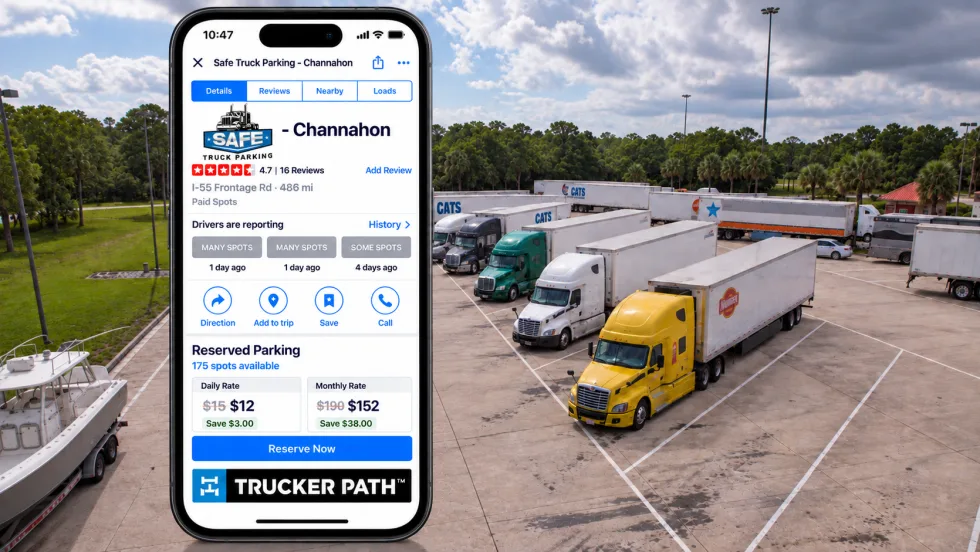
Trucker Path Expands Reserved Parking Network
Trucker Path has added close to 6,000 more truck parking spaces to its Trucker Path Reserved Parking Network with the addition of Safe Truck Parking.
Read More →
EEOC Sues Texas Trucking Company Over Driver Age Limits
The agency says Trancasa USA rejected applicants over 65 and applied tougher driving-record standards to those over 60.
Read More →
Nussbaum, Roehl Announce Second Driver Pay Increase This Year
This year has seen a swath of major truck driver pay increases as freight capacity has tightened.
Read More →
From One Generation to the Next: How Mentorship Builds Safer Truck Drivers
After three decades in trucking, Harold Perry shares what he's learned about driver safety, mentorship, and helping the next generation build confidence behind the wheel.
Read More →
Truck Drivers Need More Than Another Alert
Fleets have more visibility into truck health, safety events, and driver activity than ever. The next challenge is turning all that information into useful guidance for the person who has to decide what to do next.
Read More →
FMCSA Removes 110 Truck Driver Training Schools from Certified ELDT List
Federal regulators also are targeting more than 160 additional training providers and launching a nationwide audit of third-party CDL skills testers as part of a broader crackdown on trucking fraud.
Read More →
Hours of Service Pilot Programs: FMCSA Readies for 2027 Rollout
Two pilot programs could eventually reshape hours-of-service rules, giving truck drivers options to pause their 14-hour clock or use longer split sleeper rest periods.
Read More →
Medical Cards, English Proficiency Reshape Roadcheck Violations
Medical-card violations jumped to the top of the driver out-of-service list during CVSA’s 2026 International Roadcheck, while English-language proficiency violations appeared among the leading violations for the first time.
Read More →