




FMCSA Proposes Dropping Inspection Reports on Defect-Free Container Chassis
Drayage drivers would not have to fill out and file a vehicle inspection report for container chassis that have no apparent defects, according to a rules change proposed by the Federal Motor Carrier Safety Administration
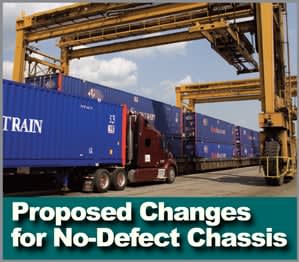
Drayage drivers would not have to fill out and file a vehicle inspection report for container chassis that have no apparent defects, according to a rules change proposed by the Federal Motor Carrier Safety Administration.
The change to the agency's "roadability" requirements for chassis follows a petition from the Ocean Carrier Equipment Management Association and the Institute of International Container Lessors.
This provision of the rule was supposed to go into effect June 30, but has been postponed pending the agency's evaluation of the proposed change. It would have required the driver to make, and the carrier to keep, a "no-defect" inspection report.
The intent of the provision, the agency said, was to make the rule consistent with a longstanding requirement that inspection reports indicate whether or not there are any defects on the equipment.
OCEMA and ICL argued that current law does not require no-defect reports and that the volume of such reports could overwhelm the system. They estimated that 96 percent of inspection reports do not show defects, a volume that creates the risk of defect reports getting lost in the flow.
In addition, they said, the data transmission requirements are expensive, and the work involved in making them cuts into productivity.
The agency said it was persuaded by these arguments, but noted that even with the change, drivers will still be obliged to inspect the chassis at the end of the day.
The proposal was published in yesterday's Federal Register. Comments are due by August 8.
The roadability rule in general requires the owner of the chassis, typically the ocean carrier or a chassis leasing company, to take responsibility for its maintenance. The rule has been phasing in over the past year, with FMCSA inspectors conducting "courtesy" audits of the equipment in preparation for the start of actual enforcement.
The courtesy audits have not found good compliance with the rule, said Dave Manning, president of drayage carrier Tennessee Express.
"Honestly, the rule is disappointing," Manning said. "It is not achieving its intended purpose. It's supposed to be a shared responsibility and I'm not sure that either motor carriers or equipment providers are doing their part. Motor carriers are still getting dinged for safety violations that belong to the equipment provider."
Curtis Whalen, executive director of the Intermodal Motor Carriers Conference, an affiliate of American Trucking Associations, said he expects the upcoming FMCSA enforcement effort to highlight the problems.
"I can tell you right now, there are chassis in that ready line that haven't seen a repair in quite a while," Whalen said. "Some don't even have up-to-date stickers. What kind of system has a mechanic that won't even notice if a sticker is out of date?"
The roadability rule is connected to a larger intermodal issue, arising from the decision by ocean carriers to get out of the business of owning chassis.
Roadability was one of a number of factors that prompted that decision, said William Rooney, president of WFR Solutions and former president of Hanjin Shipping America.
Probably the biggest factor was the desire by the ocean carriers to bring their U.S. chassis operations into line with the way they work everywhere else in the world, Rooney said.
The ocean carriers started supplying chassis in the U.S. for the marketing advantage of owning the equipment. This practice is unique to the U.S. Elsewhere, it's the drayage carriers, terminals or shippers who provide the chassis, he said in a recent webinar hosted by the National Industrial Transportation League.
The ocean carriers are no longer thinking of the chassis as a differentiator, though, Rooney said. "They do not get a price premium based on the chassis."
The League, along with other transportation organizations such as the Intermodal Association of North America and ATA's Intermodal Motor Carriers Conference, is trying to promote discussions among intermodal stakeholders who are seeking a new chassis business model.
Thomas Malloy, vice president of policy and communications at IANA, said the ocean carriers clearly want to exit the chassis business. "But once you get past that, it starts to get detailed and complex, with each line doing it in its own way, and some remaining silent," he said.
Malloy coordinates IANA's Chassis Working Group, which brings together the chassis owners, leasing companies, marine terminal operators, drayage carriers and railroads to negotiate the transition.
"The difficulty for everybody is that there's not a clear transition plan that's been laid out," said Manning.
The key issue from the dray carrier perspective is to preserve competition in the chassis business, he said.
"The motor carrier needs to be the one who makes the (chassis) selection," he said. That's why it's important to preserve the "gray" chassis pools, from which dray carriers can take a chassis and deal only with the pool rather than the owner of the chassis, he said.
Manning thinks it's likely that the market will gradually evolve into a variety of different models, one of which will include chassis ownership by drayage companies.
"We're looking at models in which motor carriers could contribute wheels or be a subscriber to wheels operated by (a chassis pool)," he said. "We think that's a good model."
For an in-depth report on the transition to a new chassis business model, see the next issue of Heavy Duty Trucking.
More Drivers
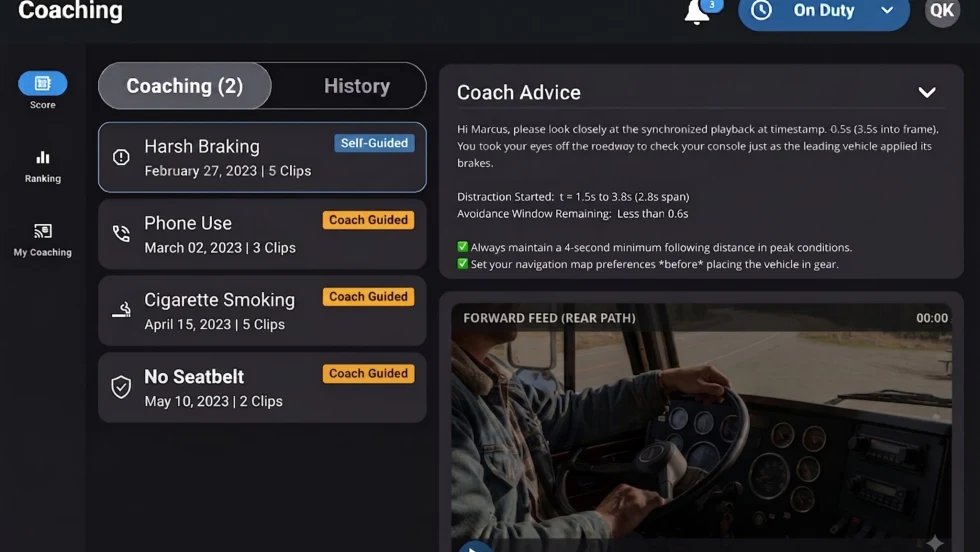
Platform Science Adds Dispatch and Safety Tools
Four additions to PS Fleet help fleets monitor loads, manage driver coaching, share truck locations and adjust video system settings.
Read More →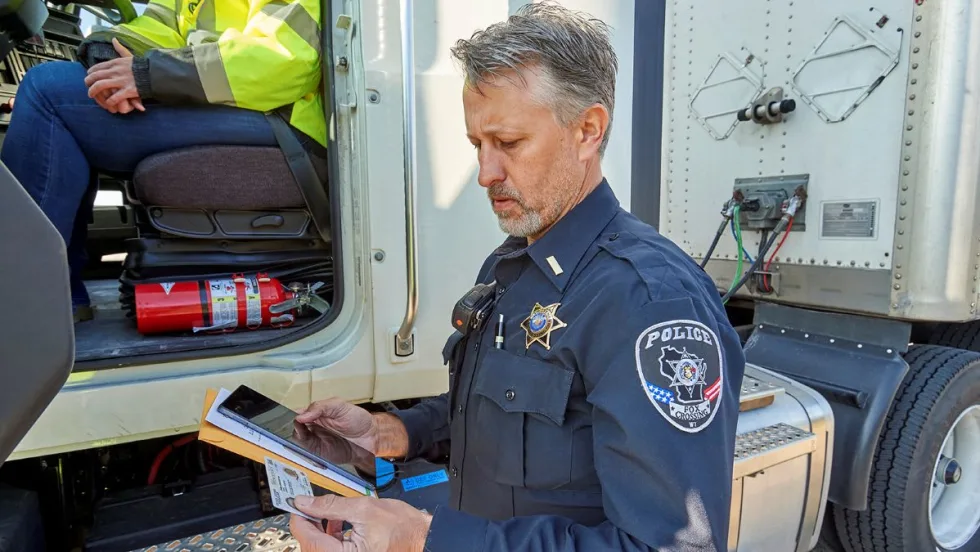
When Language Stops the Truck: The Return of ELP Out-of-Service Orders
English language proficiency rules for commercial drivers aren’t new, but renewed out-of-service enforcement has raised the stakes. Here’s what carriers need to know before a driver reaches a roadside inspection.
Read More →
Samsara Launches Custom AI Agent Builder
Agent Studio lets fleets create AI tools for hours-of-service monitoring, reporting and driver support, including agents that communicate by phone.
Read More →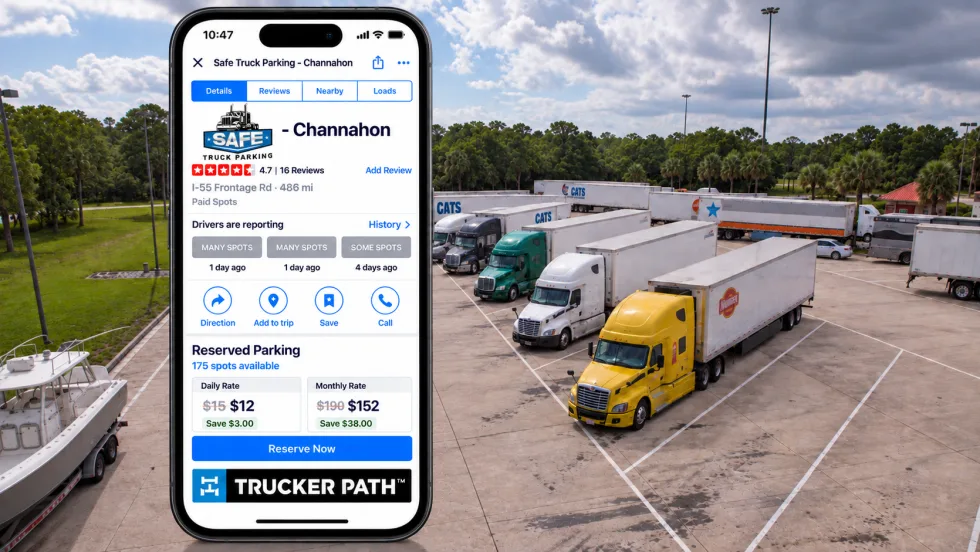
Trucker Path Expands Reserved Parking Network
Trucker Path has added close to 6,000 more truck parking spaces to its Trucker Path Reserved Parking Network with the addition of Safe Truck Parking.
Read More →
EEOC Sues Texas Trucking Company Over Driver Age Limits
The agency says Trancasa USA rejected applicants over 65 and applied tougher driving-record standards to those over 60.
Read More →
Nussbaum, Roehl Announce Second Driver Pay Increase This Year
This year has seen a swath of major truck driver pay increases as freight capacity has tightened.
Read More →
From One Generation to the Next: How Mentorship Builds Safer Truck Drivers
After three decades in trucking, Harold Perry shares what he's learned about driver safety, mentorship, and helping the next generation build confidence behind the wheel.
Read More →
Truck Drivers Need More Than Another Alert
Fleets have more visibility into truck health, safety events, and driver activity than ever. The next challenge is turning all that information into useful guidance for the person who has to decide what to do next.
Read More →
FMCSA Removes 110 Truck Driver Training Schools from Certified ELDT List
Federal regulators also are targeting more than 160 additional training providers and launching a nationwide audit of third-party CDL skills testers as part of a broader crackdown on trucking fraud.
Read More →
Hours of Service Pilot Programs: FMCSA Readies for 2027 Rollout
Two pilot programs could eventually reshape hours-of-service rules, giving truck drivers options to pause their 14-hour clock or use longer split sleeper rest periods.
Read More →